
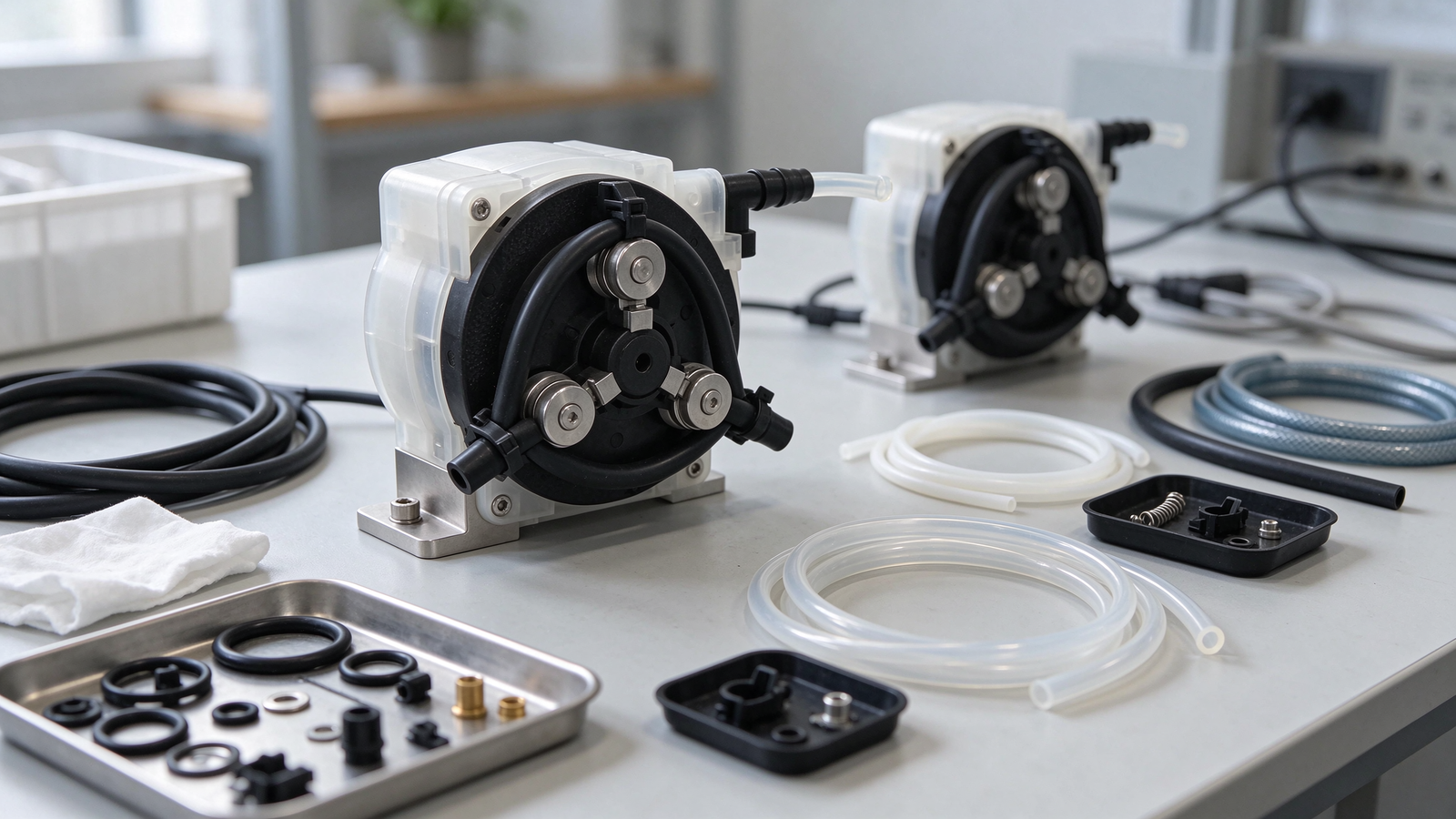
Buyers comparing peristaltic pump quotes often start from the unit price, but the purchase price is only the first cost over the pump’s working life. A low-priced head that needs frequent tube changes, wears out early on an aggressive fluid, or sits waiting on spare parts when it stops can cost more over a year than a slightly higher-priced unit matched to the duty. This procurement guide breaks down the total cost of ownership for a peristaltic: consumables, downtime, maintenance labor, energy, and service life, and shows how to compare suppliers on the full picture rather than the line-item price alone.
What Goes Into Total Cost of Ownership
TCO is the sum of what you pay up front and what the pump costs to keep running through its service life. For a peristaltic, the recurring items are usually the tube consumable, periodic head and drive service, calibration and inspection labor, any downtime when a feed stops, and the energy the motor draws. Replacement of worn heads or drives at end of life closes the cycle. Missing any one of these when comparing quotes makes the cheapest unit look better than it is.
| Cost component | What it covers | What drives it up |
|---|---|---|
| Purchase price | Head, drive, fittings, included spares | Over-sizing, premium features not needed for the duty |
| Consumables | Replacement tubes, and any head wear parts | Aggressive chemical, abrasive fluid, long run hours |
| Downtime | Lost production or off-spec batch while the feed is stopped | No spare on hand, long lead time, unclear fault diagnosis |
| Maintenance labor | Tube swaps, inspection, calibration, record keeping | Hard-to-service head, no clear procedure, remote location |
| Energy | Motor power over the duty cycle | Oversized drive working at low load, high back-pressure |
| Service life / replacement | Head and drive reaching end of life | Undersized load margin, poor maintenance, chemical attack |
The Tube Is the Recurring Consumable
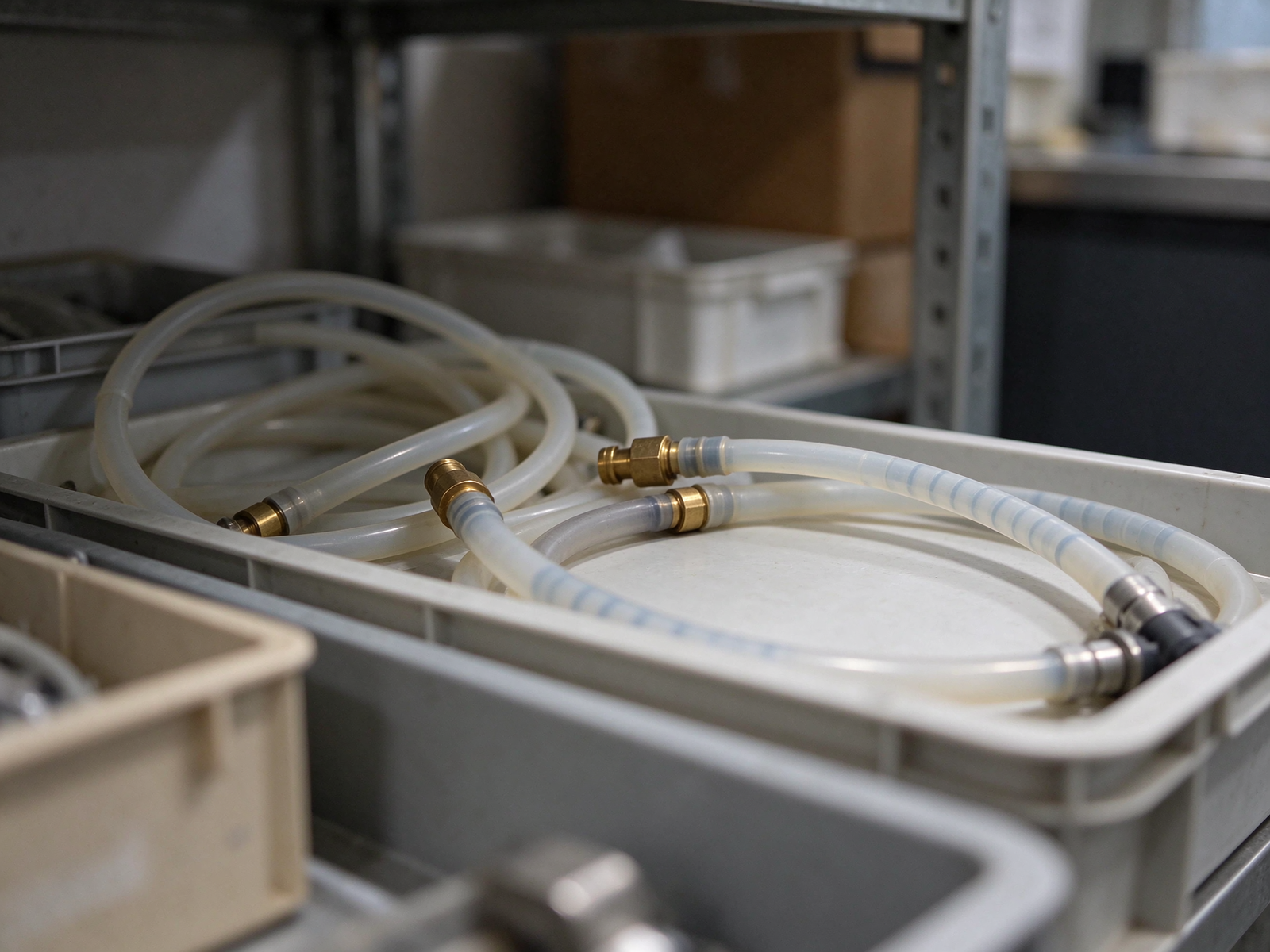
On a peristaltic, the tube is the part that wears by design, and it is the main recurring purchase. Its life depends on the fluid chemistry and concentration, the fluid temperature, abrasiveness, the run hours, the occlusion setting, and the tube material. A tube that swells, hardens, or cracks early means more frequent changes and more downtime, even if the head itself is sound. When evaluating a quote, ask how the recommended tube material matches your fluid, what the expected replacement interval looks like under your duty, and whether spare tubes are stocked or made to order.
The peristaltic pump tube should be specified by bore and material, not just “a tube for the pump,” so replacements match the original flow and load. Keep a recorded spare for each active pump; for a line that cannot tolerate a stop, holding a spare tube and any common head wear part on site cuts the restart time. The NSF fluid-handling guidance on controlled systems supports keeping wetted consumables documented and segregated by chemical.
Downtime and Spare-Parts Strategy
The most expensive cost on a dosing line is often an unplanned stop, especially where the feed protects a batch, a treatment step, or a continuous process. Downtime has two sources: the fault itself, and the wait for the right part or information. A pump that is easy to diagnose and service, with a tube and wear parts available locally or on short lead time, lowers that second source. A pump with a long consumable lead time or a non-standard head means a short fault can turn into a long outage.
When you ask suppliers about lead time, cover the tube, the head wear parts, and the drive, not just the complete pump. Note whether spares are interchangeable across the pump range and whether the supplier provides a service procedure and fault reference. For multi-pump sites, a common head and tube family across units reduces the number of spare types to stock.
Maintenance Labor and Serviceability
Labor cost is easy to leave out of a price comparison. A head that opens quickly, seats the tube centrally, and has a clear tube-swap procedure keeps each service short. A head that needs special tools, repeated adjustment, or careful reassembly adds labor on every change and raises the chance of a mis-seated tube that has to be corrected again. Calibration after service should be a simple weigh-and-check step so the pump returns to the same dose. The NIST gravimetric measurement practice describes how to verify a dispensed volume, which keeps calibration consistent across service visits.
Ask whether the supplier provides maintenance guidance, replacement intervals, and a contact for fault questions. The peristaltic pump driver and its control scheme also affect service: a drive with a clear fault indication is faster to diagnose than one that only stops without a signal.
Energy and Sizing Margin
An oversized drive does not save money over time. A motor sized far above the actual load may draw more power and sit at an inefficient part of its range, while a drive that is too small strains under load and trips or wears early. Match the head and drive to the target flow, the fluid viscosity, and the discharge back-pressure, with a reasonable margin for the worst-case line condition. Review the duty cycle: a pump running continuously all day loads the motor and tube differently from one dosing in short pulses. The motor-driver operating manual and driver reference describe how duty and load are rated, which should be checked against your line rather than assumed.
Comparing Quotes on Total Cost
Build a simple comparison per pump: purchase price, estimated annual tube and consumable cost, expected service interval, downtime exposure, and the drive and head service life. A quote that includes a spare tube, clear lead times, and service support can justify a higher unit price; a bare-bones quote may add cost later in consumables and waiting time.
| Procurement question | Why it matters |
|---|---|
| What tube material matches my fluid and concentration? | Determines consumable life and early-failure risk |
| What is the spare tube and parts lead time? | Sets how long an unplanned stop lasts |
| Which parts are consumable versus serviceable? | Separates routine tube changes from head or drive replacement |
| Is the head easy to service without special tools? | Affects labor time and reassembly errors |
| What duty cycle and load margin does the drive carry? | Affects energy use, thermal trip risk, and service life |
| Are spares common across the pump range? | Reduces the number of spare types a site must hold |
| What service documentation and fault support are included? | Speeds diagnosis and corrects service the first time |
For sizing reference, low-flow instrument feeds commonly use a micro peristaltic pump, general dosing lines a small peristaltic pump head, and higher-flow duties a large-flow peristaltic pump head. Matching the head to the duty avoids paying for flow you do not use, and keeps the drive in a comfortable load range.
Common Procurement Mistakes
| Mistake | Result | Better practice |
|---|---|---|
| Choosing on unit price only | Higher consumable and downtime cost later | Compare TCO over the expected service life |
| Specifying a generic tube | Wrong bore or material, short life, off-dose | Match bore and material to fluid and flow |
| Ignoring spare lead time | Long outage when a tube fails | Confirm spares stock and lead time before order |
| Oversizing the drive | Extra energy and poor low-load efficiency | Size to flow, viscosity, back-pressure, and duty |
| Buying non-standard heads | Limited interchangeability and spares | Prefer a common head family across the site |
| Skipping service documentation | Slow diagnosis, repeated service errors | Require procedure, intervals, and support contact |
Common Questions
How do I estimate annual tube cost? Multiply the tube unit cost by the expected number of replacements per year under your fluid and run hours. If the supplier cannot give an interval, plan a conservative first year and adjust after observing actual tube condition.
Should I keep a spare tube on every pump? For a line that cannot tolerate a stop, yes. For low-criticality feeds, one shared spare per head type may be enough, provided the lead time is short.
Does a more expensive pump always have lower TCO? Not automatically. It depends on consumable life, serviceability, lead time, and how well the head matches the duty. Compare the components rather than assuming price tracks quality.
What affects service life most? Load margin, chemical compatibility of the tube, maintenance regularity, and running within the drive’s duty cycle. A well-matched pump on a clean duty outlasts an undersized unit on an aggressive fluid.
How often should maintenance be planned? Tie it to run hours and fluid aggressiveness, with a written log. Inspect the tube and head on that cycle, and re-calibrate after any consumable service.
If you are putting together a peristaltic pump purchase or spare-parts plan, contact YOORAIN with the number of pumps, the fluid and concentration, daily run hours, target flow, and any discharge back-pressure. We can suggest the head and tube family, an initial spares package, and lead times so the purchase reflects the full cost of ownership rather than the unit price alone.