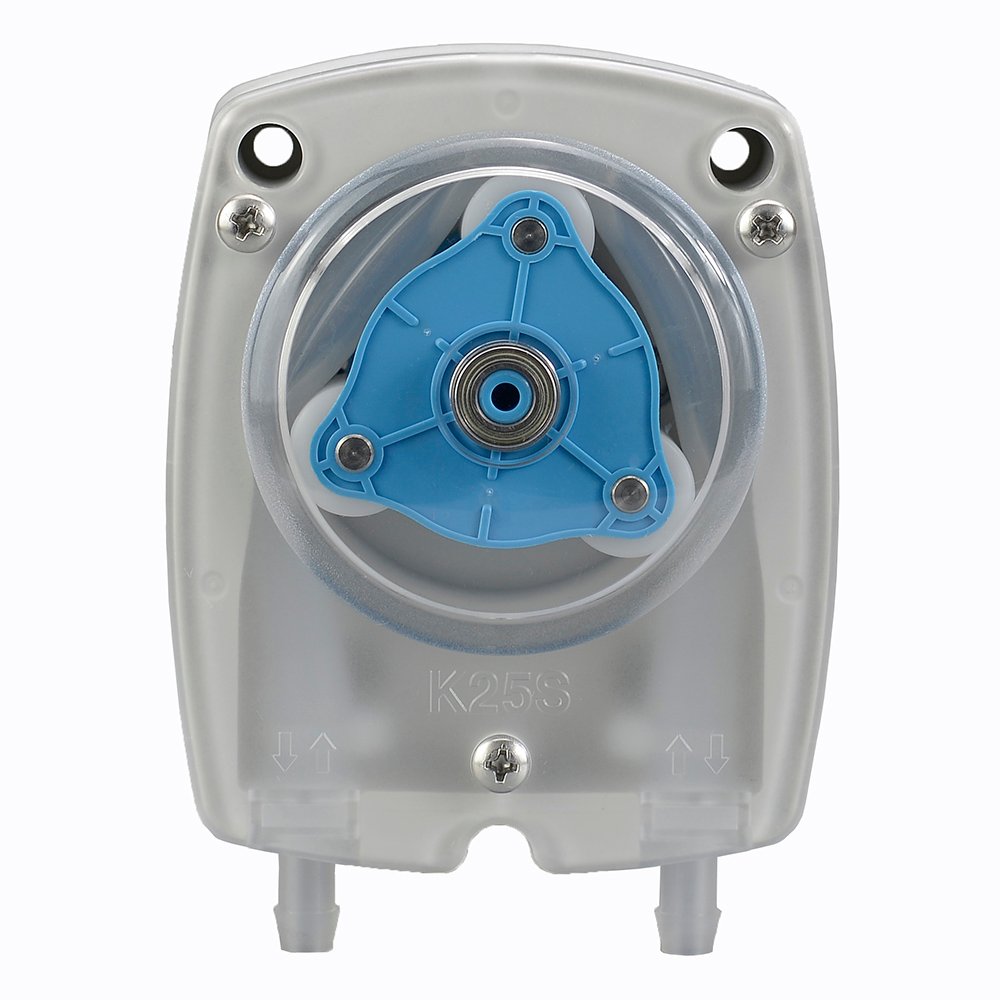
Because peristaltic pumps have varying requirements for hose hardness, chemical corrosion resistance, and resilience, the types of hoses available are relatively limited. Based on differences in transparency, corrosion resistance, and hardness, they can be categorized as follows:
1. Silicone tubing: Currently the lowest hardness hose used in peristaltic pumps, it also boasts excellent resilience and is affordable, making it a common standard choice.
2. Norprene tubing: A well-balanced peristaltic pump hose in all aspects. It has moderate hardness, good resilience, and its biggest advantage is its long service life. It also offers some corrosion resistance, allowing it to transport some commonly used, non-corrosive fluids.
3. Viton tubing: Currently the most corrosion-resistant hose available for peristaltic pumps, it can resist strong acids, alkalis, and organic solvents. For specific corrosion resistance details, please contact us. It has high hardness, so it is recommended to use peristaltic pumps with high-torque DC or AC motors. Disadvantages include high price, poor wear resistance, and shorter lifespan.
4. PTFE tubing, also known as chemical tubing, has a Teflon coating on the inside of the pump tubing to resist highly corrosive liquids while maintaining a long service life. It has good wear resistance and is generally the first choice for conveying highly corrosive liquids. The disadvantage is that there is a risk of corrosion after the inner coating wears down.
5. Pharmed BPT biological tubing can withstand repeated high-temperature and high-pressure sterilization and is widely used in the medical industry. Its service life is much longer than silicone tubing, similar to Norprene tubing, and it also has a certain degree of corrosion resistance, but its hardness is not high, and its resilience is excellent.