
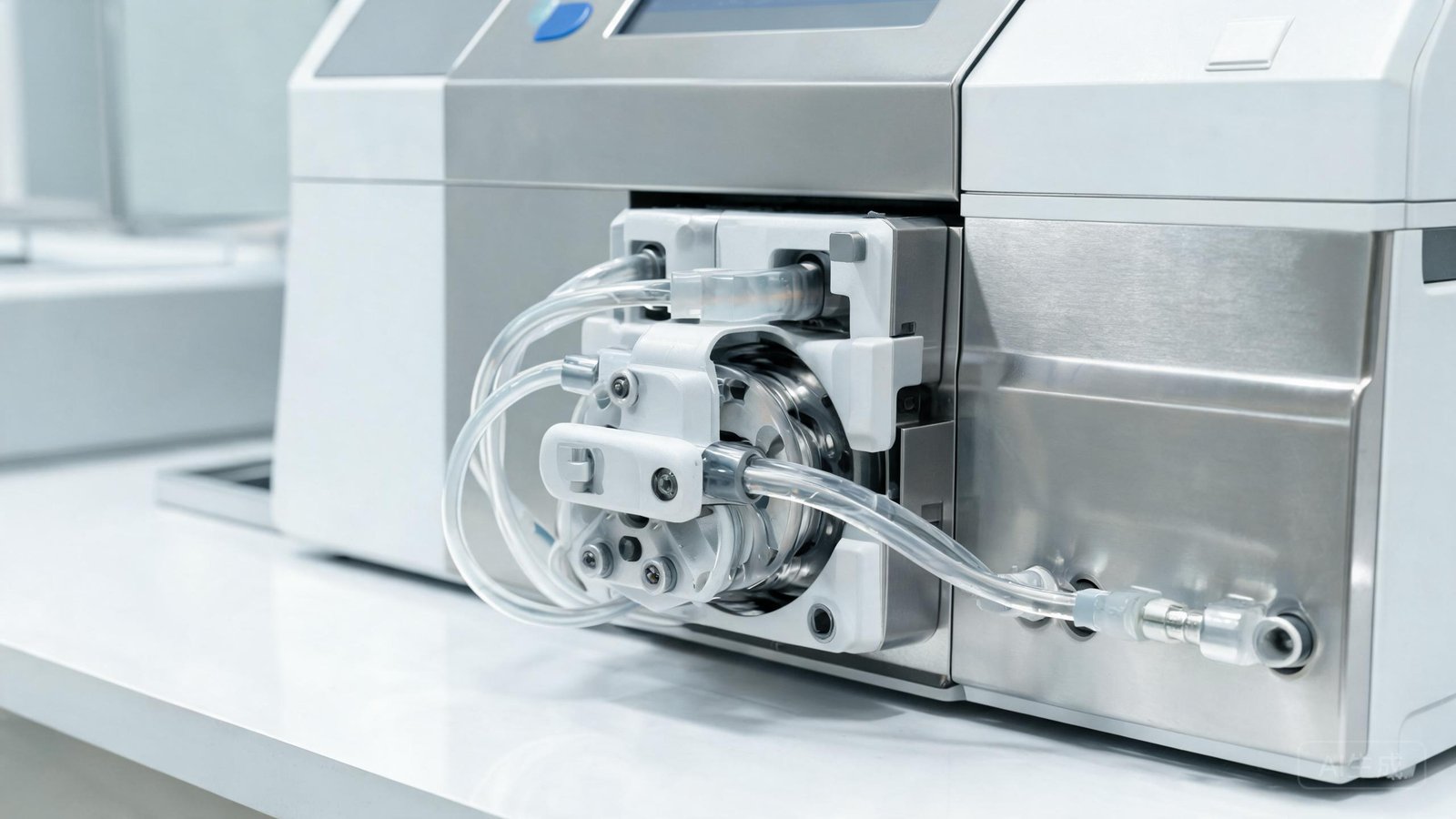
Diagnostic equipment manufacturers face a specific challenge when designing fluid handling systems: the pump must deliver reagents, samples, and wash solutions with repeatable accuracy while fitting into a compact instrument envelope. A peristaltic pump for diagnostic equipment addresses both needs because the fluid path is isolated within disposable tubing, and the pump mechanism can be scaled to match the available space. This guide covers the main factors engineers should evaluate when selecting and integrating a peristaltic pump into an analyzer or diagnostic instrument.
What the Application Requires
Diagnostic analyzers — including clinical chemistry analyzers, immunoassay systems, hematology instruments, and point-of-care testing devices — depend on precise liquid handling for sample pipetting, reagent dispensing, wash cycles, and waste removal. The pump must deliver consistent volumes across thousands of operating cycles, often with different fluid types running through the same tubing at different stages of an assay. A single immunoassay run might involve dispensing a reagent, introducing a sample, washing the flow cell, and then removing waste — all through one pump or a coordinated set of pumps.
Because the fluid only contacts the tubing interior, peristaltic pumps provide a natural isolation barrier between the pump mechanism and the diagnostic fluids. This matters in instruments where cross-contamination between samples would compromise test results. Tubing can be replaced between runs or configured as a consumable, reducing cleaning complexity and supporting the contamination control strategies required in clinical laboratory environments.
The FDA regulations for hematology and pathology devices outline classification requirements for in vitro diagnostic instruments, while FDA classification of immunology and microbiology devices covers additional diagnostic device categories. Equipment designers working under these frameworks need components that support documentation, traceability, and validated performance.
| Diagnostic Function | Fluid Handling Requirement | Pump Consideration |
|---|---|---|
| Reagent dispensing | Micro-volume accuracy, repeatable delivery | Stepper motor drive, fine speed control |
| Sample transfer | Contamination-free transfer between stages | Disposable tubing, no cross-contamination |
| Wash cycle | Continuous flow at moderate pressure | Higher flow rate pump head, durable tubing |
| Waste removal | Self-priming, reversible flow capability | Bidirectional pump control |
Key Pump Selection Factors
Selecting the right pump starts with defining the instrument’s fluid handling budget — the total volume, flow rate range, and duty cycle the pump must support. A compact K15 micro peristaltic pump with a maximum flow rate of 350 ml/min suits many analyzer applications, particularly those requiring micro-volume dispensing. For instruments that need integrated control with a display and flow correction functions, a peristaltic pump with housing provides an all-in-one solution with LCD control and multiple operating modes.
Motor type directly affects dosing precision. Stepper motors deliver precise angular rotation in discrete steps, which translates to consistent volumetric output per revolution. DC motors offer simplicity and lower cost but require external speed control for accurate dispensing. For diagnostic instruments where repeatability is critical, stepper motor pumps generally provide better performance.
Another factor is roller count. Pumps with two rollers tend to provide longer tubing life because each roller engages the tubing less frequently. Pumps with four rollers produce lower pulsation, which matters when smooth continuous flow is required for optical readings or sensitive detection. The micro peristaltic pump category at YOORAIN includes options for both configurations, allowing designers to match the roller count to their specific flow stability requirements.
| Selection Factor | What to Check | Why It Matters |
|---|---|---|
| Motor type | Stepper vs. DC brush vs. brushless | Determines dosing precision and control complexity |
| Roller count | 2-roller vs. 4-roller head | Trade-off between tubing life and pulsation |
| Flow range | Minimum and maximum required volume | Defines pump head and tubing size selection |
| Control interface | PWM, analog, RS485, or digital I/O | Affects integration with instrument controller |
| Physical size | Envelope dimensions and mounting | Determines fit within instrument chassis |
Flow and Pressure Considerations
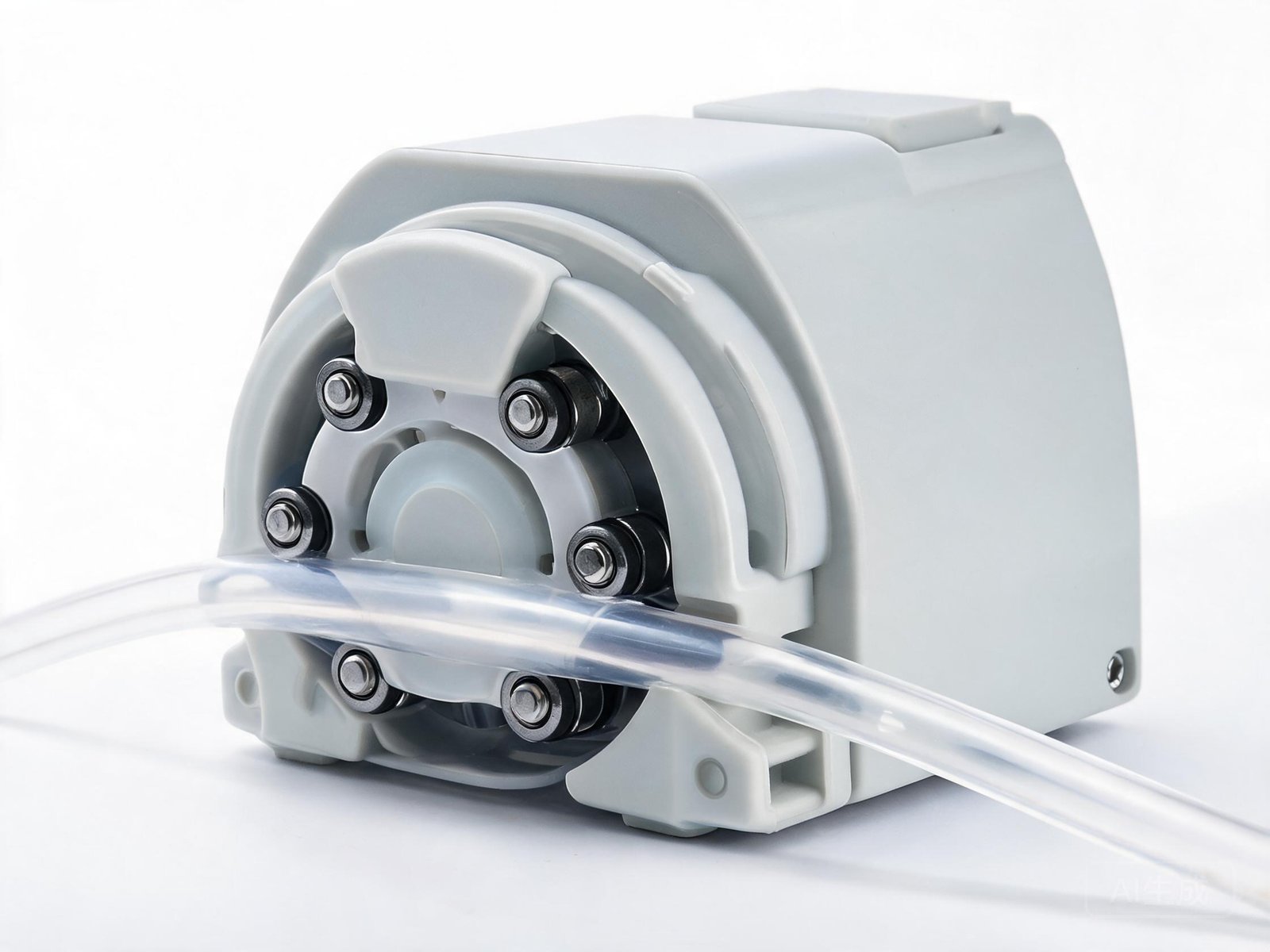
Diagnostic instruments typically operate at low pressures, but the pump must still overcome system resistance from filters, valves, and elevation differences. Peristaltic pumps generate pressure through tubing compression, so the maximum pressure depends on tubing material, wall thickness, and pump head design. Understanding the system’s pressure profile helps prevent flow rate degradation during operation.
Flow accuracy depends on several variables, including tubing condition, pump speed, fluid characteristics, and system calibration. Factors affecting peristaltic pump dispensing accuracy include tubing wear, back pressure, pump speed control, and fluid viscosity. New tubing stretches during initial use, so a break-in period of 15 to 30 minutes at operating speed is recommended before calibration.
For instruments that dispense different reagent types, the pump should support flow correction or calibration modes. This allows the system to compensate for variations in tubing elasticity and fluid properties, maintaining dosing accuracy across different assay protocols.
| Application | Typical Flow Range | Pressure Consideration |
|---|---|---|
| Reagent dispensing | 0.1–50 ml/min | Low pressure, precision-focused |
| Sample handling | 1–100 ml/min | Minimal back pressure, contamination control |
| Wash and waste | 50–500 ml/min | Moderate pressure, continuous duty |
Tubing and Fluid Compatibility
Tubing selection is inseparable from pump performance. The tubing material determines chemical compatibility with reagents, mechanical durability under repeated compression, and the flow rate achievable at a given pump speed. Silicone tubing works well for general diagnostic applications, while BPT (bioprene thermoplastic) tubing offers improved chemical resistance for aggressive reagents.
YOORAIN’s peristaltic pump tubing options include sizes compatible with 14#, 16#, 17#, and 25# tube designations. Selecting the correct tubing size ensures the pump delivers the intended flow rate without exceeding the tubing’s pressure rating or causing premature fatigue.
When the diagnostic instrument handles multiple fluid types — such as buffers, reagents, and cleaning solutions — designers should verify chemical compatibility for each fluid against the tubing material. Some reagents may require fluoropolymer tubing, which has different mechanical properties and may affect flow rate accuracy compared to silicone alternatives.
Integration Considerations
Integrating a peristaltic pump into diagnostic equipment involves mechanical, electrical, and software considerations. Mechanically, the pump must mount securely within the instrument chassis with adequate clearance for tubing replacement and maintenance. The pump head orientation affects how tubing is loaded and replaced, which matters for serviceability in clinical environments where downtime must be minimized.
Electrically, the pump motor needs a compatible driver and control interface. Some pumps come with integrated drivers that accept digital commands via RS485 or analog signals, simplifying integration with the instrument’s main controller. Others require an external driver board. For OEM projects, customizing OEM peristaltic pumps can include specific mounting brackets, cable lengths, connector types, and control protocols matched to the instrument design.
Software integration should account for calibration routines, tubing life tracking, and error handling. The instrument controller should monitor pump operation and flag conditions such as tubing wear, flow deviations, or motor stalls. Setting up a maintenance schedule based on cycle count or operating hours prevents unexpected failures during clinical use. Many diagnostic instruments log pump cycles and trigger tubing replacement alerts when a preset threshold is reached, which helps laboratories maintain consistent performance without manual tracking.
Thermal management also deserves attention during integration. Peristaltic pumps generate heat at the motor and at the roller-tubing interface. In a sealed instrument enclosure, this heat can affect temperature-sensitive reagents mounted nearby. Designers should verify that pump placement does not create hot spots near reagent storage or optical measurement components. Adequate ventilation or thermal isolation may be needed depending on the instrument’s duty cycle and operating environment.
For instruments developed under regulatory frameworks, component selection should support compliance with ISO 13485 quality management standard for medical devices. This includes maintaining documentation of pump specifications, validation test results, and supplier qualifications throughout the development and production lifecycle.
Practical Selection Checklist
Before finalizing a peristaltic pump for a diagnostic instrument, confirm the following:
- Flow range defined: Document the minimum and maximum flow rates for each assay stage, including tolerances.
- Fluid compatibility verified: Check each reagent, buffer, and cleaning solution against the selected tubing material.
- Motor type matched to precision needs: Stepper motors for high-precision dispensing; DC motors for simpler transfer tasks.
- Control interface specified: Define the communication protocol between pump and instrument controller.
- Mounting and service access planned: Ensure tubing can be replaced without disassembling major instrument components.
- Duty cycle estimated: Calculate expected operating hours and cycles per day to size the pump and plan tubing replacement intervals.
- Calibration procedure documented: Include break-in time, calibration method, and recalibration frequency in the instrument maintenance manual.
- Supplier qualification complete: Verify the pump manufacturer can provide consistent product specifications, technical support, and documentation for regulatory submissions.
If you are developing diagnostic or laboratory instruments, you can contact YOORAIN to discuss the fluid-handling requirements of your system, including flow range, tubing specifications, and integration constraints. Providing these details early helps identify a pump configuration that fits both the technical and regulatory demands of the application.