
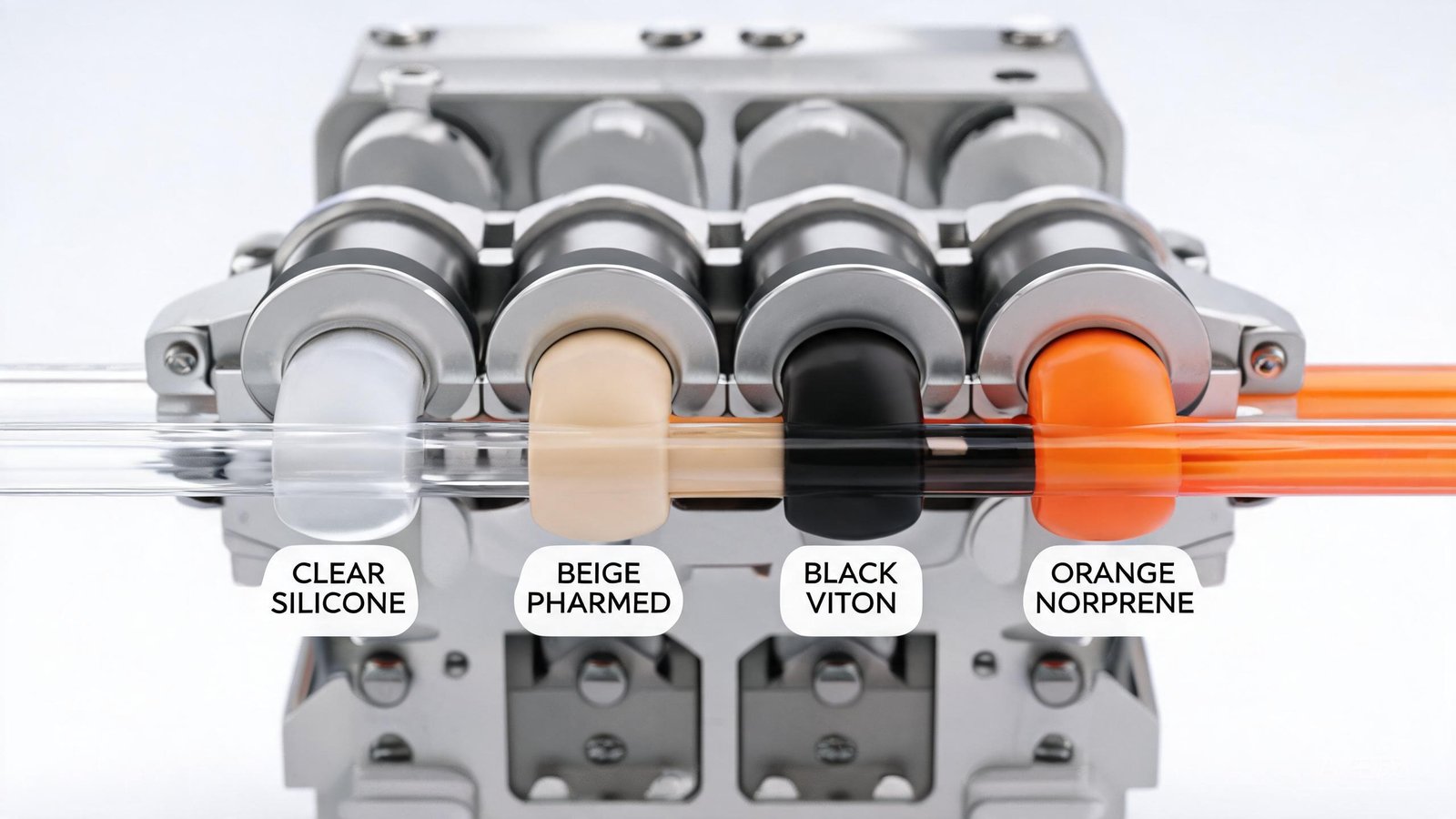
When a peristaltic pump underperforms in a chemical dosing system, the pump mechanism is rarely the root cause. The tubing inside the pump head usually is. Engineers specifying peristaltic pumps for chemical dosing applications — whether in water treatment, laboratory reagent dispensing, or industrial process control — often find that tubing material selection determines flow accuracy, chemical compatibility, maintenance intervals, and overall system reliability more than any other single factor.
In a peristaltic pump, the tubing is the only component that contacts the fluid. The rollers compress and release the tubing to generate flow, which means the tubing functions simultaneously as a valve, a seal, and the primary flow channel. Selecting the wrong material can lead to rapid tubing degradation, flow rate drift, chemical contamination, and unplanned downtime — problems that become expensive quickly in continuous-duty dosing systems.
This guide covers the main factors engineers and procurement teams should evaluate when selecting peristaltic pump tubing for chemical dosing, including material properties, chemical compatibility, regulatory compliance, and tubing life expectations.
Why Tubing Material Matters in Peristaltic Pump Systems
The operating principle of a peristaltic pump places unique mechanical and chemical demands on tubing. Unlike a centrifugal pump where the housing and impeller handle fluid contact, or a diaphragm pump where a flexible membrane isolates the fluid, a peristaltic pump relies entirely on the tubing’s elastic recovery after each compression cycle. The tubing must return to its original shape thousands of times per hour while maintaining chemical resistance to the dosed fluid.
Three performance characteristics depend directly on tubing material:
Flow consistency: Tubing that loses elasticity or develops permanent set (deformation) will deliver decreasing flow rates over time. A material with high resilience, like platinum-cured silicone, maintains flow consistency longer than materials with lower elastic recovery.
Chemical containment: The tubing wall is the only barrier between the chemical and the environment. Material degradation, swelling, or permeation can lead to leaks, chemical exposure, and contamination of the dosed fluid.
Maintenance cost: Tubing replacement frequency drives the total cost of ownership. A material that lasts 500 hours versus one that lasts 5,000 hours can mean the difference between weekly and monthly maintenance intervals, especially in multi-pump installations.
YOORAIN manufactures peristaltic pump tubing specifically designed for pump-head applications, with features including ultra-smooth inner walls, low protein adhesion, and batch-to-batch consistency. The tubing meets USP Class VI, FDA 21 CFR 177.2600, and European Pharmacopoeia standards, making it suitable for pharmaceutical, food, and biomedical applications.
Main Fluid-Handling Requirements for Chemical Dosing
Before comparing tubing materials, engineers need to define the application parameters that constrain the selection. These requirements vary significantly across industries:
Chemical identity and concentration: Sodium hypochlorite, sulfuric acid, sodium hydroxide, and polymer coagulants each interact differently with elastomeric materials. Concentration matters as much as chemical identity — 10% sulfuric acid may be compatible with a material that fails at 98% concentration. The EPA National Primary Drinking Water Regulations specify maximum contaminant levels for treatment chemicals, which influence dosing concentration ranges in water treatment.
Operating temperature: Chemical reactions, ambient conditions, and pump motor heat can raise fluid temperature. Silicone tubing handles temperatures up to 200°C, while PharMed BPT tubing is typically rated to 135°C. Selecting tubing below the operating temperature risks softening, swelling, or rupture.
Pressure requirements: Peristaltic pumps generally operate at lower pressures than diaphragm pumps — typically 2 to 8 bar depending on tubing material and wall thickness. The tubing must withstand both the working pressure and the cyclic compression from the pump head rollers.
Flow accuracy targets: Dosing applications often require accuracy of ±1% to ±5%. Tubing wall uniformity, inner diameter tolerance, and elastic consistency all affect delivered flow accuracy. Materials with poor batch consistency make calibration difficult.
Duty cycle: Continuous-duty applications (24/7 operation) demand tubing with longer service life to minimize replacement frequency. Intermittent applications may tolerate shorter-life materials if the cost savings justify the more frequent changes.
The following table summarizes the key fluid-handling parameters that drive tubing selection:
| Parameter | What to Specify | Impact on Tubing Selection |
|---|---|---|
| Chemical and concentration | Exact fluid name and percentage | Determines base material compatibility |
| Temperature range | Min/max operating temperature | Narrows material options by thermal limits |
| Working pressure | System backpressure (bar) | Affects tubing wall thickness requirement |
| Flow accuracy | Required dosing accuracy (%) | Influences tubing precision and consistency needs |
| Duty cycle | Hours per day / days per week | Drives tubing life and replacement interval |
Tubing Material Selection Considerations
Several tubing materials are commonly used in peristaltic pump applications, each with distinct properties that make it suitable for specific chemical dosing scenarios. The peristaltic hose pump series and dosing pump configurations from YOORAIN are compatible with a range of tubing materials.
Platinum-cured silicone tubing: The most common standard tubing for peristaltic pumps. It offers excellent temperature range (-60°C to 200°C), high resilience for consistent flow, and meets FDA food-grade rubber standards under 21 CFR 177.2600. Silicone works well with water-based fluids, weak acids, and weak bases. However, it has limited resistance to oils, organic solvents, and strong acids or alkalis. Typical peristaltic pump life ranges from 500 to 1,000 hours depending on pump speed and fluid characteristics.
PharMed BPT tubing: A biopharmaceutical-grade thermoplastic elastomer that offers significantly longer pump life — approximately 30 times that of standard silicone tubing. It resists acids, alkalis, oxidants, and oils, and meets USP Class VI biological safety standards, FDA, and NSF51 requirements. The opaque material also blocks UV and visible light, protecting photosensitive fluids. Temperature range is typically -51°C to 135°C.
Viton (FKM) tubing: A fluoroelastomer that provides superior resistance to oils, fuels, and many organic solvents. It handles temperatures from -20°C to 200°C and suits aggressive chemical transfer where silicone would degrade rapidly. However, Viton is not recommended for ketones, esters, or strong alkalis.
Norprene tubing: A thermoplastic elastomer designed for long service life in peristaltic pumps — up to 10,000 hours under favorable conditions. It meets FDA and NSF-51 standards and works well for food, beverage, and disinfectant transfer. Temperature range is -50°C to 135°C.
The following table provides a comparative overview of these materials:
| Tubing Material | Temp Range | Key Chemical Resistance | Typical Pump Life | Regulatory Compliance |
|---|---|---|---|---|
| Platinum-cured silicone | -60°C to 200°C | Water, weak acids/bases | 500–1,000 hours | FDA 21 CFR 177.2600, USP Class VI |
| PharMed BPT | -51°C to 135°C | Acids, alkalis, oxidants, oils | 5,000+ hours | USP Class VI, FDA, NSF51 |
| Viton (FKM) | -20°C to 200°C | Oils, solvents, fuels | 2,000–5,000 hours | Varies by grade |
| Norprene | -50°C to 135°C | Disinfectants, food fluids | Up to 10,000 hours | FDA, NSF-51, 3-A |
For industrial chemical dosing with aggressive fluids, the YD25 peristaltic hose pump can accommodate heavy-wall tubing materials designed for chemical resistance and long service life.
Common Tubing Design Problems
Even with the right material selected, several design problems frequently reduce peristaltic pump performance in chemical dosing systems:
Tubing wear and spallation: All peristaltic pump tubing sheds microscopic particles as rollers compress it repeatedly. In pharmaceutical or food applications, particulate contamination from tubing spallation is a measurable concern. Selecting tubing with low spallation characteristics — such as pharmaceutical-grade silicone or PharMed — reduces this risk. The CDC’s overview of drinking water treatment underscores the importance of material safety in fluid contact systems.
Chemical incompatibility symptoms: Swelling, softening, hardening, discoloration, and cracking all indicate that the tubing material is degrading due to chemical exposure. These changes often occur gradually, making them easy to miss until flow accuracy drifts or a leak develops. Engineers should establish baseline flow rates and monitor for gradual drift, which often signals early tubing degradation.
Incorrect tubing size: Using tubing with the wrong inner diameter or wall thickness for a given pump head causes either insufficient roller compression (leading to backflow and poor accuracy) or excessive compression (accelerating wear and shortening tubing life). Pump head specifications define the correct tubing dimensions.
Temperature-related failures: Chemical dosing applications sometimes generate heat through exothermic reactions or motor transfer. Tubing rated for 135°C may fail prematurely if the system operates near that limit continuously. A margin of at least 20°C below the tubing’s maximum temperature rating is advisable for continuous-duty applications.
For systems requiring custom integration, OEM pump customization can address tubing compatibility, mounting, and drive-speed optimization as part of the pump specification process.
Integration and Tubing Replacement Planning
Tubing replacement scheduling is a critical maintenance planning activity that directly affects system uptime and operating cost. The replacement interval depends on the interaction of four factors: tubing material, pump speed, fluid chemistry, and duty cycle.
Pump speed: Lower pump speeds extend tubing life significantly. Operating at 30 RPM versus 100 RPM can increase tubing life by 3 to 5 times for the same material. Where flow rate permits, reducing speed is the single most effective way to extend tubing life.
Chemical aggressiveness: Strong oxidants like sodium hypochlorite accelerate elastomer degradation. In water treatment applications, NSF/ANSI 60 standards for drinking water treatment chemicals govern the health effects of treatment chemicals, and tubing material selection must account for long-term chemical contact under dosing conditions.
Wall thickness: Thicker-walled tubing generally lasts longer under compression but may require a pump head designed for larger tubing profiles. The trade-off between tubing life and pump head compatibility should be evaluated during system design.
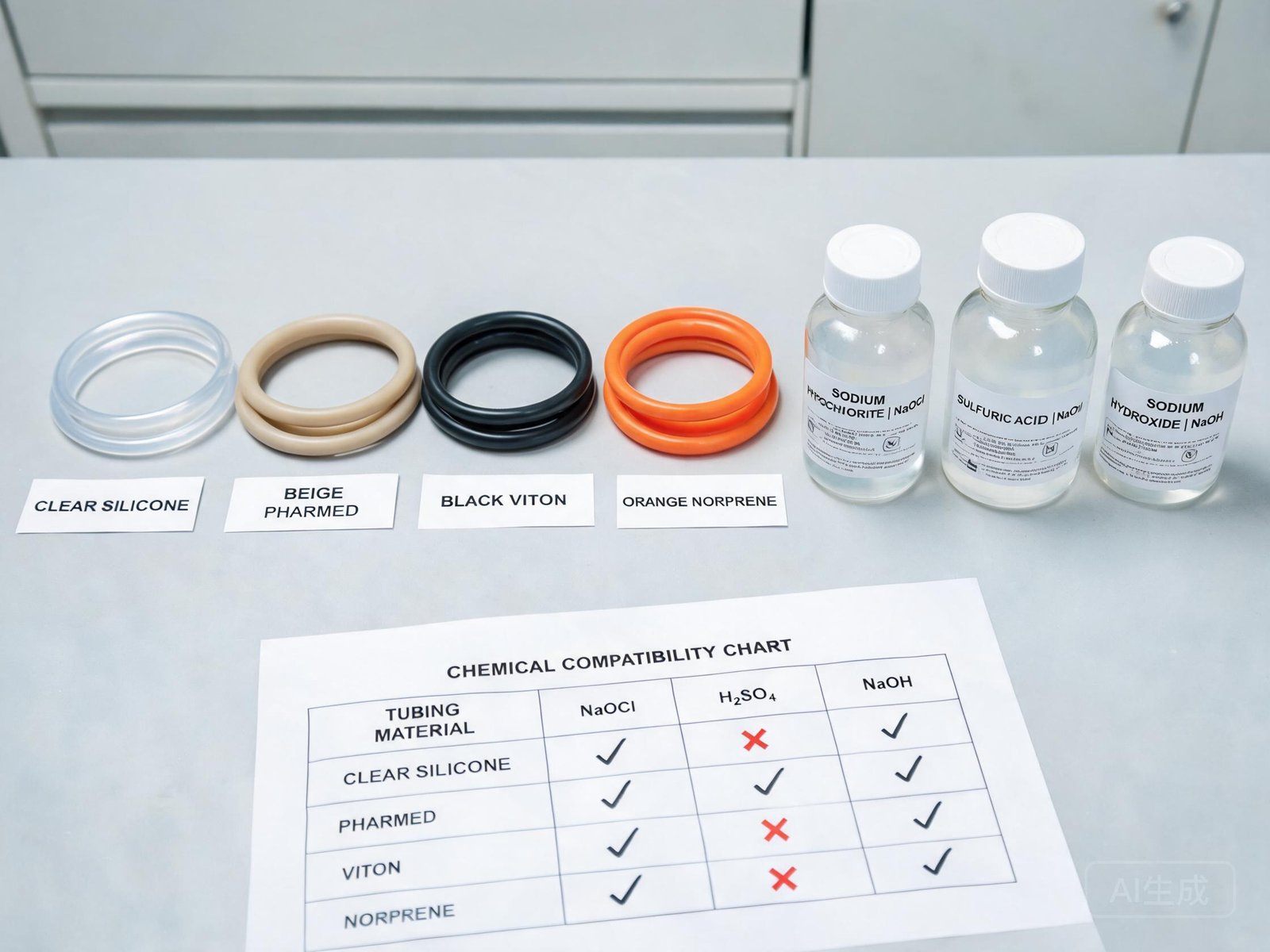
The following table provides a starting reference for chemical compatibility with common dosing fluids:
| Dosing Chemical | Recommended Tubing | Notes |
|---|---|---|
| Sodium hypochlorite (NaOCl) | Viton or PharMed | Silicone degrades rapidly with concentrated NaOCl |
| Sulfuric acid (dilute) | PharMed or Viton | Verify concentration compatibility |
| Sodium hydroxide (NaOH) | PharMed or silicone | PharMed preferred for concentrated solutions |
| Polymer coagulants | Silicone or Norprene | Low chemical aggressiveness |
| Hydrogen peroxide | PharMed | Silicone may be acceptable at low concentrations |
These recommendations are general guidelines. Engineers should verify compatibility with specific concentrations, temperatures, and duty cycles before finalizing a selection. Chemical compatibility charts from tubing manufacturers provide material-specific data that should be consulted during the design process.
Key Takeaways
1. Tubing material is the primary determinant of peristaltic pump performance in chemical dosing. It affects flow accuracy, chemical containment, maintenance frequency, and total cost of ownership.
2. No single tubing material works for all applications. Silicone is ideal for pharmaceutical and food-grade applications with mild chemicals. PharMed BPT offers extended life and broader chemical resistance. Viton handles aggressive solvents and oils. Norprene provides exceptional life for compatible fluids.
3. Regulatory compliance must be verified for the application. FDA 21 CFR 177.2600, USP Class VI, and NSF standards apply differently across food, pharmaceutical, and water treatment applications. Tubing certifications should match the end-use regulatory environment.
4. Tubing life can be extended through operational choices. Reducing pump speed, selecting thicker-walled tubing, and operating below maximum temperature ratings all contribute to longer service intervals.
5. Chemical compatibility charts are essential design tools. Always verify tubing-chemical compatibility with manufacturer data for the specific concentration and temperature of the dosing application.
For chemical dosing applications, providing your required flow range, chemical list, operating temperature, and duty cycle to a pump supplier can help identify the right tubing material and pump configuration for your system.