
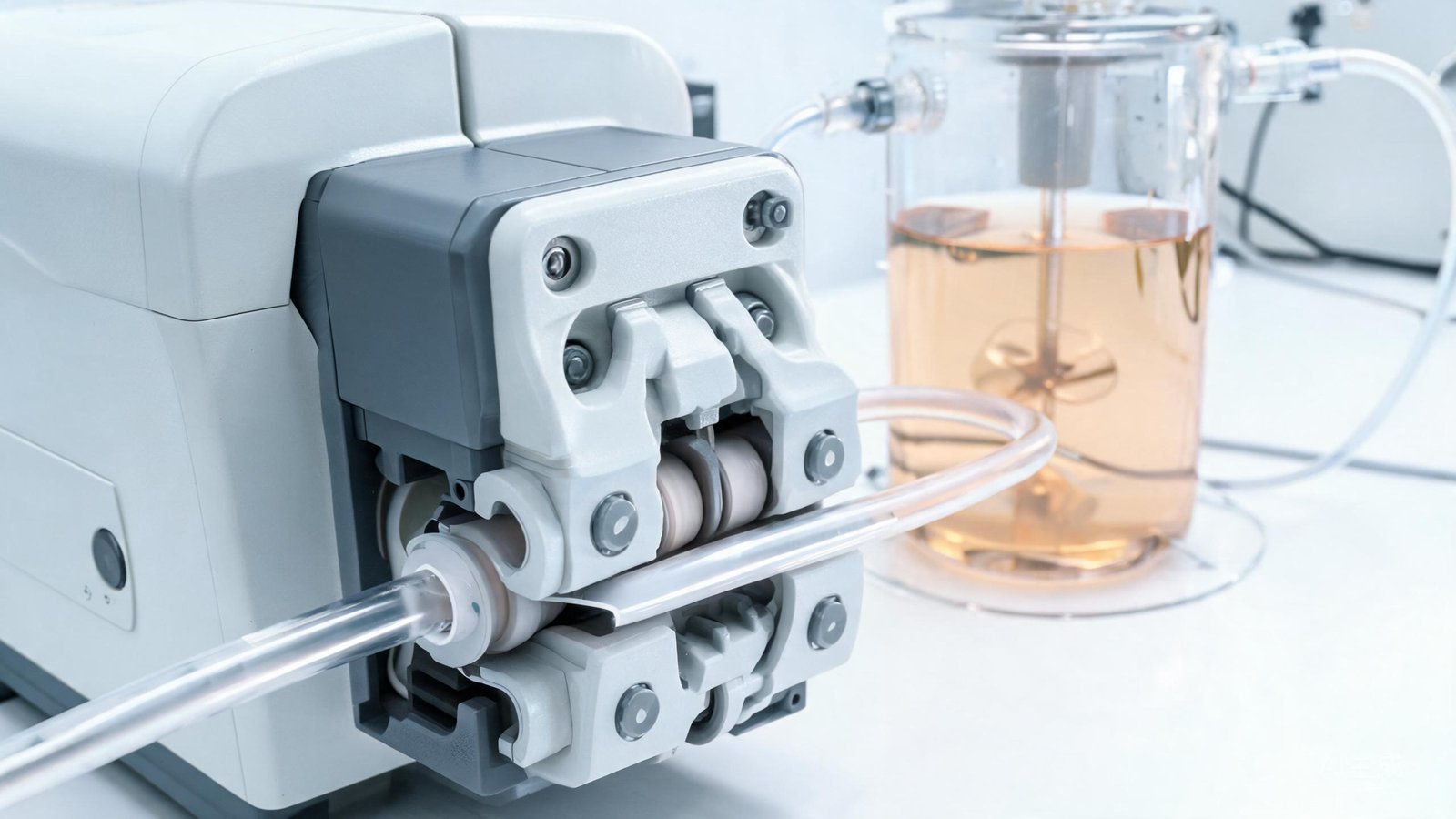
Bioreactor and cell culture processes depend on controlled, sterile fluid transfer at every stage. Media delivery, feed addition, pH titrant injection, inoculation, sampling, and harvest all require a pump that can move biological fluids without introducing contamination, damaging cells through excessive shear, or losing dosing accuracy over a long run. Peristaltic pumps are widely used in these applications because the fluid contacts only the interior of a tube, eliminating seals and valves that could harbor bacteria or leach extractables into the culture.
This article covers where peristaltic pumps fit in bioreactor and cell culture systems, the fluid-handling requirements that drive selection, common design problems encountered during integration, and the tubing compliance standards that bioprocess engineers should confirm before specifying a pump for a biopharmaceutical or research application. For background on why peristaltic pumps are preferred in biopharmaceutical contexts generally, YOORAIN’s existing article on peristaltic pumps in the biopharmaceutical industry provides additional context.
Why Peristaltic Pumps Fit the Application
The defining advantage of a peristaltic pump in bioprocessing is isolation. The culture media, feed solution, or buffer moves through a flexible tube that is compressed by rollers. No pump shaft, seal, or valve touches the fluid. In a bioreactor environment where sterility is non-negotiable, this means the pump can be located outside the sterile boundary while the tube passes through it, and the tube itself can be supplied pre-sterilized as part of a single-use assembly.
Peristaltic pumps also deliver low-shear fluid transfer, which matters because mammalian and insect cells are sensitive to mechanical stress. Pump designs that use aggressive impeller or gear mechanisms can damage cell membranes and reduce viability. A peristaltic pump’s gentle, progressive compression produces far less shear, helping preserve cell viability during media transfer and inoculation. Research on peristaltic pump perfusion in microfluidic cell culture has demonstrated continuous operation over extended periods while maintaining cell health, as documented in a study published in Micromachines.
The pump is reversible and self-priming, which simplifies line clearing and product recovery. When a batch is finished, the operator can reverse the pump to drain the tube set, reducing residual volume and waste. These characteristics make peristaltic pumps a natural fit for upstream cell culture, midstream separation, and downstream fill operations.
Main Fluid-Handling Requirements
Bioreactor and cell culture applications involve several distinct fluid-handling tasks, each with different requirements. The table below summarizes the main duties and the pump characteristics that matter most for each.
| Bioreactor Task | Typical Flow Range | Key Requirement |
|---|---|---|
| Media transfer to bioreactor | Low to medium | Sterile path, low shear |
| Fed-batch feed addition | Very low, precise | Accurate dosing, repeatable |
| pH titrant injection | Very low, intermittent | Precise metering, chemical resistance |
| Inoculation transfer | Low | Gentle handling, sterile |
| Sampling and harvest | Low to medium | Reversible, drainable |
Fed-batch feeding is one of the most demanding tasks. The pump must deliver small volumes at a controlled rate over many hours, and the dosing accuracy directly affects the metabolic state of the culture. A pump that drifts in output, or one whose tubing wears unevenly over the run, can compromise the process. This makes pump speed control, tubing selection, and calibration frequency critical decisions.
Pump Selection Considerations
Selecting a peristaltic pump for bioreactor duty starts with defining the flow range and the required dosing precision. For benchtop and pilot-scale bioreactors, compact pump drives with small peristaltic pump heads are common. For OEM integration into analytical instruments or diagnostic equipment, a micro peristaltic pump with a small footprint may be the right choice. Enclosed designs like a peristaltic pump with housing provide mechanical protection and a cleaner external surface for installation in a bioprocessing suite.
| Selection Factor | What to Define | Impact on Bioreactor Performance |
|---|---|---|
| Flow range | Minimum and maximum required rates | Determines pump head and tube bore |
| Dosing accuracy | Acceptable deviation per dose | Drives motor type and control method |
| Tube compatibility | USP Class VI, ISO 10993 compliance | Ensures no leachables enter culture |
| Sterilization method | Gamma, autoclave, or single-use | Affects tube material and assembly design |
| Duty cycle | Continuous or intermittent | Influences tube life and maintenance schedule |
Motor type is a related decision. Stepper motors provide precise, programmable flow for dosing tasks, while variable-speed DC drives are simpler and adequate for continuous transfer. The motor must be matched to the pump head and tube bore so that the system can deliver the required flow without over-compressing the tube or generating excess heat.
Tubing Compliance and Material Standards
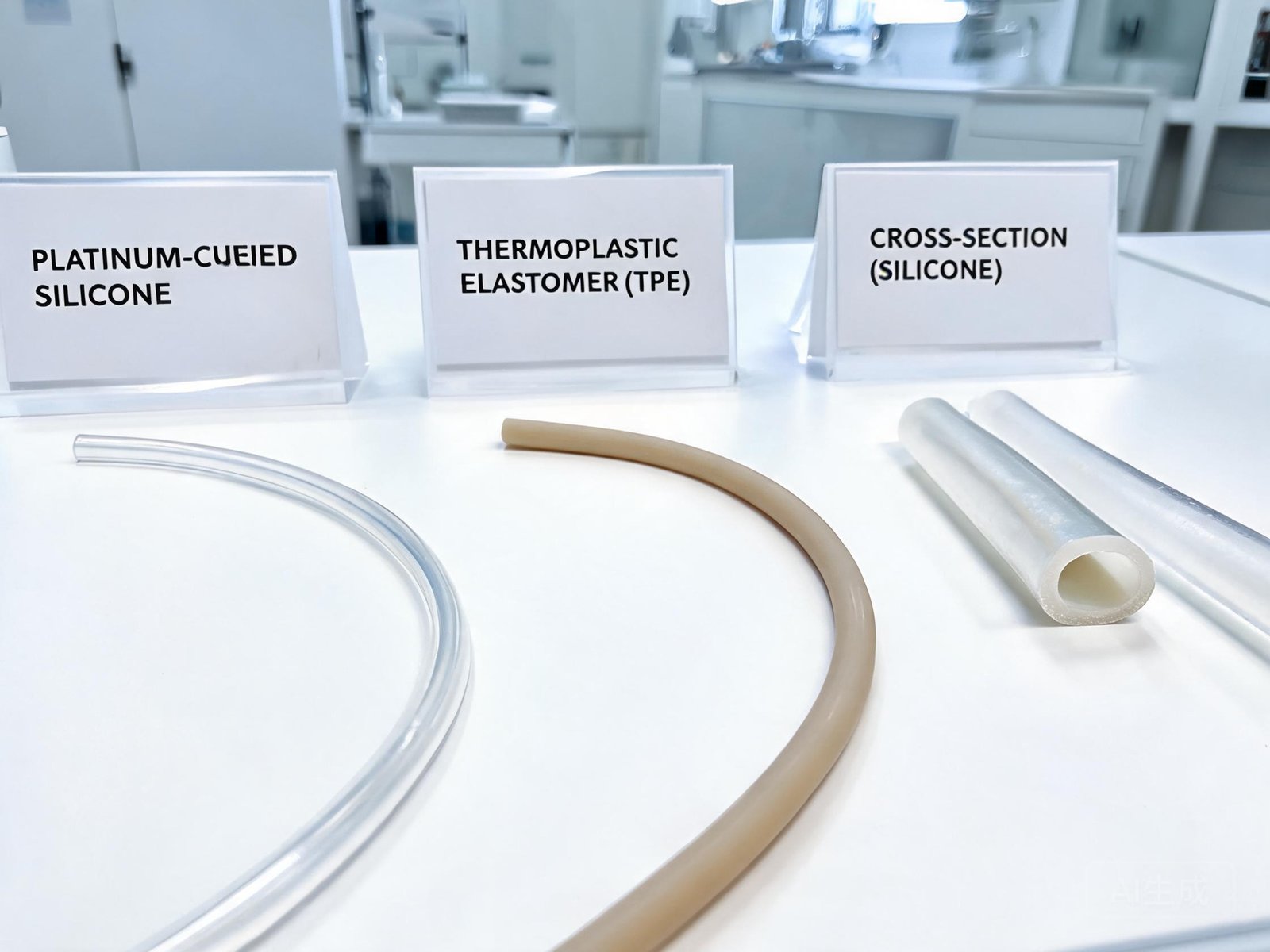
Tubing is the single most important component in a bioreactor peristaltic pump system because it is the only material in contact with the culture. Bioprocess tubing must meet biocompatibility standards to ensure that extractables and leachables do not affect cell growth or product quality. Platinum-cured silicone tubing is the baseline for many cell culture applications, while thermoplastic elastomers such as PharMed BPT offer longer flex life and broader chemical resistance for feed and buffer lines.
The relevant compliance benchmarks include USP Class VI testing for biological reactivity, ISO 10993-1 for biological evaluation within a risk management process, and FDA 21 CFR 177.2600 for rubber articles intended for repeated use. The specific tubing grade should be confirmed against the intended application, including the fluid chemistry, temperature, and contact duration. A tube that performs well in cold media transfer may not be suitable for hot buffer or aggressive cleaning chemistry.
For OEM equipment designers, the tube set is often supplied as a pre-assembled, gamma-irradiated single-use component. This requires the pump head geometry to accept a specific tube wall thickness and outer diameter consistently. YOORAIN offers peristaltic pump tubing in various materials, and verifying the exact dimensions and compliance documentation with the supplier is part of a responsible specification process.
Common Design Problems
Several issues recur when peristaltic pumps are integrated into bioreactor systems. Understanding them before the design is frozen saves rework and validation time later.
Tube wear and flow drift. As tubing is repeatedly compressed, it loses elasticity and the internal bore may narrow. This causes output to drift downward over time. For long fed-batch runs, the pump should be calibrated at the start and checked periodically, and the tube should be replaced on a schedule based on operating hours, not on failure.
Pressure limitations. Peristaltic pumps are not suited to high back-pressure systems. If the bioreactor operates under higher pressure or the downstream filter creates significant resistance, the pump may slip or the tube may distort. Confirm the maximum discharge pressure before selecting the pump.
Pulsation. Peristaltic output is inherently pulsed. In cell culture perfusion, pulsation can cause shear spikes and uneven flow. Multi-roller heads and dampeners reduce this, but the effect should be evaluated against the cell line’s sensitivity.
Temperature effects. Bioreactor suites and incubators operate at 37°C or higher. Tube elasticity changes with temperature, and a pump calibrated at room temperature may deliver a different flow rate inside an incubator. The pump should be characterized under operating temperature conditions.
Integration Into Equipment
For OEM equipment manufacturers building bioreactors, analyzers, or automated cell culture platforms, the peristaltic pump must integrate cleanly into the system architecture. Mechanical mounting, motor drive electronics, tube loading and unloading, and sterilization compatibility all need consideration. The pump head should be accessible for tube changes without requiring tools, and the drive should accept a standard control interface, whether analog, stepper, or digital.
In single-use bioreactor systems, the pump head is often a permanent component while the tube set is disposable. This means the head geometry must accommodate the specified tube dimensions precisely, and the tube loading procedure must be repeatable to ensure consistent occlusion and flow. Where the pump is inside a controlled environment, the external surfaces should be compatible with wipe-down disinfection.
The regulatory landscape also matters. In the United States, the FDA classifies cell and tissue culture supplies and equipment under 21 CFR 864.2240 as Class I devices, subject to general controls. While the pump itself is a component rather than a regulated device, it must be specified and documented in a way that supports the overall system compliance, particularly when the end equipment is used in GMP-regarded processes.
Common Questions
What tubing material is appropriate for cell culture media transfer?
Platinum-cured silicone is the most common choice for cell culture media transfer because it is biocompatible, flexible, and available in USP Class VI compliant grades. For feed lines carrying more aggressive chemistry or requiring longer service life, thermoplastic elastomers such as PharMed BPT are often specified. The exact grade should be confirmed with the supplier based on the fluid, temperature, and contact duration.
How often should tubing be replaced in a fed-batch process?
Replacement frequency depends on the pump speed, tube material, duty cycle, and pressure. A common approach is to replace tubing at the start of each batch for critical applications, or on a schedule based on validated operating hours for less critical duties. The key is to replace tubing before it fails, not after.
Can a peristaltic pump maintain accurate dosing over a long run?
Yes, but only with proper calibration and tubing management. Peristaltic pumps can drift as tubing wears. For long fed-batch runs, the pump should be calibrated before the run and the flow verified periodically. Stepper-motor-driven pumps with programmable speed control generally provide better repeatability than simple fixed-speed drives.
If you are developing bioreactor or cell culture equipment and need to specify a peristaltic pump, YOORAIN can discuss the flow range, tubing requirements, and drive options that match your system. Providing the target application, flow rates, and tubing specifications will help identify a suitable configuration from the available pump and tubing range.