
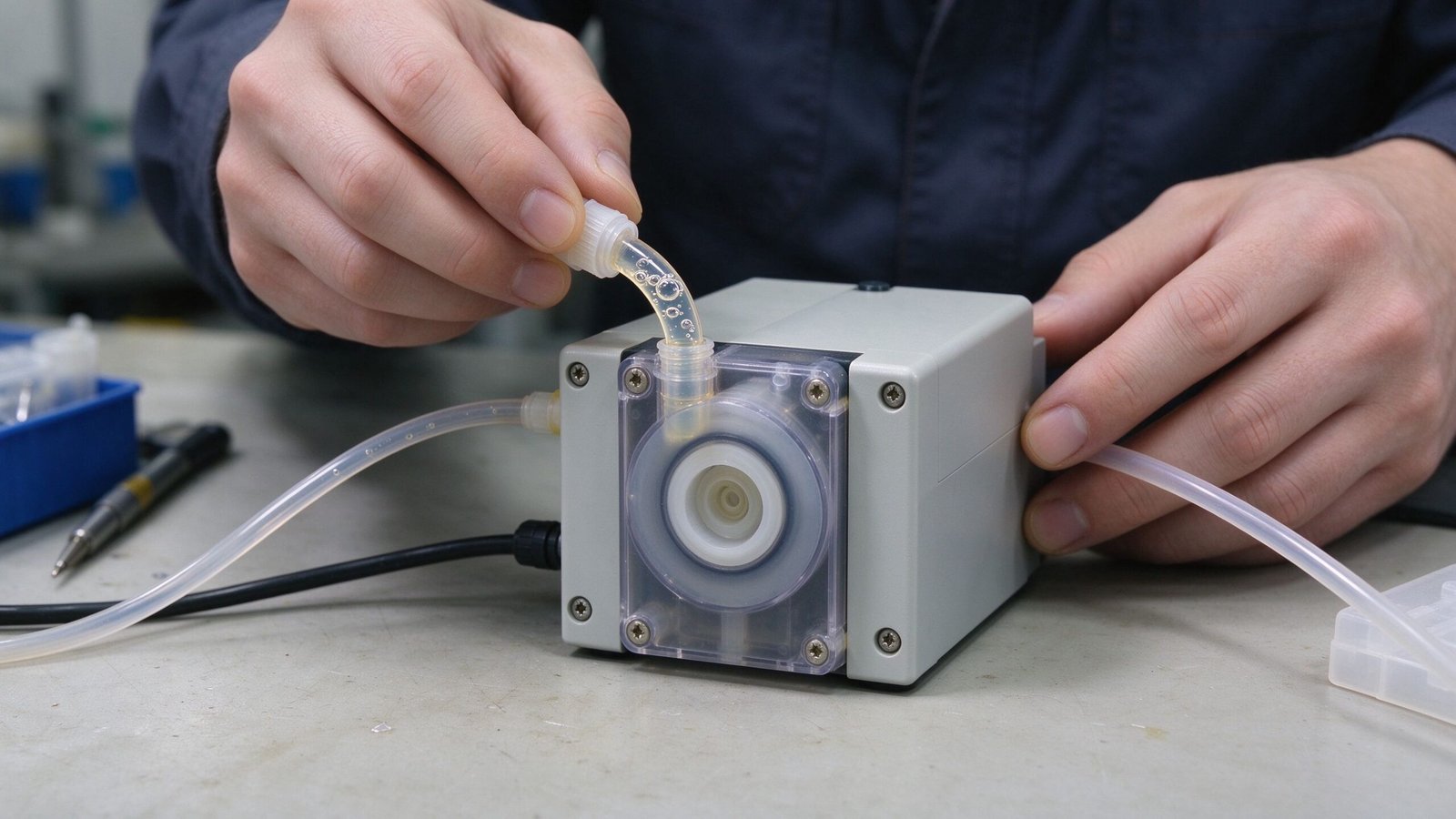
A peristaltic pump that turns but does not move fluid is the most common field complaint, and it almost always comes down to priming or air. The motor runs, the rollers turn, but nothing reaches the discharge. This troubleshooting guide walks through the likely causes in order of how often they occur, from a loose fitting to a worn tube, and how to confirm each one before replacing parts.
First: Confirm It Is Actually an Air or Prime Problem
Before opening the head, establish what the pump is doing. Is the intake dry, is the tube full of air, or is fluid moving but weak? A pump that delivers nothing has lost its prime. A pump that sputters and pulses air with fluid has an air leak on the suction side. A pump that delivers slowly but steadily may be under-compressed or starved on the intake. Each points to a different fix.
The fastest test is to lower the intake into a known full reservoir and watch. If the pump then draws fluid, the problem was a suction-side restriction or leak. If it still refuses, the head itself is not sealing. A small micro peristaltic pump is especially sensitive here because its tube volume is small, so a tiny air gap breaks prime more easily than on a larger head.
| Symptom | Likely cause | First check |
|---|---|---|
| Turns, no flow at all | Lost prime, air in tube | Fill intake, re-prime |
| Sputters air + fluid | Air leak on suction side | Fittings and hose barbs |
| Weak, low steady flow | Under-compressed or worn tube | Occlusion and tube condition |
| Works then stops after a pause | Leak-back through worn seal | Tube at pinch point |
The Most Common Cause: Air on the Suction Side
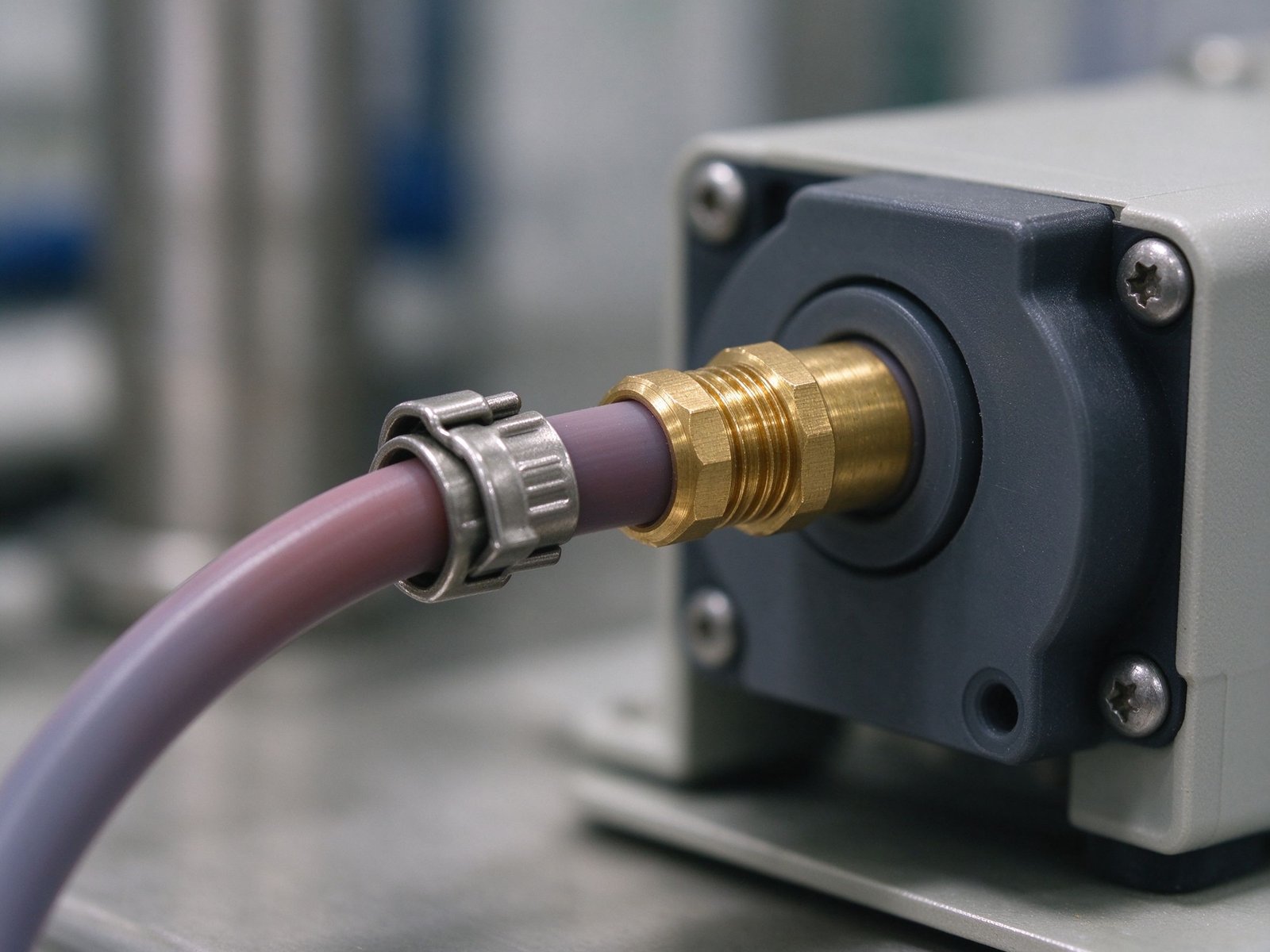
Peristaltic pumps build suction by sealing the tube at the roller. Any air leak on the intake side breaks that seal, and because the pump draws fluid by suction, even a tiny leak lets air in while keeping fluid out. The usual culprits are a loose hose barb, a cracked intake fitting, tubing that is too soft and collapses under suction, or a filter that has been allowed to run dry.
Check every point the intake touches: the reservoir pick-up, the barb, the clamps, and the tube itself. A tube that is hard or cracked near the barb admits air. The fix is to seat the tubing fully on the barb, use a proper clamp, and confirm the pick-up stays submerged. For viscous or high-suction duties, a reinforced intake line avoids the collapse that thin tubing causes. The matched peristaltic pump tube should be run on the suction side, not a generic substitute that may flex and draw air.
Worn or Fatigued Tube
The tube is the only wetted moving part, and it wears. As the tube fatigues at the pinch point it no longer seals fully, and the pump loses its ability to hold suction. A worn tube may still push fluid when it is primed, but it cannot re-prime on its own, and it slowly loses flow over weeks. The tell is a tube that looks flattened or cracked where the roller presses it, or a smell and surface tack from material fatigue.
This is a consumable, not a pump failure. Replace the tube on schedule and the priming behavior returns. Because a fatigued tube can also develop a pinhole that leaks onto the drive, inspecting the tube at each prime failure prevents a spill. The duty cycle and occlusion determine how fast this happens; a correctly occluded head on the right tube, as on the small peristaltic pump, reaches a predictable service interval.
Under-Compression and Wrong Tube Size
If a fresh, intact tube still will not prime, the head may not be closing it. Under-compression means the roller does not fully pinch the tube, so air slips past. This is common after a tube change to a different wall thickness, because the same head setting no longer flattens the new tube. The check is the bench flow and suction test: a head that cannot lift water from a short flooded intake is under-compressed.
Using the wrong diameter tube makes this worse. A tube that is too thin for the head never reaches the bed, and a tube that is too thick jams the roller. The head is sized for a tube range, and running outside it guarantees sealing trouble. When in doubt, fit the tube the head was designed for and re-test prime rather than adjusting by feel.
Too Long or Too High a Suction Lift
Peristaltic pumps can lift fluid, but they are not limitless. A long, narrow intake line or a high lift from a deep reservoir reduces the suction the pump can hold, and the result is slow priming or a pump that pulls gas instead of liquid. The fix is to shorten and widen the intake, keep the reservoir close to the pump, and reduce the lift where possible. A flooded suction — mounting the reservoir above the pump — removes the problem entirely and is the reliable answer for difficult fluids.
Viscous fluids make the suction limit tighter. Thick fluid moves slowly through the intake, and the pump can out-run the fill rate, pulling air. Slowing the pump and widening the intake lets the fluid keep up. This kind of suction and intake sizing is the same reasoning behind a driver set for a controlled, repeatable speed rather than a fast open-loop run.
| Step | Action |
|---|---|
| 1 | Confirm the symptom: no flow, sputter, or weak flow |
| 2 | Lower intake into a full reservoir and re-prime |
| 3 | Check suction-side fittings, barbs, and clamps for air leaks |
| 4 | Inspect the tube at the pinch point for fatigue or pinholes |
| 5 | Verify the tube matches the head and the occlusion seals |
| 6 | Shorten/widen the intake and reduce suction lift |
When It Is the Motor or Drive, Not the Fluid Path
Rarely, the pump turns slowly or stalls rather than refusing to prime. That points to the drive: low supply voltage, a long undersized wire, a signal that is not reaching the controller, or an over-current protection trip. Measure the voltage at the motor terminals under load, following the point-of-use measurement approach described by NIST’s Physical Measurement Laboratory, and confirm the controller is actually commanding speed. A pump that barely creeps cannot build the suction needed to prime, and the fix is electrical, not a new tube.
A Quick Re-Prime Procedure
When the pump has lost prime and the cause is not obvious, a clean re-prime settles most cases. Fill the intake tube with the fluid, submerge the pick-up, run the pump briefly, and if needed tip the head or briefly reverse direction to work fluid through the tube. On a large-flow peristaltic pump with a long intake, filling the line by hand saves minutes of the pump trying to pull air. Once fluid reaches the head, the seal takes over and the pump holds its own prime. If it will not hold after a deliberate re-prime, the tube or occlusion is the cause, and the checks above apply.
This same diagnosis order matters for warranty and support: before calling the supplier, confirm the symptom, the intake condition, the tube age, and the voltage at the motor. Those four answers narrow the fault to a consumable, a fitting, or a drive issue fast, and they are exactly what a supplier will ask for. The controlled-speed approach in the motor-driver operating manual also helps, because a slow, steady priming run is gentler on the seal than a fast open-loop start that spits air.
If you keep losing prime on a peristaltic pump application, contact YOORAIN with the fluid, the intake length and lift, and the tube and head you are using. We can confirm whether the issue is suction sizing, tube selection, or occlusion, and recommend a head and tube combination that primes reliably on your fluid before you commit to production.