
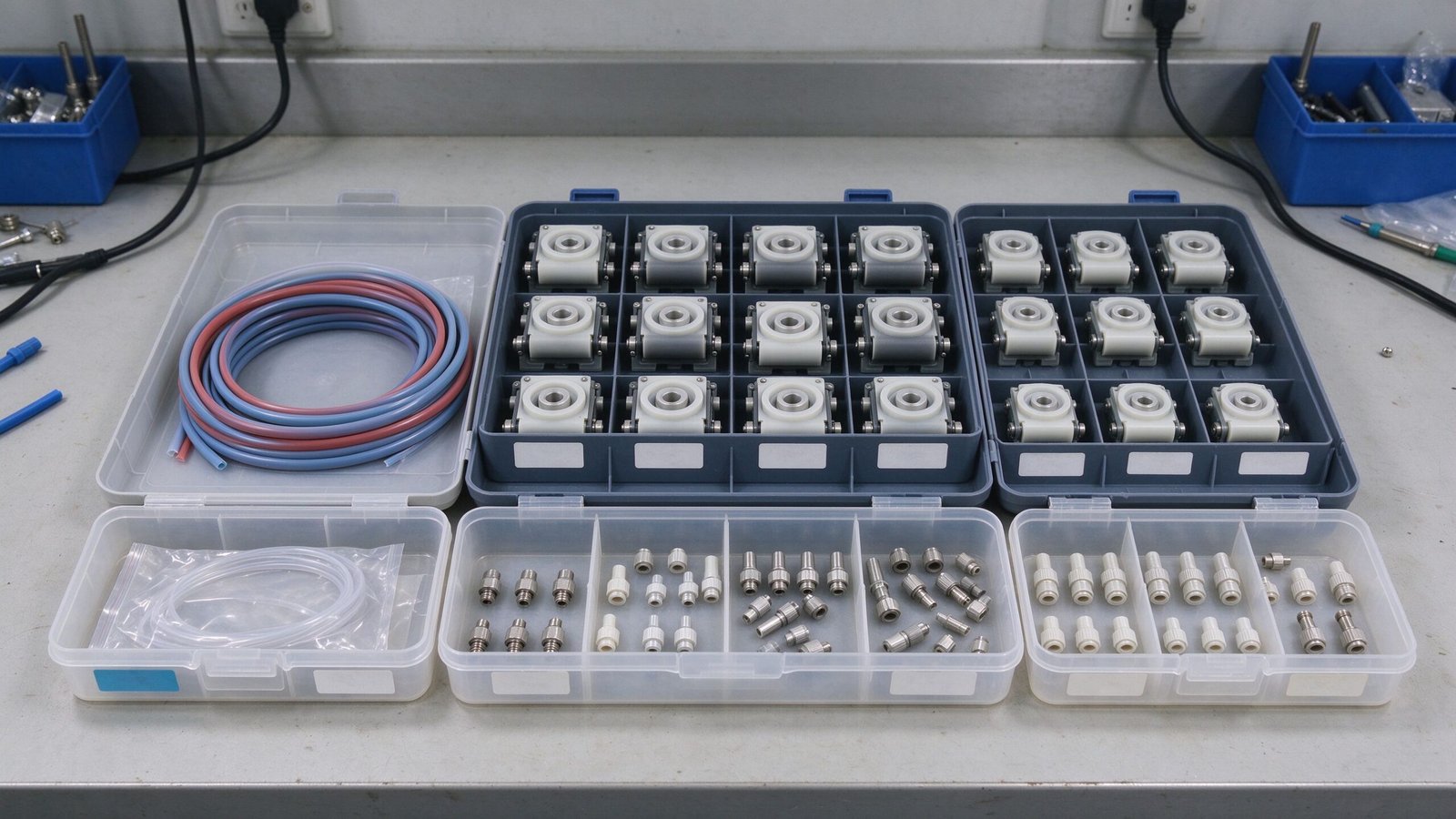
A peristaltic pump is a low-maintenance device, but it is not a no-maintenance device. The tube wears out, the rollers wear, and the fittings get old. The difference between a pump that is back online in ten minutes and one that waits two weeks for a spare part is what the plant keeps on the shelf. This buyer guide lists the spares that every process plant running peristaltic pumps should stock, in what quantities, and why each one matters.
The One Wear Part That Always Runs Out: The Tube
The tube is the only wetted part, and it is the part that fails first. Every compression flexes it, every chemical attacks it slowly, and every temperature cycle ages it. A plant that runs a pump for a process cannot afford to wait for a tube shipment when the current one hardens or splits. Stock at least one spare tube per pump head on site, and two if the chemistry is aggressive or the pump is on a critical duty. Keep them in the original packaging, away from heat and sunlight, because elastomers age on the shelf too.
The tube must match the head, the bore, and the chemistry. A peristaltic pump tube that is the wrong bore changes the delivered volume, and a tube in the wrong material swells or hardens in the fluid. Label each spare with the head model, the bore, the material, and the chemical it is approved for, so the maintenance technician grabs the right one in a hurry. A micro peristaltic pump on a small bore uses a different spare than a large-flow peristaltic pump, and mixing them up means the wrong tube on the head.
| Spare | Why you stock it | Minimum on shelf |
|---|---|---|
| Tube, correct bore and material | Primary wear part, fails on interval | 1 per head (2 for critical duty) |
| Roller set | Wears, scores the tube if damaged | 1 set per head size |
| Hose barbs / compression fittings | Crack, strip, leak after repeated swaps | 1 pair per head |
| Occlusion spring / screw parts | Lost or dropped during maintenance | 1 set per head type |
| Driver fuse or signal cable | Electrical failure stops the pump | 1 fuse, 1 cable |
Rollers and the Bed: The Next Wear Parts
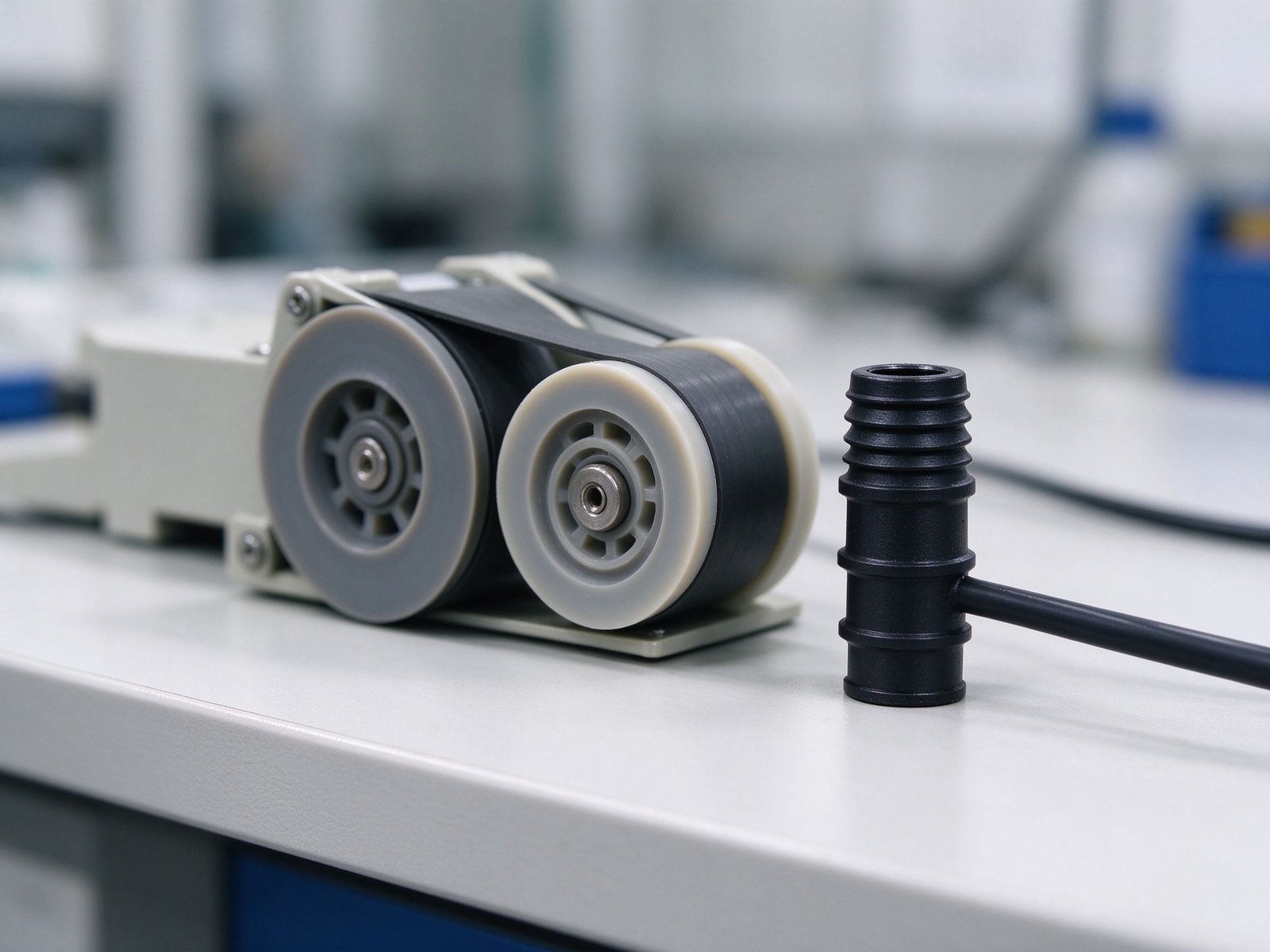
The rollers pinch the tube against the bed, and over time they pick up scratches, lose their smooth surface, or develop flat spots. A scored roller does not seal the tube cleanly, and it wears a new tube quickly. Stock a roller set for each head size in the plant, not one universal set. A roller set is cheap compared with the downtime it prevents, and swapping it is a few minutes of work once the cover is off.
The bed itself rarely fails, but inspect it when the cover is open. A bed that is grooved or scored needs attention, because no new tube will seal against a damaged bed. This is also the time to wipe grit out of the head; particles trapped under the rollers are the silent tube killers on slurry or dirty chemical duty. The maintenance and inspection practice, consistent with the motor-driver operating manual, is to open the head at every tube change and look at the rollers and bed.
Fittings and Tubing End Connections
The hose barbs and compression fittings that hold the tube on the pump head are small parts, and they fail at the worst time. A cracked barb leaks chemical, a stripped thread sprays, and a barb that will not tighten admits air on the suction side. Stock a pair of barbs or compression fittings for each head size, in the correct bore, so the technician does not have to rig a makeshift connection on a Saturday night.
On a plant with several heads, the bore sizes differ. A mini peristaltic pump, a small peristaltic pump, and a dosing pump on a larger head all take different fittings. Label the spare bag with the head model and the bore. A fitting that almost fits but does not seal is worse than no fitting at all, because it leaks quietly and the dose drifts without anyone noticing.
| Failure on site | Spare that fixes it now |
|---|---|
| Tube hardens or splits | Spare tube, correct material |
| Tube wears fast on new install | Inspect rollers, swap roller set |
| Leak at the head connection | Spare barb or compression fitting |
| Air in the line, uneven shots | Tight or replace suction fitting |
| Pump will not start, fuse blown | Spare fuse in the driver |
Electrical Spares for the Driver
The pump head is mechanical, but the driver stops the whole skid when it fails. Stock the simple electrical spares that a technician can swap without an electrician: the fuse, the power connector, and the signal cable if the driver takes a control signal. A peristaltic pump driver with a blown fuse is a five-minute fix with a spare on the shelf; it is a two-week wait if the plant has no spare. For a 24V skid, the fuse and the DC connector are the two parts that stop the pump most often.
For remote skids on 12V, a spare DC power plug and a spare fuse are the difference between a Monday-morning fix and a Monday-morning panic. The NIST measurement practice point applies here too: after swapping any electrical or mechanical part, re-verify the delivered volume by weighing a minute of discharge, because a new tube or a new fitting changes the dose.
How to Organize the Spares Cabinet
A spares cabinet only helps if it is organized. Put one labeled bag or box per pump head, with the head model written on the outside. Inside: one tube, one roller set, one pair of barbs, and a note of the correct occlusion setting. Keep the cabinet near the pumps, not in a distant warehouse. Track the spares like inventory: when a spare tube is pulled, reorder one so the shelf never drops below the minimum. A plant that runs on a just-in-time parts model for a low-cost wear part is paying more in downtime than the parts ever cost.
| Head model | Spare bag contents | Reorder when used |
|---|---|---|
| K15 / micro | Tube, roller set, small barbs | Yes, restock immediately |
| K25 / small | Tube, roller set, barbs | Yes |
| C300 / dosing | Tube, roller set, fittings, fuse | Yes |
| K45 / large | Tube, roller set, large fittings | Yes, two tubes for critical duty |
What Not to Stock
You do not need to stock a whole spare pump for every head unless the duty is truly critical. A complete spare pump sits on a shelf and ages. You do not need to stock a different driver for every model; the simple fuses and connectors cover the common electrical failures. And you do not need to stock tubes in every material imaginable — stock the materials that actually serve the fluids on site, labeled clearly. Over-stocking the wrong parts is just as bad as under-stocking, because the technician wastes time finding the right bag.
Tracking Spares by Head, Not by Pump Brand
A plant often runs pumps from several suppliers on similar heads. The spares that matter are the head model, the tube bore, and the roller size, not the color of the motor. Organize the cabinet by head size and fluid chemistry, so a tube for a 4 mm bore acid duty is not confused with a tube for an 8 mm bore water duty. The U.S. National Science Foundation’s engineering guidance on maintenance practices supports the same principle: keep the spares tied to the actual wear part and the actual service, not to a marketing label. Review the cabinet once a year, throw away tubes that have sat past their shelf life, and reorder based on what was actually pulled in the last twelve months. A spare that is never used is fine; a spare that has hardened on the shelf is worse than none, because it will fail on the first shift.
If you are building a spares list for a bank of peristaltic pumps, send YOORAIN the list of head models on site and the fluids they handle. We can put together a recommended spare-parts kit — tubes, roller sets, barbs, and driver fuses — matched to your actual heads, so the cabinet opens with the right part already labeled.