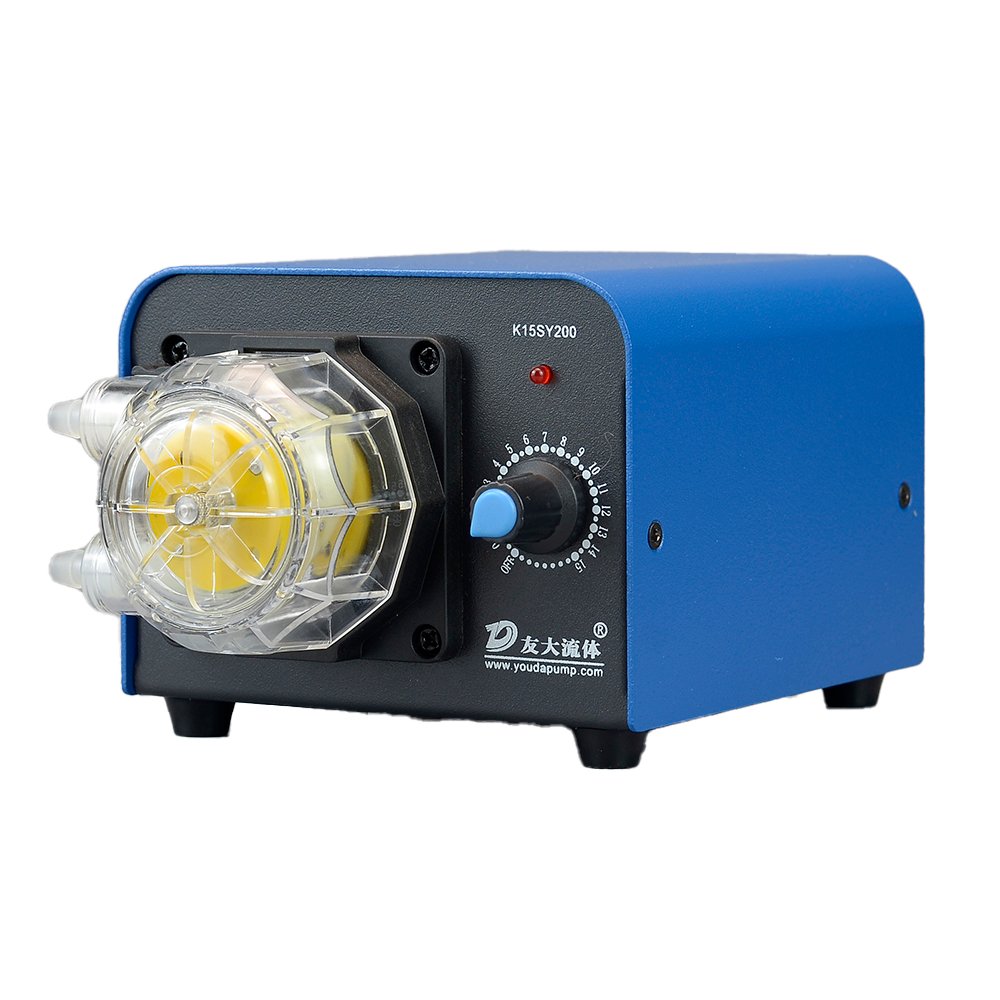
Many factors influence the flow rate of a peristaltic pump, primarily the following:
- Tubing Material: Better tubing resilience results in higher efficiency in delivering liquid media; harder tubing leads to greater difficulty and lower efficiency in delivery. Silicone tubing offers the best resilience, followed by Pharmed BPT tubing, then Norprene tubing, with chemically coated tubing exhibiting the highest hardness. When choosing a high-hardness tubing, it is recommended to use a DC motor and avoid stepper motors.
- Liquid Media Characteristics: Liquid media characteristics include corrosiveness, viscosity, and particle content. Here, we only discuss viscosity. High-viscosity liquids are more difficult to deliver. When selecting a peristaltic pump, use tubing with lower hardness whenever possible. Also, when choosing the reference flow rate, select a pump with a flow rate 20%-30% higher.
- Peristaltic Pump Speed: Generally, higher peristaltic pump speed results in a larger flow rate and higher delivery efficiency. However, due to the resilience of the hose, it will experience fatigue at a certain rotational speed. This causes the flow rate to reach its maximum after a certain rotational speed. Further increasing the speed will increase the flow rate, but the rate of increase will gradually decrease and eventually stop increasing.
- The Positional Relationship Between the Peristaltic Pump Inlet/Outlet and the Liquid Under normal circumstances, the elevation difference between the peristaltic pump inlet/outlet and the liquid level has a relatively small impact on the flow rate. However, as the height difference increases, the impact becomes more significant. When the liquid is above the inlet, gravity accelerates its descent, resulting in a flow rate higher than the reference flow rate. Conversely, when the liquid is below the inlet, gravity results in a lower flow rate than the reference flow rate.