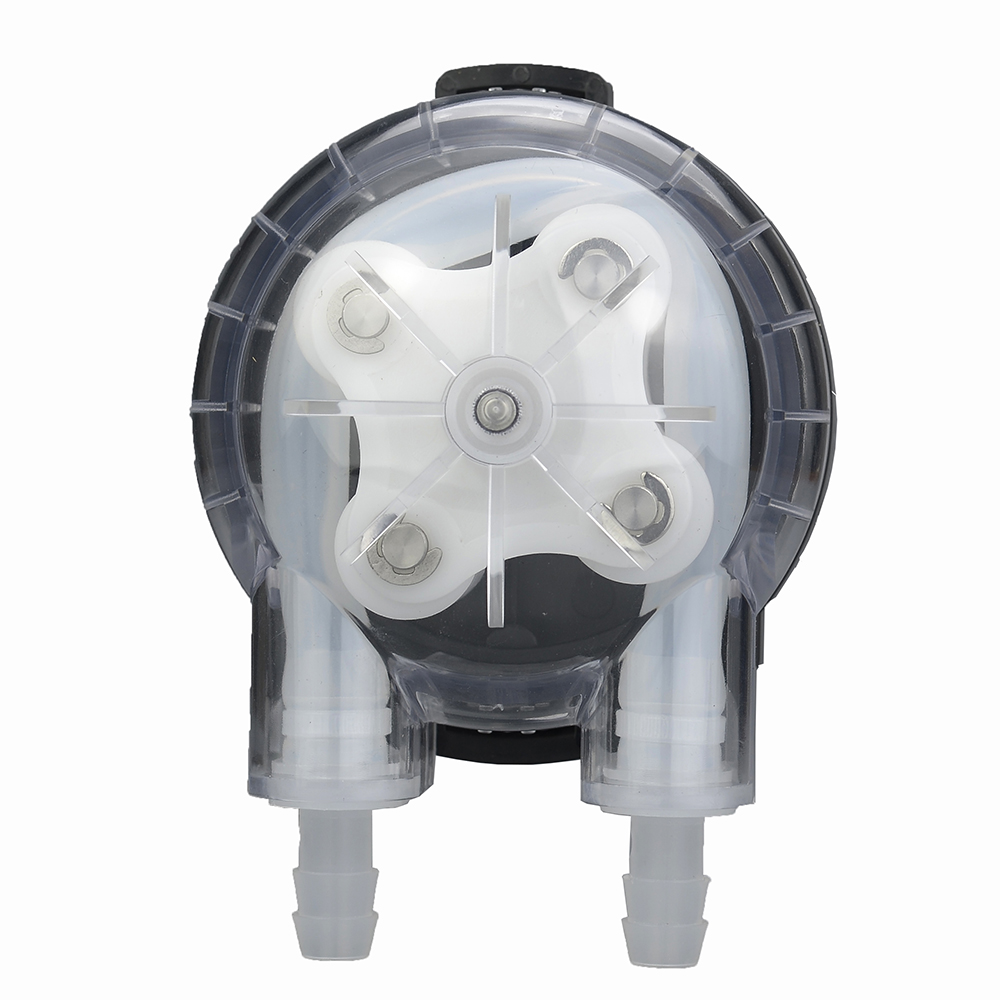
Generally, peristaltic pumps are controlled by their rotation speed and running time. However, there are many ways to control these speeds and times. Here are some of the more commonly used methods:
1. Start and Stop Control: This involves controlling the power supply to start and stop. It can also be seen as keeping the rotation speed constant while controlling the pump’s running time. The total volume delivered by the pump accumulates over varying durations.
2. Rotation Speed Control: This controls the pump’s speed to achieve different delivery volumes. Higher speeds result in higher delivery volumes.
3. Analog Signal Control: This uses current and voltage levels as signals to control the pump’s operation. There are 4-20mA current signals and 0-5V voltage signals. Analog signals control the operating speed, and combined with start/stop control, the pump can be fully controlled.
4. Pulse Control: This controls the rotation speed and start/stop time by adjusting the frequency, achieving precise control of the peristaltic pump.
5. By using several control methods together, the peristaltic pump can be precisely controlled, and it can also achieve complex operating modes, such as filling and timed operation.