
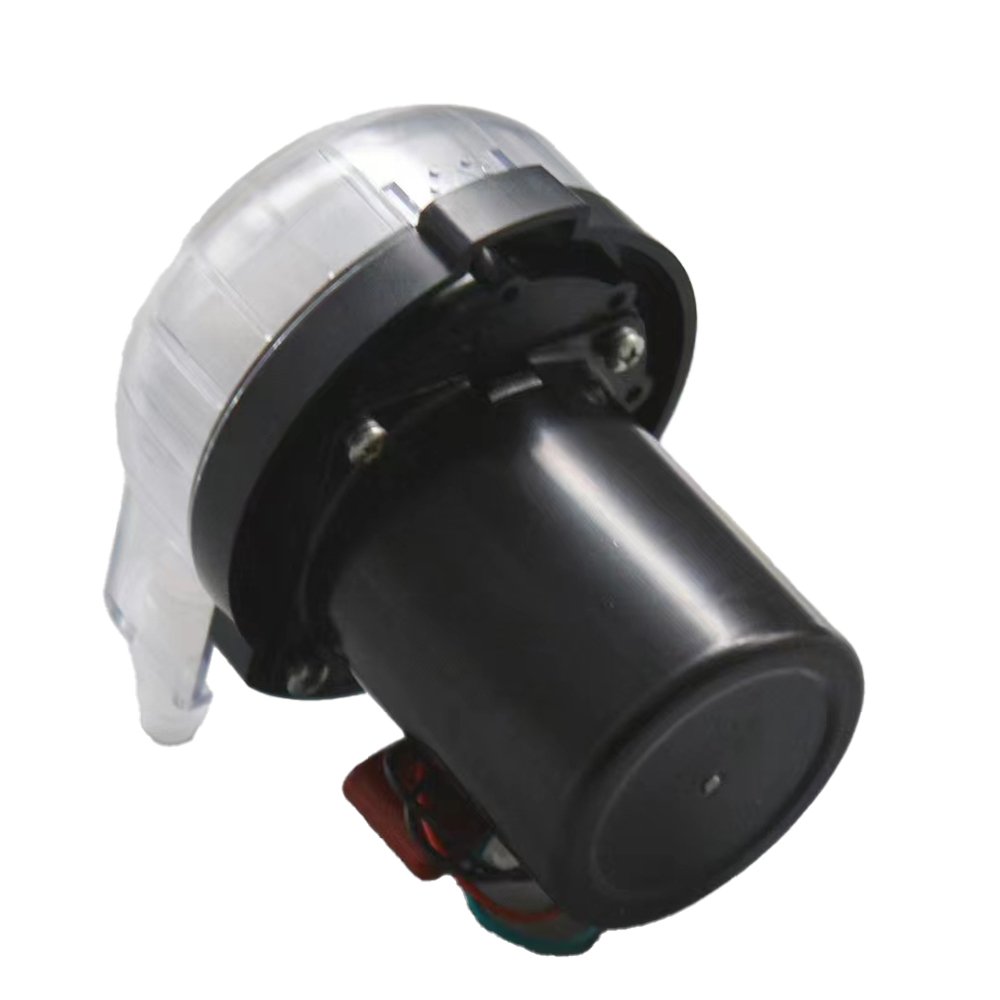
Common peristaltic pump motors include DC motors, stepper motors, and AC motors, specifically:
- DC Motors: Also known as DC geared motors, these come in standard DC geared motors and planetary geared motors. These motors have relatively high torque and are commonly used in peristaltic pumps as the primary choice for conveying viscous liquids. The disadvantage is relatively high noise. Planetary geared motors are quite quiet, but their lifespan is shorter, generally used intermittently, and prolonged operation is not recommended. Control is relatively simple, requiring only power-on and power-off control. They are commonly used for fixed-speed operation, and in special cases, speed can be adjusted using PWM pulse width control.
- Stepper Motors: Stepper motors allow for precise control of the peristaltic pump’s operation, including starting, stopping, speed, and running time. They have a long lifespan and are almost never damaged (waterproofing is an issue to consider in special cases), but they are expensive, especially since they require a circuit board, costing almost twice as much as the other types of motors. Costs can be reduced by using centralized circuitry or central control.
- AC Motors: These can be divided into two types: ordinary geared AC motors and asynchronous geared AC motors (synchronous motors). Ordinary geared AC motors have higher speeds and larger torques, making them suitable for driving peristaltic pumps with stainless steel rollers. They can operate at speeds above 300 rpm for extended periods and are commonly used in peristaltic pump systems. Their speed can be controlled via a dedicated speed controller. Synchronous motors have lower speeds, generally below 100 rpm, with minimum speeds as low as 5 rpm or 10 rpm. They have lower torques, and the lower the speed, the greater the relative torque. Overall, their torque is much lower than that of DC motors. Their advantages include stability, a fixed speed, and a longer lifespan (although prolonged operation is not recommended).