
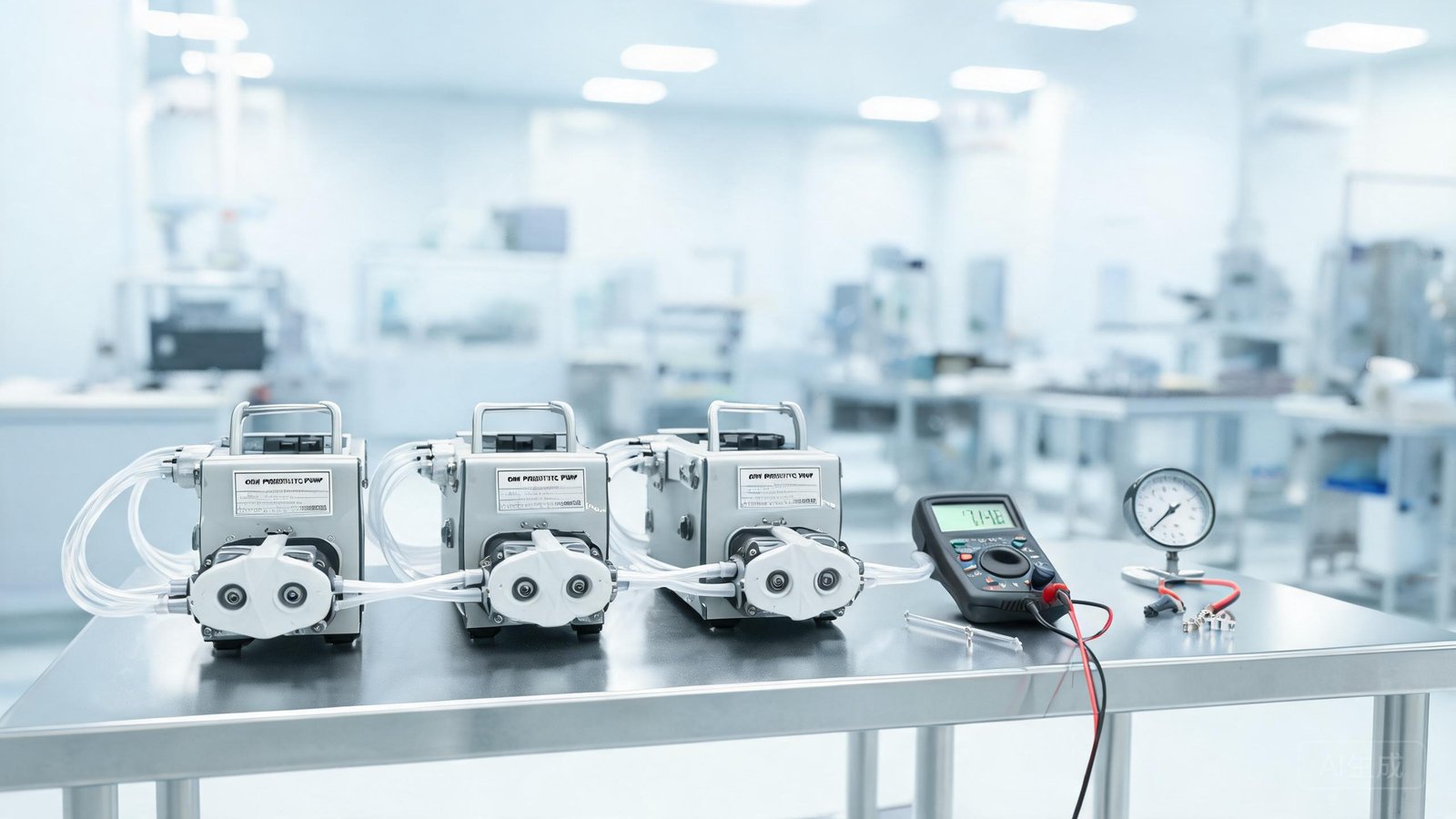
Procurement teams responsible for sourcing OEM peristaltic pumps face a specific challenge: the pump is not a standalone product but a component that must integrate into a larger system. Unlike buying an off-the-shelf laboratory pump, OEM sourcing involves defining technical requirements, evaluating supplier manufacturing capability, testing samples under real conditions, and ensuring production consistency across batches. This guide covers what procurement teams should define, evaluate, and confirm before placing an OEM peristaltic pump order.
What Procurement Teams Should Define
Before contacting suppliers, the procurement team needs a documented set of requirements. Vague specifications lead to mismatched recommendations, delayed sampling, and inconsistent production. At minimum, define the following items:
Flow rate range: State the minimum and maximum flow the application requires, not just a single target value. A pump sized for 50 mL/min may perform differently at 10 mL/min due to motor control resolution and tubing hysteresis.
System pressure: Identify the back pressure the pump will operate against, including line resistance, filter pressure drop, and elevation head. Peristaltic pumps have pressure limits determined by tubing wall strength and roller closure force.
Tubing requirements: Specify the fluid being transferred, chemical compatibility needs, and whether the tubing must meet specific standards such as USP Class VI or FDA 21 CFR 177.2600. Tubing directly affects flow accuracy, chemical resistance, and service life.
Power and control interface: Define the available voltage (12V DC, 24V DC, 110V AC, 220V AC), control method (analog 4-20 mA, digital PWM, RS485, or simple start/stop), and any communication protocol the host equipment requires.
Mechanical constraints: Provide the available mounting envelope, weight limits, and orientation requirements. For space-restricted applications, a compact OEM peristaltic pump may be necessary to fit within the equipment chassis.
Duty cycle: State whether the pump runs continuously or intermittently, and estimate the total operating hours per day. This affects motor selection, heat dissipation, and expected tubing replacement intervals.
| Technical Requirement | What to Specify | Why It Matters |
|---|---|---|
| Flow rate | Min/max range, not just target | Motor control accuracy varies across the range |
| System pressure | Back pressure including line losses | Tubing and roller design must handle it |
| Tubing | Material, size, regulatory compliance | Determines chemical compatibility and life |
| Control interface | Voltage, signal type, protocol | Must match host equipment electronics |
| Duty cycle | Hours/day, continuous or intermittent | Affects motor and tubing wear |
| Mounting | Dimensions, orientation, weight | Physical integration into equipment |
Technical Requirements
After defining the application requirements, convert them into a technical specification document that can be sent to potential suppliers. This document should be detailed enough that a supplier can recommend a specific pump configuration without guessing.
Include the fluid properties: viscosity range, temperature range, specific gravity, and whether the fluid contains particulates or is shear-sensitive. Peristaltic pumps handle viscous fluids well, but higher viscosity requires more torque and lower speed to maintain consistent flow. Particulate-laden fluids may require thicker-walled tubing or larger bore sizes to prevent clogging and reduce wear.
State the required dosing accuracy. Industrial peristaltic pumps typically achieve ±1% to ±3% repeatability depending on motor type, tubing condition, and operating point. If the application requires tighter accuracy, specify it explicitly and ask the supplier how their pump achieves it. A peristaltic pump driver with a stepper motor or brushless DC motor generally provides better speed control than a basic brushed DC motor, because the controller can maintain consistent rotational speed under varying load conditions.
For UK and EU buyers, electrical safety compliance is mandatory. The CE marking framework requires that pumps meet applicable EU directives, including the Machinery Directive and Low Voltage Directive. Pumps sold in the EU must comply with DIN EN 809, which establishes common safety requirements for liquid pumps, including construction, assembly, operation, and servicing. These standards address mechanical safety, electrical safety, and electromagnetic compatibility.
| Specification Element | Typical Range | Procurement Note |
|---|---|---|
| Flow rate | 0.1 mL/min to 15 L/min | Match to application, avoid oversizing |
| Pressure | Up to 2-4 bar (tube); up to 15 bar (hose) | Verify with supplier, not assumed |
| Tubing life | 200-1000 hours (application-dependent) | Request test data, not estimates |
| Speed range | 1-600 RPM typical | Wider range gives more flexibility |
| Accuracy | ±1-3% of setpoint | Depends on motor type and tubing |
| Power | 12V DC, 24V DC, 110-240V AC | Match to equipment power supply |
Supplier Evaluation
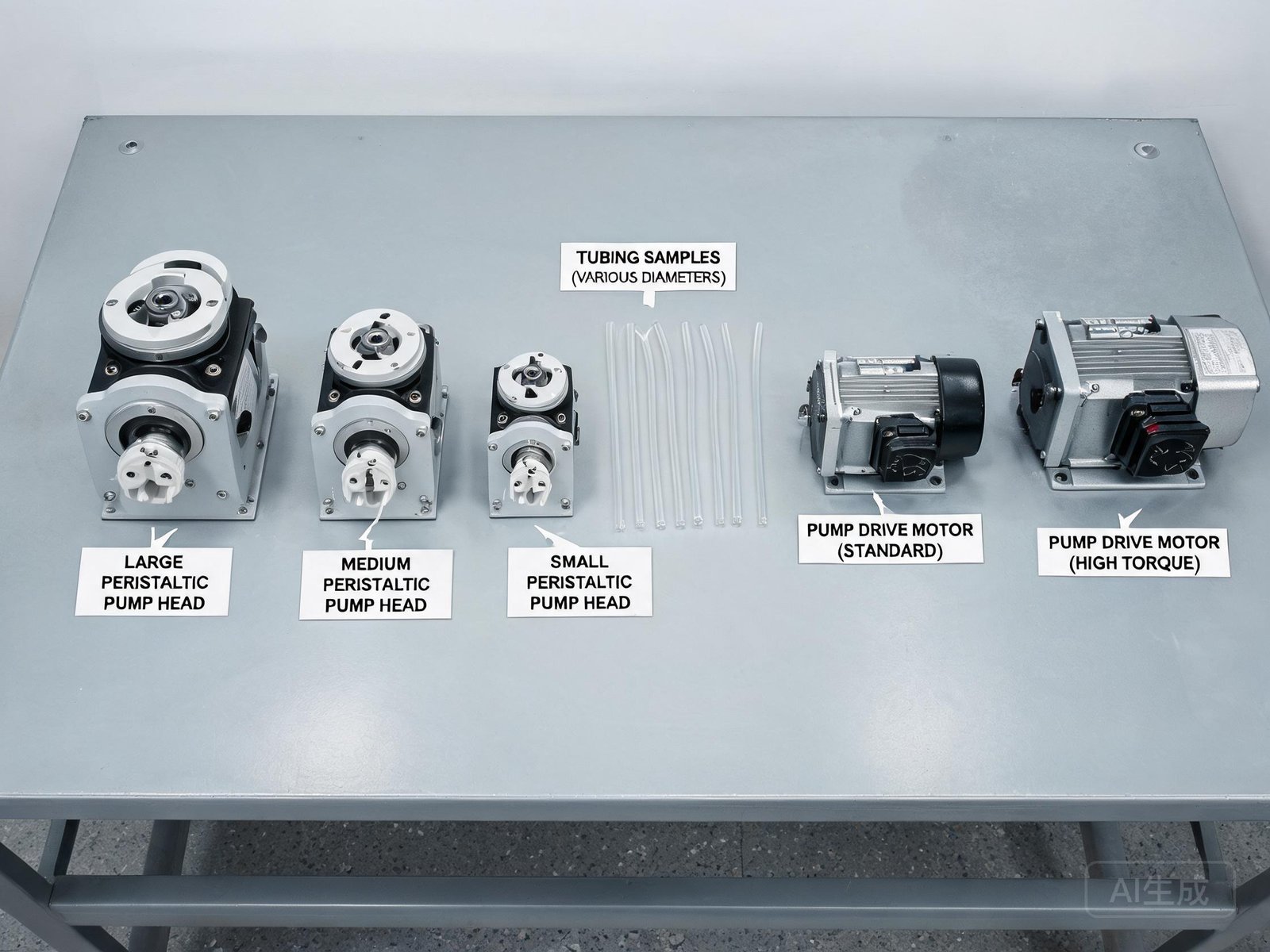
Evaluating an OEM peristaltic pump supplier goes beyond comparing prices. The supplier becomes a component partner, and their manufacturing consistency directly affects the quality of the finished equipment.
Manufacturing experience: Look for suppliers with documented experience in peristaltic pump manufacturing. YOORAIN Electronics has manufactured peristaltic pumps since 2012, covering micro pumps, hose pumps, and dosing pump categories. A supplier with long-term production experience is more likely to have stable processes and documented quality procedures.
Quality management certification: Verify that the supplier holds ISO 9001:2015 certification, which establishes requirements for quality management systems. ISO 9001 covers incoming material inspection, in-process quality checks, final product testing, and corrective action procedures. For medical device applications, ISO 13485:2016 adds risk management and regulatory compliance requirements specific to medical device manufacturing, including traceability and process validation.
Production consistency: Ask how the supplier maintains consistency across production batches. Request information on their flow testing procedures — whether every pump is individually tested or only batch-sampled. A supplier that documents individual test results provides better traceability and reduces the risk of field failures.
Customization capability: OEM projects often require mechanical or electrical modifications. The supplier’s ability to customize pump head configurations, motor options, and control interfaces matters during development. Review the OEM peristaltic pump customization process to understand what modifications are typically available and how they are implemented.
Export experience: For UK procurement teams, a supplier with experience exporting to the UK and EU understands documentation requirements, CE compliance, and shipping logistics. Verify that the supplier can provide technical documentation in English and has established shipping procedures.
| Evaluation Criterion | What to Check | Evidence to Request |
|---|---|---|
| Quality system | ISO 9001 certificate (current) | Certification body and scope |
| Medical device (if applicable) | ISO 13485 certificate | Certification scope includes pump manufacturing |
| Production testing | Individual flow test per unit | Test reports for sample units |
| Customization | Mechanical and electrical modifications | Previous OEM project examples |
| CE compliance | Declaration of Conformity | Technical file and test reports |
| Lead time | Typical production lead time | Written quotation with delivery commitment |
Sample Testing
Never place a production order without testing samples. Sample testing validates that the pump meets the application requirements under real operating conditions, not just nominal specifications on a datasheet.
Request 2-3 sample units configured to the application specification. Test them with the actual fluid (or a substitute with similar viscosity and chemical properties), at the required flow rate and pressure, over a representative duty cycle. Measure flow consistency over time, tubing wear rate, motor temperature rise, and noise level at the operating distance relevant to the equipment.
Document the test results with specific data points. If the pump does not meet specifications, provide the test data to the supplier and request a modified configuration. This iterative process is normal in OEM pump development and helps both parties arrive at a configuration that works reliably in production.
For projects involving pump head integration into existing equipment, verify that the mounting dimensions, tubing connections, and drive interface match the mechanical drawings provided by the supplier before proceeding to production.
Quality Control
After sample approval, confirm the supplier’s production quality control process. Request documentation covering incoming material inspection for tubing, motors, and pump head components. Confirm in-process quality checks at defined production stages, and verify that final product testing includes flow rate verification, noise measurement, and electrical safety testing before shipment.
Component traceability is important for OEM production. Ask how the supplier tracks production batches and whether individual units can be traced to specific component lots. This becomes critical if a field failure requires root cause analysis.
For applications regulated under the FDA Quality System Regulation (21 CFR Part 820), confirm that the supplier can provide the documentation needed for medical device manufacturing compliance. The supplier does not need to be FDA-registered unless they are manufacturing a finished medical device, but they must be able to provide the material certificates, test reports, and process documentation their customer needs for regulatory submissions.
Ordering Considerations
When placing a production order, define the following items in writing as part of the purchase agreement:
- Exact pump model and configuration reference
- Tubing type, size, and material specification
- Motor type and electrical specifications
- Control interface requirements and communication protocol
- Quantity and delivery schedule with milestones
- Packaging requirements for export shipping
- Acceptance criteria for incoming inspection
- Warranty terms, replacement policy, and after-sales support
- Minimum order quantity (MOQ) and pricing tiers
Confirm that the supplier provides OEM pump installation documentation, including mechanical drawings, electrical wiring diagrams, and maintenance procedures. This documentation is needed by the engineering team integrating the pump into the final equipment.
What to Confirm Before Ordering
Before releasing a purchase order, confirm the following items:
- Technical specifications documented and agreed by both parties
- Samples tested under real operating conditions with the actual fluid
- Flow rate and accuracy verified over the required duty cycle
- Tubing chemical compatibility confirmed with the application fluid
- Supplier holds valid ISO 9001 (or ISO 13485 if applicable) certification
- CE compliance documentation available and complete
- Production lead time committed in writing with milestone dates
- Quality control process documented and agreed
- Incoming inspection criteria defined for your receiving team
- Warranty and after-sales support terms agreed in writing
- Technical documentation package available before first shipment
For OEM projects, providing the required flow range, pressure, tubing, and installation constraints can help suppliers recommend a suitable pump configuration. Contact YOORAIN with your application requirements to discuss OEM peristaltic pump options for your equipment.