
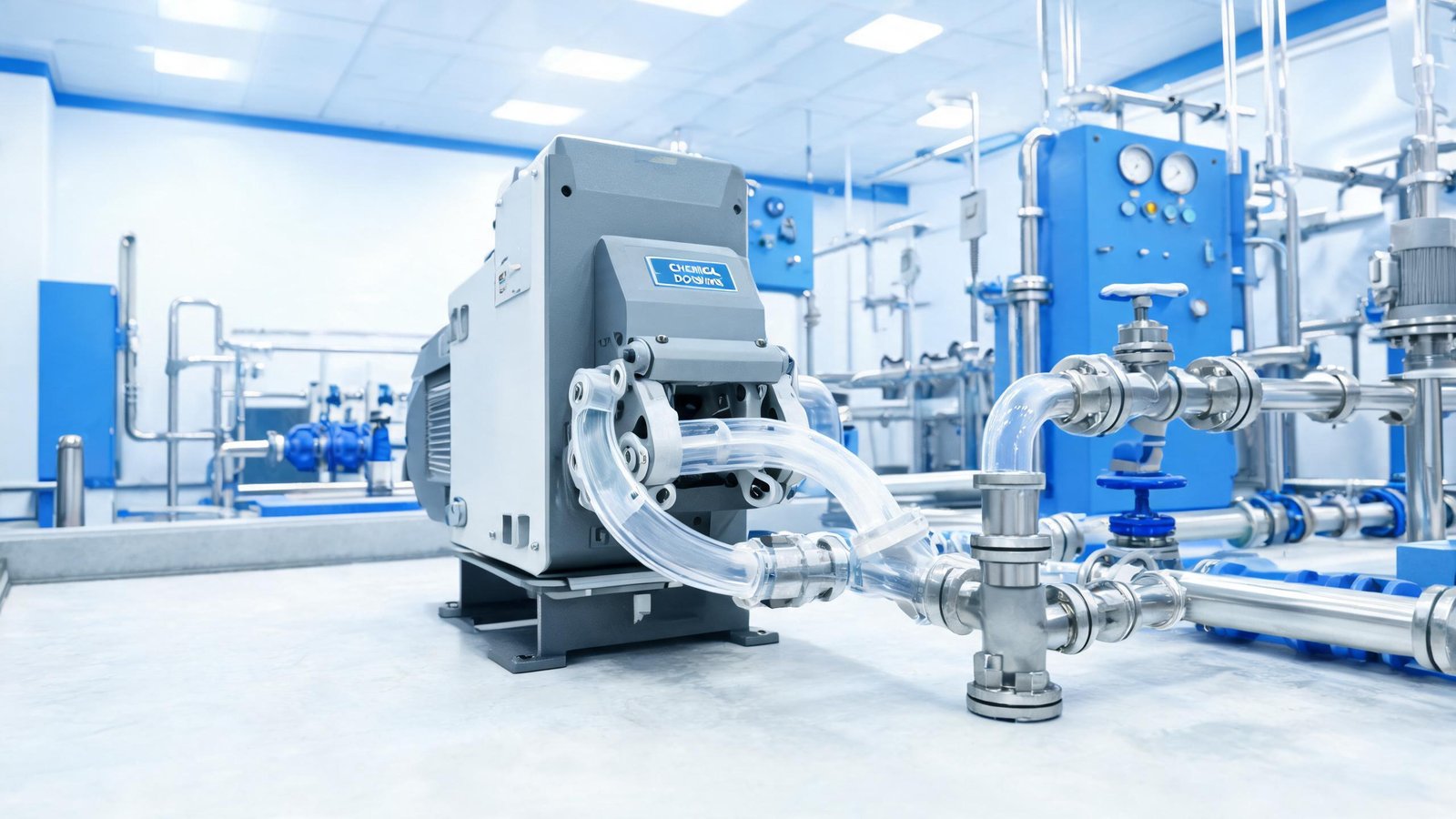
Procurement teams responsible for sourcing a peristaltic pump for water treatment and wastewater dosing equipment face a specific challenge: the pump must handle aggressive chemicals, maintain precise flow rates, and operate reliably in environments where downtime can mean regulatory violations. Peristaltic pumps are frequently specified for these applications because the fluid contacts only the tubing or hose, eliminating seal wear and reducing the risk of cross-contamination. However, selecting the right pump requires more than catalog comparisons. Buyers must define application requirements, verify material compatibility, assess supplier capabilities, and confirm regulatory compliance before placing an order.
This guide addresses the procurement decisions that determine whether a peristaltic pump performs reliably for five years or becomes a source of repeated maintenance calls. The focus is on municipal and industrial water treatment applications, including chemical metering for disinfection, coagulation, and pH adjustment, as well as sludge transfer in wastewater facilities.
What Water Treatment Applications Require from a Peristaltic Pump
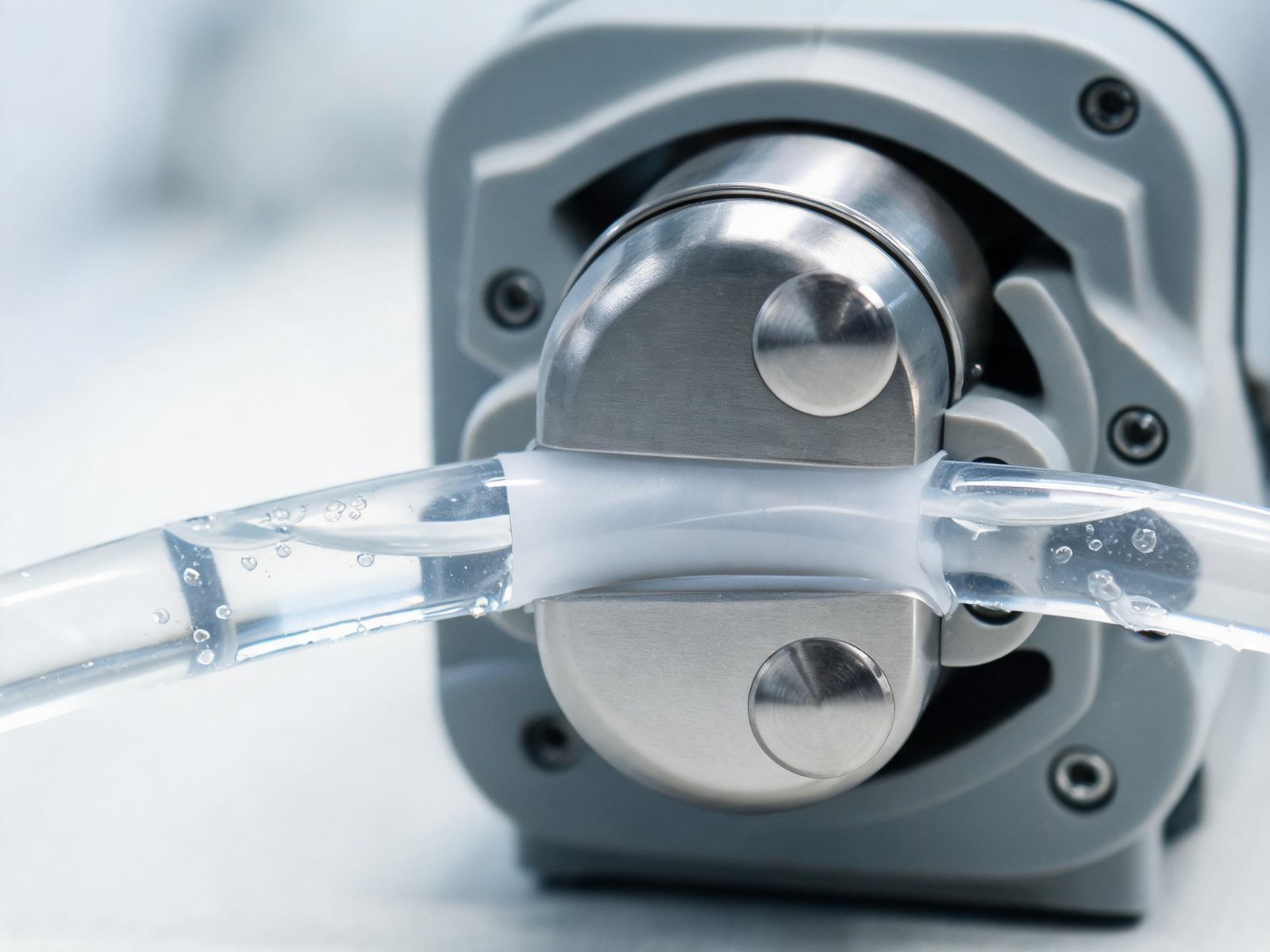
Water treatment plants use peristaltic pumps in two primary roles: chemical metering and viscous sludge transfer. In chemical metering, accuracy matters because under-dosing fails to achieve treatment goals, while over-dosing wastes chemicals and can create secondary contamination. Sodium hypochlorite, ferric chloride, polymers, and lime slurry are common fluids that challenge conventional pump designs. Sodium hypochlorite dosing off-gases chlorine vapor, which can cause vapor lock in diaphragm pumps. Lime slurry is abrasive and will wear internal components in gear or progressive cavity pumps. Peristaltic pumps avoid these problems because they have no check valves to clog and no close-tolerance metal parts to erode. A selection guide for chemical metering pumps in water treatment explains that peristaltic designs are often preferred for off-gassing chemicals and abrasive slurries because the fluid contacts only the hose or tubing.
Sludge transfer presents a different set of requirements. Thickened waste activated sludge and digester feed are viscous, often contain solids, and must be moved at flows that can range from a few liters per minute to hundreds of liters per hour. For these duties, larger hose pumps with reinforced tubing and robust drive systems are typically required. The K45 large flow rate peristaltic pump, with a maximum flow rate of 4,600 ml per minute and compatibility with 73# and 82# silicone tubes, is suited to medium-flow chemical dosing and fluid transfer tasks in compact treatment systems. For higher-volume industrial applications, the YD25 peristaltic hose pump delivers flow rates from 400 to 1,000 liters per hour with a 1.5 kW gear motor and IP61 protection, making it appropriate for continuous-duty sludge handling as a wastewater dosing pump.
| Chemical / Fluid | Application | Pump Consideration |
|---|---|---|
| Sodium hypochlorite | Disinfection dosing | Vapor-lock resistance, tubing compatibility with chlorine |
| Ferric chloride | Coagulation | Corrosion-resistant tubing, accurate low-flow control |
| Polymer (PAM) | Flocculation | Low-shear pumping to protect polymer chain structure |
| Lime slurry | pH adjustment | Abrasion-resistant hose, solids handling capability |
| Thickened sludge | Waste transfer | High-flow hose pump, reinforced tubing |
Technical Specifications to Define Before Sourcing
Before contacting suppliers, procurement teams should document the operating envelope. This includes the required flow range, discharge pressure, fluid chemistry, temperature, duty cycle, and control requirements. For chemical metering, turndown ratio—the ability to operate accurately at a small fraction of maximum flow—is critical. A pump rated for 10 liters per hour that cannot maintain accuracy below 1 liter per hour will be unsuitable for applications requiring variable dosing.
Pressure requirements in water treatment are typically modest. Chemical metering lines often operate at pressures below 2 bar, while sludge transfer may require slightly higher pressures depending on pipe length and elevation. The pump should be sized so that normal operating speed falls in the middle of its range, not at the maximum. Running a peristaltic pump at maximum speed accelerates tubing fatigue and reduces service life.
Tubing selection is equally important. Silicone tubing is common for water treatment applications because it offers good chemical resistance and mechanical resilience. However, for specific chemicals such as concentrated acids or certain oxidizers, EPDM, Viton, or Norprene may be more appropriate. Buyers should request compatibility data from the supplier and verify it against the specific chemical concentrations and temperatures in their process. The peristaltic pump tube product range includes multiple materials for different chemical environments.
Motor and control options should match the facility’s infrastructure. DC motors, including 12V and 24V options, are suitable for portable or battery-backed systems. AC motors with variable frequency drives offer simple integration into plants with standard electrical supplies. Stepper motors provide precise speed control for applications requiring exact dosing volumes. The peristaltic pump with housing offers a touchscreen interface with flow adjustment, timing functions, and foot-switch control, which simplifies operation in automated treatment skids.
Evaluating Suppliers for Water Treatment Projects
Supplier evaluation for a peristaltic pump water treatment supplier should extend beyond price and delivery time. The supplier’s experience with water treatment applications, availability of technical documentation, and willingness to provide sample units for testing are indicators of long-term support quality. A supplier that understands the difference between a laboratory dosing pump and an industrial chemical metering pump will ask the right questions about your application.
Key evaluation criteria include manufacturing quality systems, tubing material traceability, and spare parts availability. ISO 9001 certification indicates that the supplier operates a documented quality management system. For drinking water applications, materials that contact the water should meet NSF/ANSI 61 requirements where applicable, ensuring that the tubing and connectors do not leach contaminants above permitted levels.
| Evaluation Factor | What to Verify | Why It Matters |
|---|---|---|
| Application experience | References in water treatment or wastewater | Reduces risk of incorrect pump specification |
| Quality certification | ISO 9001, material test reports | Ensures consistent manufacturing standards |
| Tubing options | Range of materials, chemical compatibility data | Allows matching tubing to specific chemicals |
| Spare parts availability | Lead time for tubing, rollers, and drive components | Minimizes downtime during maintenance |
| Technical support | Availability of engineering consultation | Helps resolve integration and operational issues |
| OEM customization | Ability to modify mounting, connectors, or controls | Supports integration into existing equipment |
For OEM equipment manufacturers building treatment systems for resale, the ability to customize an OEM water treatment pump with matching mounting, electrical interfaces, and control protocols is often essential. The YZ15 easy load peristaltic pump head, with SUS304 rollers and engineering plastic covers, is designed for integration into larger systems and can be paired with various drive units to match specific OEM requirements.
Sample Testing and Compatibility Verification
Procurement decisions based solely on datasheets carry risk. Chemical compatibility charts provide general guidance, but actual performance depends on concentration, temperature, and the presence of additives. A tubing material that resists 5% sodium hypochlorite at 20°C may degrade more rapidly at 12% concentration or at elevated temperatures.
Buyers should request sample tubing and, where possible, conduct immersion tests using the actual process fluid at operating temperature. A typical immersion test runs for 72 hours, after which the tubing is examined for swelling, hardening, cracking, or loss of mechanical strength. If the pump will handle multiple chemicals in sequence, testing should include all fluids, not just the most aggressive one.
Flow accuracy testing is equally important. Using water or a fluid with similar viscosity, measure the actual delivered volume at several points across the intended operating range. Record flow rate at the minimum, midpoint, and maximum speeds. If the application requires intermittent dosing with precise volumes, test the pump’s repeatability over multiple cycles. Document any deviation from the specified flow and discuss adjustment options with the supplier before finalizing the order.
Quality Assurance and Regulatory Compliance
Water treatment equipment operates under regulatory frameworks that vary by region. In the European Union, the Drinking Water Directive 2020/2184 sets quality standards for water intended for human consumption, including limits on chemical contaminants and requirements for materials in contact with drinking water. In the United States, the EPA Office of Ground Water and Drinking Water administers the Safe Drinking Water Act and establishes maximum contaminant levels for public water systems. The directive requires that materials do not compromise human health, affect color or odor, enhance microbial growth, or leach contaminants at levels higher than necessary.
For chemical metering pumps, compliance extends to the accuracy of dosing. Under-dosing disinfectants can result in microbiological contamination, while over-dosing can create byproducts such as trihalomethanes or chlorate that exceed permitted limits. The EU directive specifies a chlorate limit of 0.25 mg/l, which places pressure on dosing accuracy. Peristaltic pumps with precise speed control and calibrated flow rates help maintain compliance.
In wastewater treatment, discharge permits define the acceptable levels of contaminants in effluent. Chemical dosing for phosphorus removal or pH neutralization must be accurate enough to keep the plant within permit limits consistently. A selection guide for wastewater treatment plants notes that over 40% of premature hose failures in peristaltic applications result from improper sizing related to rotational speed and heat dissipation, not chemical incompatibility. This highlights the importance of correct specification during procurement.
Ordering Considerations for Long-Term Operations
The initial purchase price of a peristaltic pump is often a small fraction of the total cost of ownership. Tubing replacement, maintenance labor, and downtime costs accumulate over the equipment’s service life. Buyers should calculate the expected annual tubing replacement cost based on the manufacturer’s recommended replacement interval and the price of replacement tubing. A pump with slightly higher upfront cost but longer tubing life may be more economical over five years.
Ordering spare tubing at the time of initial purchase reduces lead time risk. For critical applications, maintaining a stock of tubing, connectors, and roller assemblies on-site allows maintenance teams to respond quickly to wear or failure. Ask the supplier for a recommended spare parts list and expected replacement intervals for each component.
Documentation requirements should be confirmed before ordering. Water treatment projects often require material certificates, test reports, and calibration data. If the pump is being integrated into OEM equipment for resale, the supplier should provide CAD drawings, electrical specifications, and control interface documentation. Clarify whether these documents are included in the standard delivery or require additional lead time.
Lead time and minimum order quantity should match the project schedule. For large infrastructure projects with extended timelines, confirm that the supplier can hold pricing and guarantee availability over the procurement period. For OEM manufacturers, discuss whether the supplier offers volume pricing for recurring orders and whether product specifications will remain stable across production batches.
Procurement Checklist
| Item | Status | Notes |
|---|---|---|
| Flow range defined | Required | Minimum, normal, and maximum flow rates |
| Pressure requirements documented | Required | System pressure including pipe losses |
| Fluid chemistry specified | Required | All chemicals, concentrations, temperatures |
| Tubing compatibility verified | Required | Immersion test or supplier compatibility data |
| Duty cycle and speed range defined | Required | Continuous or intermittent operation |
| Motor and control requirements confirmed | Required | DC, AC, or stepper; control interface |
| Regulatory compliance verified | Required | EU, EPA, or local drinking water standards |
| Supplier quality systems checked | Required | ISO 9001, material certifications |
| Spare parts availability confirmed | Required | Tubing, rollers, drive components |
| Sample testing completed | Recommended | Flow accuracy and tubing compatibility |
| OEM customization discussed | If applicable | Mounting, connectors, control integration |
| Documentation requirements clarified | Required | Drawings, certificates, calibration data |
For water treatment projects, providing the required flow range, chemical compatibility data, and regulatory framework can help suppliers recommend a suitable pump configuration. If you are developing OEM water treatment equipment or upgrading an existing facility, you can contact YOORAIN to discuss the fluid-handling requirements of your system.