
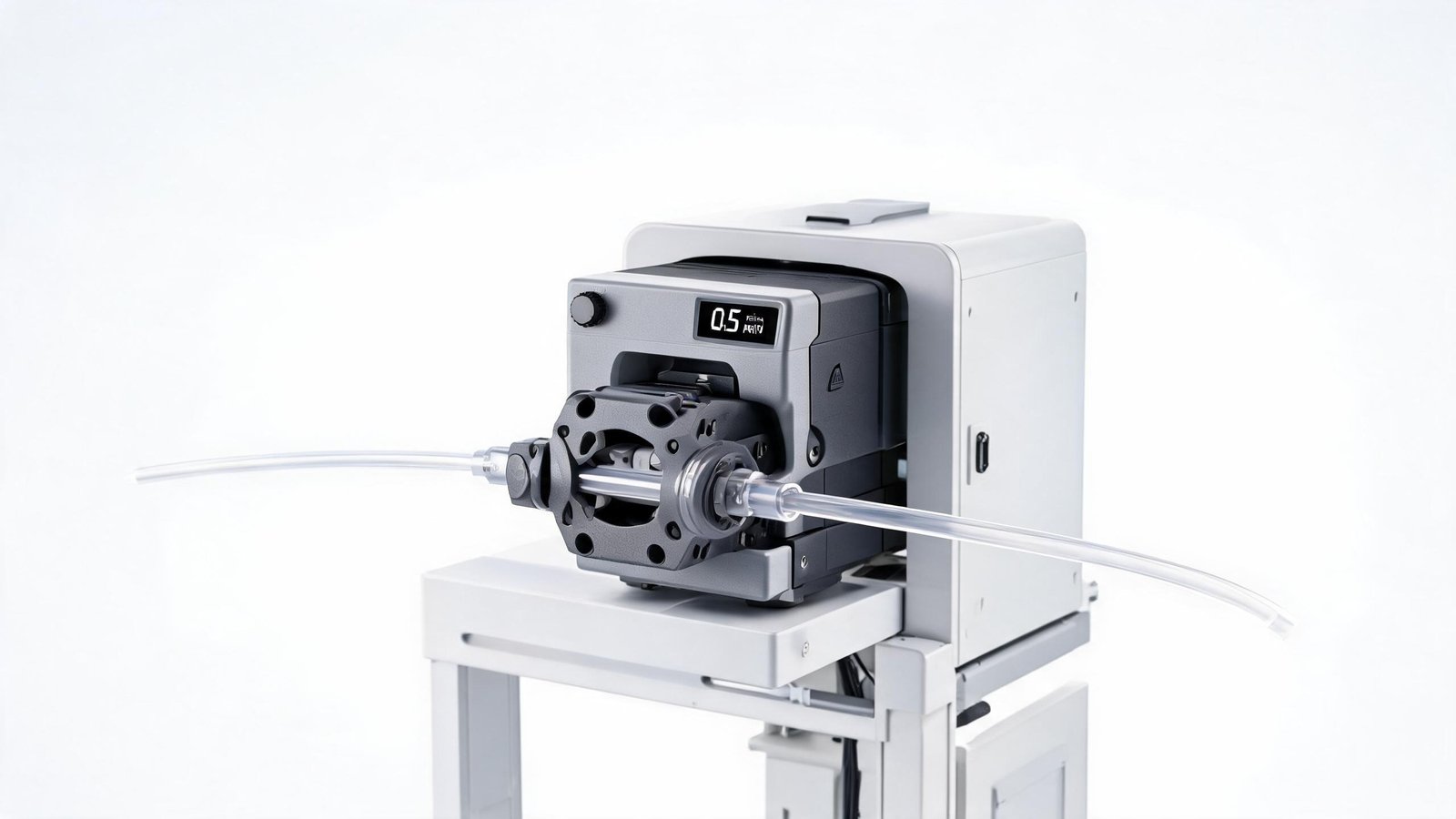
Instrument manufacturers developing automated liquid handling systems face a specific set of fluid-handling constraints. The pump must deliver accurate volumes repeatedly, fit within a compact mechanical envelope, operate quietly enough for benchtop environments, and allow simple tubing replacement during routine maintenance. Peristaltic pumps satisfy many of these requirements because the fluid contacts only the tubing, eliminating seals, valves, and complex flow paths that add cost and maintenance overhead in laboratory automation equipment.
However, not every micro peristaltic pump suits every liquid handling application. Flow range, dosing accuracy, tubing material compliance, motor control options, and mechanical integration all vary between models. Buyers who define these requirements before contacting suppliers receive more relevant proposals and reduce prototype iteration time. This guide outlines what OEM teams should evaluate when selecting a small peristaltic pump for laboratory automation and liquid handling robots.
What Buyers Should Define First
Before requesting quotations, the engineering team should document the operating parameters that constrain pump selection. Ambiguous specifications lead to oversized pumps, incompatible tubing materials, or control interfaces that do not match the instrument’s electronics architecture.
Required flow range and dispense volume. Liquid handling systems range from sub-microliter reagent dispensing in microplate washers to milliliter-scale buffer transfer in sample preparation stations. The peristaltic pump must cover the required flow range without operating at extreme speed ratios where accuracy degrades. Define the minimum and maximum dispense volumes, the acceptable tolerance, and whether the application requires continuous flow or discrete aliquots.
Fluid characteristics. Viscosity, particulate content, and chemical aggressiveness affect tubing selection and pump torque requirements. Aqueous reagents with low viscosity flow easily through small-bore tubing, while protein solutions or suspensions may require larger tubing diameters and gentler roller action to prevent shear damage. Document the full range of fluids the system will handle, including cleaning and sanitization agents.
Duty cycle and expected lifetime. Laboratory automation instruments often run intermittently during working hours, but some applications such as high-throughput screening operate near-continuously. The pump motor, driver electronics, and tubing must withstand the expected duty cycle over the instrument’s service life without excessive maintenance intervals.
Mechanical and electrical integration constraints. Record the available mounting space, the required tubing inlet and outlet orientations, and the control signal types the instrument’s main controller can provide. Some mini peristaltic pumps accept simple voltage-speed control, while others use stepper motors with pulse-direction interfaces or serial communication protocols.
| Requirement Category | What to Document | Why It Matters for Pump Selection |
|---|---|---|
| Flow range | Min/max dispense volume and flow rate | Determines pump head size, tubing diameter, and motor speed range |
| Fluid compatibility | All fluids, reagents, and cleaning agents | Determines tubing material and chemical resistance requirements |
| Accuracy requirement | Acceptable volumetric tolerance (% or µL) | Affects need for calibration protocols, flow sensors, or feedback control |
| Duty cycle | Hours per day, days per year | Influences motor type, thermal management, and tubing replacement schedule |
| Integration space | Mounting envelope and port orientation | Determines pump form factor and housing design |
| Control interface | Voltage, pulse, serial, or MODBUS | Determines driver electronics and communication protocol compatibility |
Comparing Pump Requirements
Once the engineering team documents the baseline requirements, buyers can compare how different pump configurations satisfy the application. Laboratory automation typically favors compact pumps with precise speed control, but the specific choice depends on the dispense volume and accuracy targets.
Micro pumps for sub-milliliter dispensing. Applications such as microplate filling, ELISA reagent addition, and PCR setup require precise low-volume dispensing. Compact K15 micro peristaltic pumps and similar models offer small form factors that fit inside crowded instrument chassis. The small tubing diameter naturally restricts flow, which helps achieve fine volume control at moderate motor speeds.
Small pumps for general liquid handling. Sample dilution, buffer transfer, and wash station supply lines typically require higher flow rates than microplate dispensing but still demand compact dimensions. K25 small peristaltic pumps provide a middle ground between micro-dispensing precision and reasonable flow capacity for bulk reagent handling.
Housed pumps for integrated modules. When the pump mounts as a replaceable module inside a larger instrument, a peristaltic pump with housing simplifies mechanical design. The enclosed housing provides mounting points, protects the tubing from external contact, and can include integrated driver electronics that reduce wiring complexity.
Motor and control options. DC brush motors offer simple voltage control and low cost, making them suitable for basic liquid transfer where open-loop speed control is acceptable. Brushless DC motors reduce maintenance and electrical noise, which matters in sensitive analytical instruments. Stepper motors enable precise positional control for discrete dispensing, though they require more sophisticated drive electronics. The NIST Fluid Metrology Group emphasizes that traceable flow measurements depend on consistent pump behavior, which favors closed-loop or calibrated open-loop control strategies in precision applications.
| Pump Type | Typical Flow Range | Best Suited For | Key Consideration |
|---|---|---|---|
| Micro peristaltic pump | 0.1–50 mL/min | Microplate dispensing, reagent addition | Tubing diameter limits maximum flow; accuracy depends on speed stability |
| Small peristaltic pump | 10–300 mL/min | Buffer transfer, wash supply, sample dilution | Balance between flow capacity and footprint |
| Mini peristaltic pump | 0.5–100 mL/min | Portable or space-constrained instruments | Verify motor torque for viscous fluids |
| Pump with housing | Varies by internal pump | Modular instrument designs, OEM integration | Mounting interface and electrical connector compatibility |
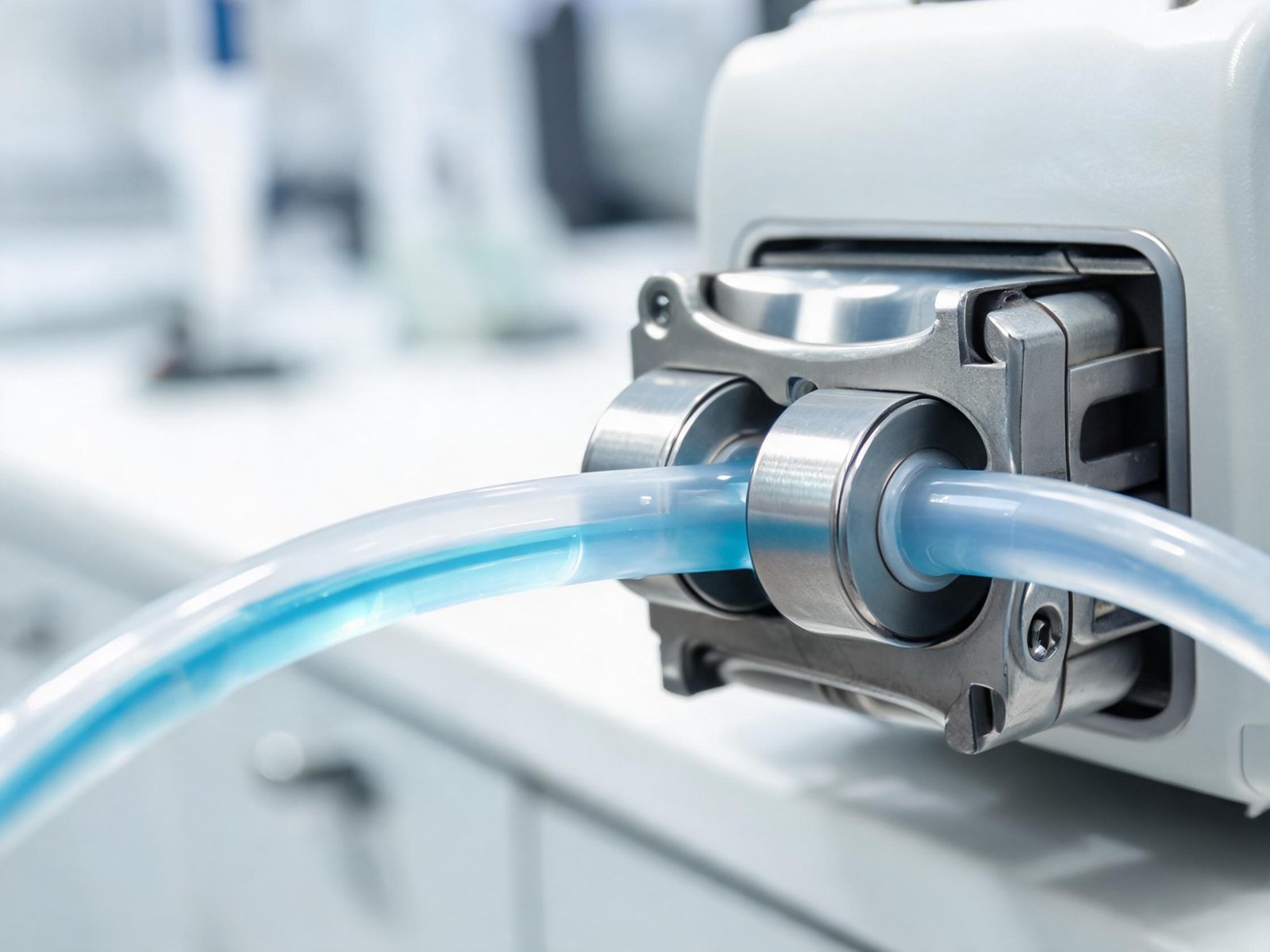
OEM Customization Considerations
Laboratory automation OEMs rarely use off-the-shelf pumps without modifications. The pump must match the instrument’s industrial design, electrical architecture, and quality system. Discuss the following customization options with potential suppliers early in the project.
Tubing configuration. The inlet and outlet tubing lengths, diameters, and termination types (plain end, barbed fitting, luer lock) must match the instrument’s fluidic manifold. Some suppliers offer custom tubing assemblies with pre-installed fittings that reduce assembly time and improve consistency during production.
Motor and driver pairing. If the instrument uses a centralized motion controller, the pump motor must accept the available control signals. Suppliers may offer alternative motors (DC brush, brushless DC, stepper) on the same pump head platform, allowing buyers to select the appropriate control interface without changing mechanical dimensions.
Housing and mounting. Custom brackets, enclosures, or label branding may be required for the instrument’s aesthetic and regulatory documentation. A peristaltic pump with housing can often be modified with custom mounting holes, connector positions, or exterior labeling without redesigning the internal pump mechanism.
Materials and compliance documentation. Laboratory instruments sold in regulated markets require material certifications for wetted components. Tubing materials should meet relevant biocompatibility standards. The FDA medical device regulations establish requirements for materials and design controls that apply to laboratory equipment handling biological samples, and similar compliance principles extend to tubing material selection for analytical instruments. Request material certifications and compliance statements from the supplier during the qualification phase.
Supplier Evaluation
Selecting a pump supplier for laboratory automation involves more than comparing specifications sheets. The supplier’s engineering support, production consistency, and quality system affect the instrument’s reliability and time-to-market.
Technical support and application engineering. Laboratory automation projects often require iterative prototyping. A supplier with experienced application engineers can recommend tubing materials, motor configurations, and control strategies based on similar projects. Ask whether the supplier provides sample pumps for feasibility testing and whether they offer engineering consultation during the design phase.
Production consistency and change control. Once the instrument enters production, the pump must remain mechanically and electrically consistent across batches. Verify that the supplier maintains documented production processes and communicates material or design changes before implementation. Unannounced changes to tubing formulations or motor suppliers can affect instrument performance and regulatory documentation.
Quality system and documentation. Suppliers serving regulated industries should maintain quality systems that support traceability and documentation. Request certificates of conformance, material certifications, and test data for the pump models under consideration. The CDC laboratory infrastructure demonstrates the importance of consistent equipment performance in analytical workflows, and the same principle applies to commercial laboratory automation instruments.
Lead time and supply stability. Laboratory instrument production schedules depend on reliable component delivery. Confirm standard lead times, minimum order quantities, and whether the supplier stocks critical components such as motors and pump heads. Long lead times on custom configurations can delay instrument launches.
Quality and Testing
Before integrating a pump into production instruments, the OEM team should validate that the pump meets the application’s performance requirements under realistic operating conditions.
Flow accuracy and repeatability testing. Measure dispense volumes across the intended flow range using gravimetric or volumetric methods. Collect data at multiple speed settings and with fluids representing the viscosity range of the application. Calculate the coefficient of variation to confirm that repeatability meets the instrument’s specification. The Society for Laboratory Automation and Screening (SLAS) publishes guidelines and research on liquid handling performance standards that provide useful benchmarking frameworks.
Tubing life validation. Run accelerated wear tests to estimate tubing replacement intervals under the application’s duty cycle. Record flow degradation, particulate generation, and visual wear indicators over time. Establish a preventive maintenance schedule based on the test results rather than arbitrary calendar intervals.
Environmental and electrical testing. Verify pump operation across the instrument’s specified temperature range, humidity limits, and electrical supply tolerances. Laboratory instruments may operate in climate-controlled environments, but shipping and storage conditions can expose components to wider ranges.
Compatibility with instrument control software. If the pump communicates through a serial protocol or analog control voltage, verify that the instrument’s software correctly commands the pump and receives feedback where applicable. Test error handling, startup sequencing, and emergency stop behavior.
Questions to Ask Before Ordering
Use the following questions to structure supplier discussions and technical reviews before placing production orders.
- What is the guaranteed flow accuracy and repeatability under the specified operating conditions?
- Which tubing materials are available, and what certifications do they carry?
- Can the motor and driver be customized to match the instrument’s control architecture?
- What is the documented tubing life under the application’s duty cycle?
- Does the supplier offer sample units for prototype validation?
- What quality documentation accompanies each production batch?
- How does the supplier manage engineering change notifications?
- What are the lead times for standard and customized configurations?
| Validation Item | Test Method | Acceptance Criteria |
|---|---|---|
| Flow accuracy | Gravimetric dispensing at min/mid/max speeds | Within specified tolerance (e.g., ±2%) |
| Flow repeatability | Multiple dispense cycles at target volume | Coefficient of variation below threshold |
| Tubing life | Accelerated cycling with target fluid | No degradation before scheduled replacement |
| Environmental operation | Temperature and humidity stress testing | Performance within spec across operating range |
| Control integration | Software-in-the-loop testing with instrument controller | Correct response to all command sequences |
Practical Recommendations
Selecting a peristaltic pump for laboratory automation requires matching mechanical, fluidic, and electrical requirements to available pump configurations. Start by defining the flow range, fluid characteristics, accuracy targets, and integration constraints in detail. Compare micro, small, and housed pump options against these requirements rather than selecting based on price or availability alone.
Engage suppliers during the prototyping phase to validate tubing life, flow accuracy, and control integration under realistic conditions. Request material certifications and confirm that the supplier’s quality system supports consistent production documentation. Plan for tubing replacement as part of the instrument’s preventive maintenance schedule, and design the fluidic path to allow quick tubing changes without disassembling the instrument.
If you are developing laboratory automation or liquid handling equipment, you can contact YOORAIN to discuss the fluid-handling requirements of your system. Provide the target flow range, tubing material constraints, and control interface preferences to receive pump recommendations suited to your instrument design.