
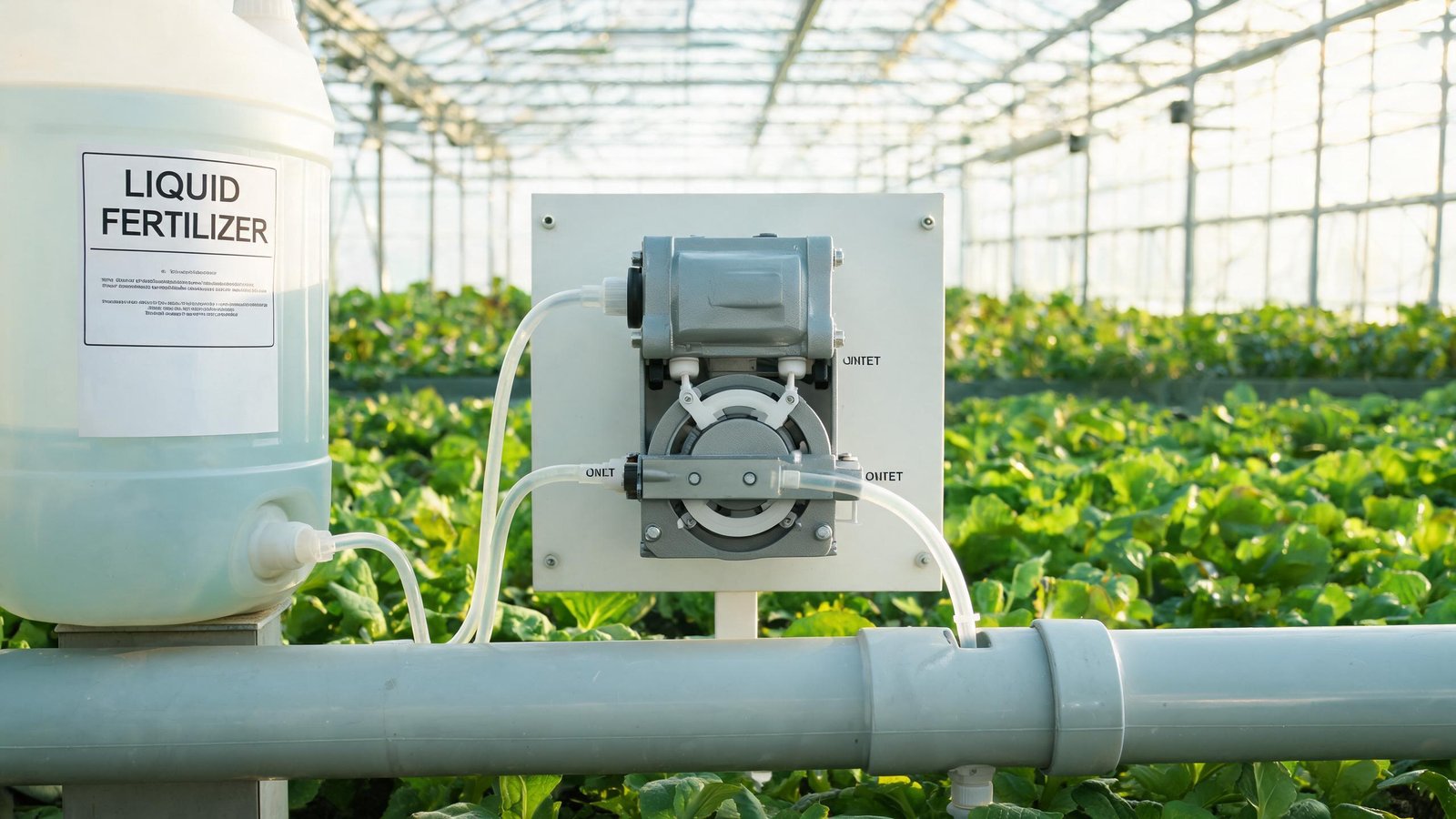
Fertigation systems that inject liquid fertilizer, nutrient solutions, and crop-protection chemicals into irrigation lines depend on metering pumps that can handle viscous, abrasive, and sometimes corrosive fluids. When agricultural equipment manufacturers and greenhouse integrators need a pump that isolates the fluid from the pump mechanism, a peristaltic pump with housing becomes the natural choice. The tubing-based design means the fertilizer only contacts the inside of the tube, eliminating cross-contamination between different nutrient stock solutions and reducing cleanup time during product changeovers.
This buyer’s guide covers the specification, selection, and procurement of peristaltic pumps for agricultural fertilizer dosing, including flow rate requirements, chemical compatibility, OEM customization, and supplier evaluation.
What Buyers Should Define First
Before contacting a pump supplier, agricultural equipment buyers should document five core parameters that determine pump sizing and configuration. Defining these upfront reduces specification errors and shortens the sample-testing cycle.
1. Target flow rate range. Dosing rates in agriculture span from 0.1 mL/min for micronutrient injection in tissue culture to 20 L/min for large-scale field fertigation. Buyers should specify the minimum and maximum required flow, not just a single target. A K25 small peristaltic pump covers the lower range for greenhouse nutrient dosing, while a K45 large flow rate peristaltic pump handles higher-volume field applications.
2. Fluid characteristics. Liquid fertilizers vary widely in viscosity, density, and solids content. Humic acid solutions, fish hydrolysate emulsions, and kelp extracts can be significantly more viscous than water. Calcium nitrate solutions may crystallize at low temperatures. Buyers should provide the supplier with the specific product name, concentration, and operating temperature range.
3. Duty cycle. Continuous fertigation systems run pumps for hours at a time, while batch dosing systems may cycle on and off frequently. The expected duty cycle affects tubing life, motor heat dissipation, and maintenance scheduling.
4. Installation environment. Greenhouse installations require humidity and splash resistance. Field installations may need IP-rated enclosures, UV-resistant materials, and protection from dust. The mounting position and available space determine whether a compact or standard pump configuration is needed.
5. Control interface. Modern fertigation controllers communicate via analog signals (4-20 mA, 0-5V), digital protocols (MODBUS, RS485), or pulse signals. The pump must accept the control signal used by the irrigation controller. For guidance on matching flow output to system requirements, refer to how to choose the peristaltic pump flow rate.
Comparing Pump Requirements
Different agricultural applications place different demands on the dosing pump. The table below compares four common fertigation scenarios and the key pump requirements for each.
| Application | Typical Flow Range | Key Fluid Challenge | Critical Pump Factor |
|---|---|---|---|
| Greenhouse nutrient dosing | 0.5–5 L/min | Multiple stock solutions | Tubing compatibility and easy changeover |
| Field fertigation injection | 2–20 L/min | Viscous fertilizer concentrates | Flow stability under varying pressure |
| Pesticide and fungicide dosing | 0.1–2 L/min | Chemical aggressiveness | Tubing chemical resistance |
| Hydroponic nutrient metering | 0.05–1 L/min | Precision EC/pH adjustment | Dosing accuracy and repeatability |
For all four scenarios, the peristaltic pump’s advantage is that the fluid never contacts the pump mechanism. When switching from one stock solution to another, operators only need to flush or replace the tubing, not disassemble the pump head. This is particularly valuable in multi-tank fertigation systems where several nutrient solutions are injected sequentially into a single mixing line.
OEM Customization Considerations
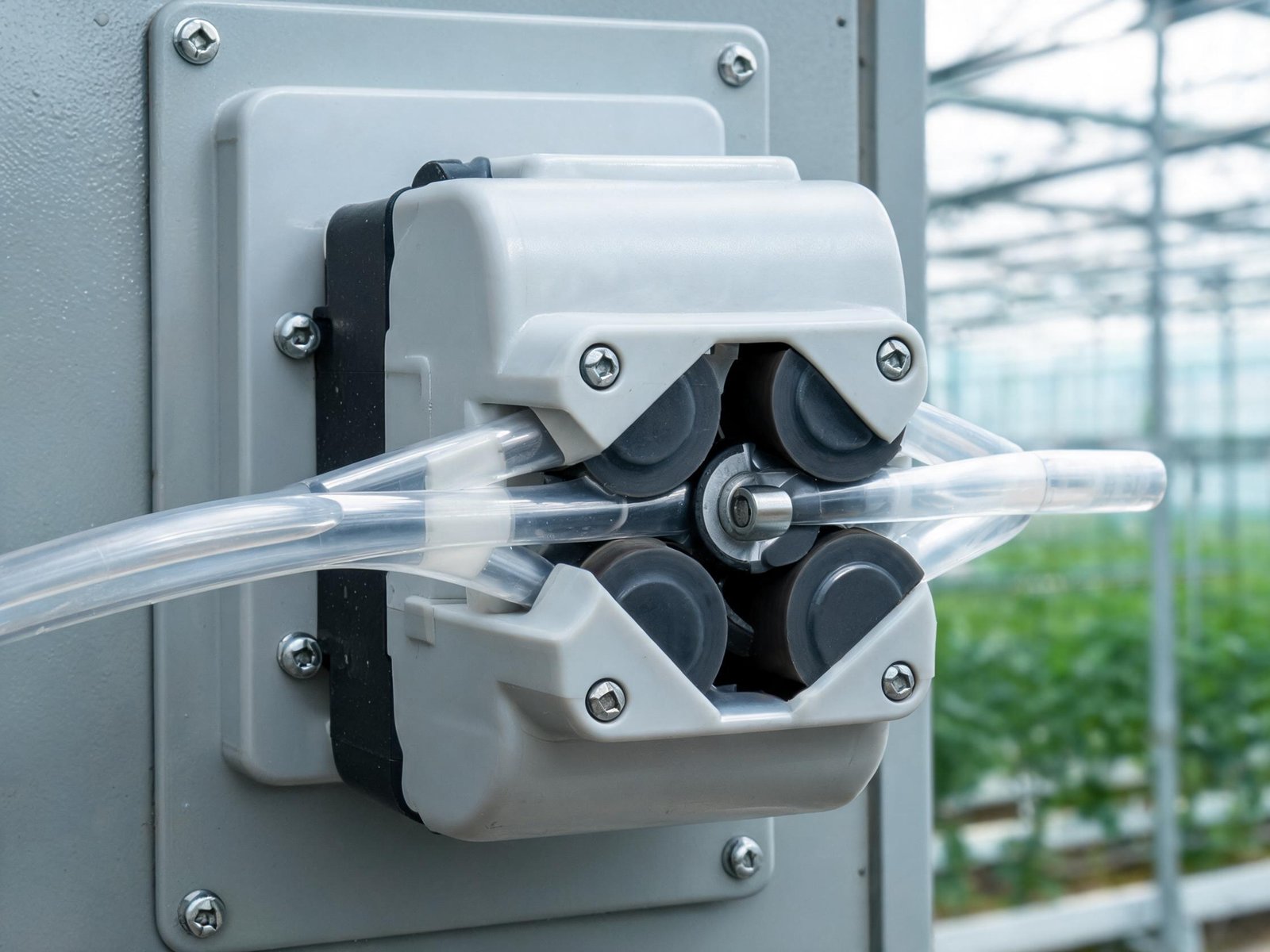
Equipment manufacturers integrating peristaltic pumps into fertigation controllers, nutrient dosing panels, or automated irrigation systems typically need customization beyond an off-the-shelf pump. Common customization requests include:
- Multi-channel configurations — dosing 2 to 4 different nutrient solutions from a single pump unit, each channel independently controlled
- Custom mounting brackets — adapting the pump to a specific equipment frame or control panel cutout
- Integrated driver electronics — matching the pump motor to the OEM controller’s signal type (PWM, analog, RS485)
- Tubing pre-selection — specifying the tubing material and size that matches the most common fertilizer types in the target market
- Flow calibration data — requesting factory calibration certificates or per-unit flow curves for quality records
Buyers should confirm whether the supplier provides peristaltic pump tubing in multiple materials (silicone, PharMed, Viton) or only standard silicone. Fertilizer formulations containing strong acids, high salt concentrations, or organic solvents may require tubing materials beyond standard silicone.
Supplier Evaluation
Evaluating a peristaltic pump supplier for agricultural applications involves technical, quality, and commercial criteria. The table below summarizes the key evaluation factors and what to look for in a qualified supplier.
| Evaluation Factor | What to Check | Why It Matters |
|---|---|---|
| Tubing compatibility data | Supplier provides chemical compatibility charts for common fertilizer chemicals | Prevents premature tubing failure in the field |
| Flow accuracy specification | Stated accuracy at the target flow rate, not just maximum | Ensures nutrient concentration consistency |
| OEM customization capability | Demonstrated experience with multi-channel and custom mounting | Reduces integration time for equipment manufacturers |
| Sample availability | Willing to provide test units for field evaluation | Validates performance under real operating conditions |
| Lead time and MOQ | Production lead time for OEM quantities and minimum order quantity | Affects project scheduling and inventory planning |
| After-sales technical support | Access to engineering support for tubing selection and troubleshooting | Reduces downtime when field issues arise |
Regulatory compliance is also relevant. In the United States, agricultural operations that discharge to waters of the United States may require NPDES permits under the EPA NPDES permit program. The EPA nutrient management requirements set standards for fertilizer application and runoff control. Equipment used in these applications should be specified with awareness of these regulatory frameworks, though the pump itself is not typically a regulated device under these programs.
Quality and Testing
Before committing to a production order, buyers should request or conduct the following tests:
Flow rate verification. Measure the actual output volume at the target operating speed using a graduated cylinder and stopwatch. Compare to the supplier’s stated flow rate. Actual flow in peristaltic pumps typically runs lower than theoretical due to tubing deformation and fluid backflow at higher pressures.
Tubing life test. Run the pump continuously with the target fertilizer solution and record the time to tubing failure. This establishes the maintenance interval for the end-user. Tubing life varies significantly between materials: standard silicone may last 200–500 hours with mild nutrient solutions, while specialized materials like PharMed or Viton may last longer with more aggressive chemicals.
Chemical compatibility. Immerse tubing samples in the actual fertilizer solution for 72 hours and check for swelling, hardening, cracking, or weight change. The 40 CFR Part 503 fertilizer standards establish limits on heavy metals and toxic compounds in fertilizer products, which is relevant when specifying pumps for biosolids-derived fertilizer applications.
Pressure test. If the pump will inject into a pressurized irrigation line, verify that the pump can maintain the target flow rate against the system backpressure. Peristaltic pumps lose volumetric efficiency as discharge pressure increases, so the tested flow at operating pressure is the number that matters, not the free-flow specification.
Final Selection Guide
After completing the evaluation above, the final selection should account for both technical fit and long-term supportability. Use the following checklist to confirm the decision before placing an order:
- Flow rate range verified at operating pressure, not just free-flow
- Tubing material tested with actual fertilizer solution for compatibility and life
- Duty cycle confirmed and maintenance interval established
- Control interface matches the irrigation controller (analog, digital, or pulse)
- Mounting dimensions and enclosure rating match the installation environment
- Supplier provides chemical compatibility data and technical support for tubing selection
- Sample unit tested under real field conditions for at least one growing cycle
- Production lead time and MOQ align with project schedule
Need help selecting a pump for agricultural fertilizer dosing? Contact YOORAIN with your target flow range, fertilizer type, irrigation system pressure, and installation environment. Our team can recommend a pump configuration and tubing material matched to your specific nutrient solution and duty cycle.