
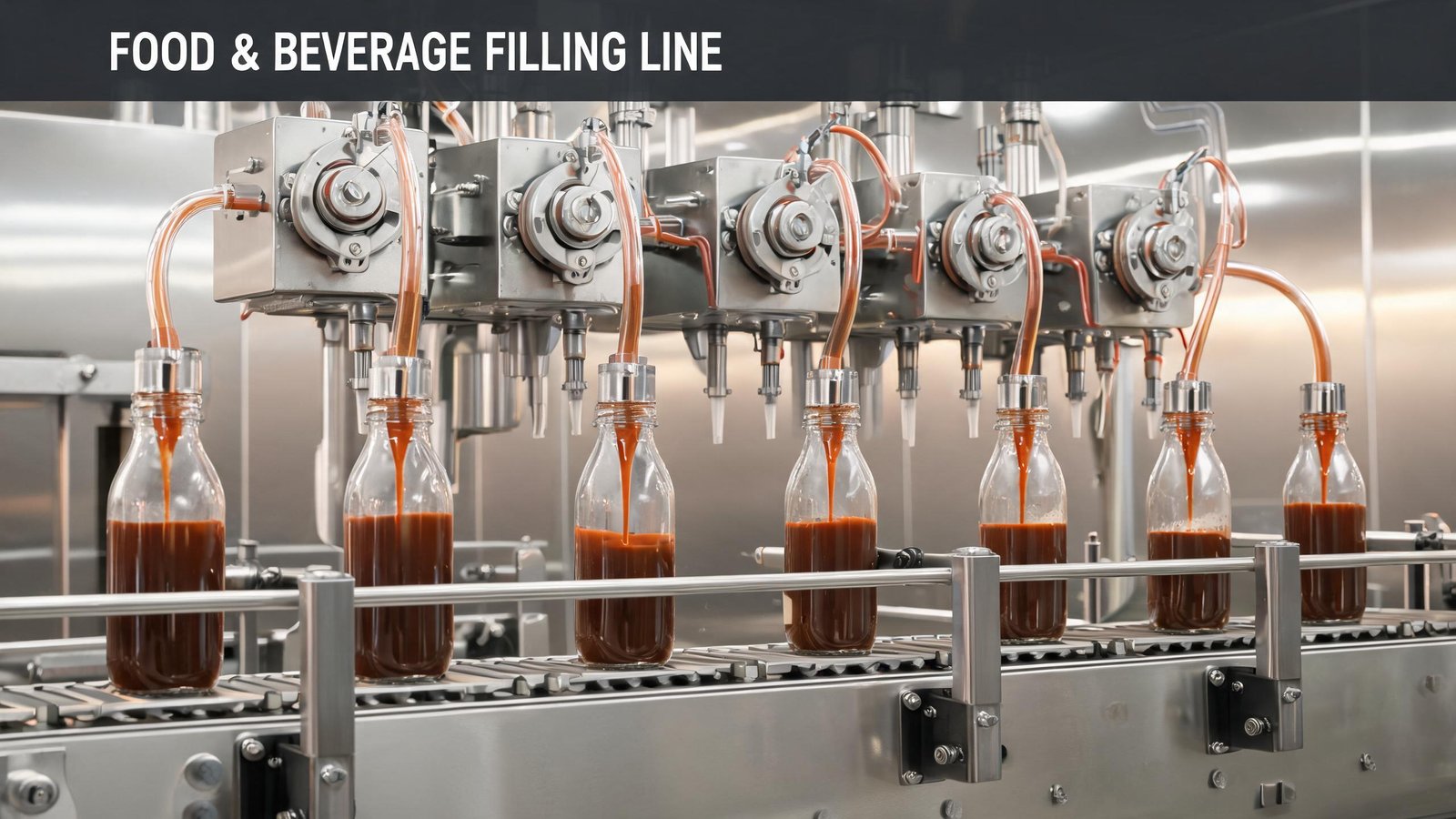
When a peristaltic pump on a food filling line starts delivering inconsistent fill volumes, the problem is rarely the pump motor. More often, the issue traces back to tubing wear, fluid property changes, or a mismatch between pump speed and filling cycle timing. Production managers at food and beverage plants across the United States deal with these issues regularly, and the cost of inconsistent fills includes both product giveaway and underfill compliance risks under FDA regulations.
This troubleshooting guide covers the most common peristaltic pump problems in food filling applications, their root causes, diagnostic approaches, and engineering fixes. Whether you are filling sauces, syrups, juices, or viscous creams, the same set of variables—tubing condition, pump speed, fluid viscosity, and system backpressure—govern fill accuracy.
Common Problem
The most frequently reported issue in peristaltic pump food filling systems is fill volume drift: each successive container receives a slightly different volume, and the trend worsens over a production run. Operators may notice that the first few hundred fills are within specification, but by the end of a batch, volumes have shifted by 5 to 15 percent.
A second common problem is pulsation-related splashing, where the pulsed nature of peristaltic flow causes product to splash out of the container, leading to fill weight inconsistency and mess on the filling line. A third issue is tubing rupture mid-run, which causes immediate line stoppage and potential product contamination.
Under 21 CFR 117.40, food contact equipment must be designed and maintained to prevent contamination. A tubing rupture that allows product to contact non-food-grade pump components creates a compliance issue, not just an operational one.
What Causes It
Fill volume drift in peristaltic pumps typically stems from one or more of the following factors:
| Cause | Mechanism | Effect on Fill |
|---|---|---|
| Tubing fatigue | Repeated compression reduces tube elasticity; incomplete occlusion | Slippage reduces volume per revolution |
| Viscosity change | Temperature shifts alter fluid resistance in the tube | Flow rate deviates from calibration |
| Speed mismatch | Pump speed does not match filling valve timing | Incomplete or excessive dispensing per cycle |
| Tube wall thinning | Wear reduces tube outer diameter at roller contact | Reduced compression and flow |
| Air entrainment | Trapped air in the feed line compresses under roller pressure | Variable displaced volume per cycle |
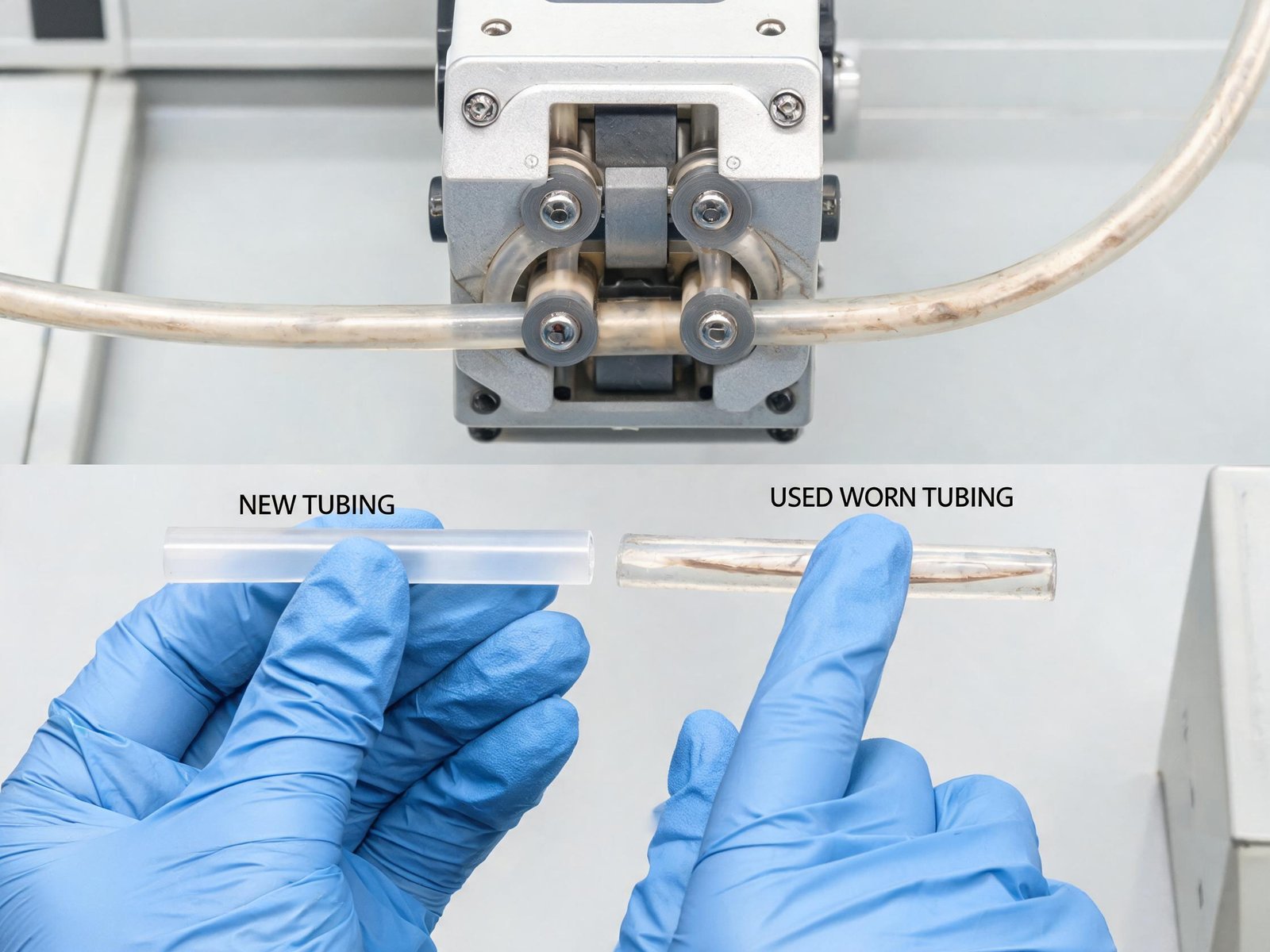
Tubing fatigue is the dominant cause. Every roller pass compresses the tubing, and over thousands of cycles the material loses its ability to fully rebound. This means the tube no longer seals completely after the roller passes, allowing fluid to slip backward. The result is a gradual decline in displaced volume per revolution.
How to Diagnose It
Diagnosing fill volume drift requires a systematic approach. Start by isolating the variable:
Step 1: Verify the fill volume trend. Collect fill weights from the start, middle, and end of a production run. If the drift is linear and progressive, tubing fatigue is the likely cause. If the drift is random, look for air entrainment or speed control issues.
Step 2: Inspect the tubing. Remove the tubing from the pump head and examine the roller track. Visible flattening, discoloration, or wall thinning at the compression point indicates fatigue. Measure the wall thickness at the roller contact area and compare it to unused tubing of the same specification.
Step 3: Check for air in the system. Air bubbles in the feed line compress under roller pressure, absorbing part of the displacement stroke. Inspect the feed reservoir for vortexing, check suction line connections for leaks, and verify that the reservoir level has not dropped below the suction port.
Step 4: Verify pump speed calibration. Use a tachometer or the pump controller’s feedback to confirm actual motor speed matches the commanded speed. Speed drift can occur in stepper or DC motor systems if the driver is overheating or the power supply is unstable.
The FDA Food Safety Modernization Act (FSMA) requires preventive controls that include equipment monitoring. Documenting fill weight trends and tubing inspection intervals supports compliance with these preventive control requirements.
Engineering Fixes
Once the root cause is identified, the following fixes address the most common issues:
For tubing fatigue: Replace the tubing with a material rated for longer cycle life. Silicone tubing offers good fatigue resistance for many food applications, but for abrasive or high-sugar products, consider PharMed or Viton depending on chemical compatibility. YOORAIN offers a selection of peristaltic pump tubing in different materials. Also consider rotating the tubing position periodically during long runs to distribute wear across a fresh section of the tube.
For viscosity changes: If product temperature varies during a run, install a temperature sensor in the feed line and adjust pump speed compensation. For shear-thinning fluids, maintain consistent shear rates by keeping pump speed within a narrow range. The K25 small peristaltic pump with speed control can accommodate these adjustments.
For speed mismatch: Synchronize the pump start/stop signal with the filling valve actuation. Use a PLC or timer to ensure the pump reaches full speed before the valve opens and stops after the valve closes. Adding a brief purge cycle between fills can also improve consistency.
For air entrainment: Install a degassing chamber or air bleed valve in the suction line. Ensure the feed reservoir design prevents vortex formation. Position the suction line entry below the minimum liquid level.
When to Change the Pump or Tubing
Tubing replacement is a routine maintenance task, not a sign of pump failure. However, if tubing life is consistently shorter than expected—less than 200 operating hours for standard food-grade silicone in a clean application—investigate whether the pump head roller pressure is set too high or the tubing size is incorrect for the pump head.
Consider replacing the pump head or entire pump when:
- Roller bearings show play or rough rotation, indicating wear that affects compression consistency
- The pump head bore is worn or scored, preventing proper tubing seating
- Motor torque has degraded, causing speed fluctuations under load
- The pump cannot achieve the required flow rate even with new tubing at maximum speed
For higher-precision filling applications, upgrading to a pump with a stepper motor and closed-loop speed feedback can reduce fill variation. The YZ15 easy-load pump head allows quick tubing changes without tools, which is valuable for food lines requiring frequent product changeovers and cleaning.
| Symptom | Likely Cause | Recommended Action |
|---|---|---|
| Gradual fill volume decline over run | Tubing fatigue | Replace tubing; consider longer-life material |
| Sudden flow stoppage | Tubing rupture or blockage | Inspect and replace tubing; check for tube debris |
| Random fill variation | Air entrainment or speed drift | Bleed air; verify motor speed calibration |
| Splashing at nozzle | Excessive pulsation | Reduce speed; add pulsation dampener |
| Inconsistent fills with viscous product | Temperature-induced viscosity change | Install temperature control; adjust speed compensation |
Maintenance Checklist
- Inspect tubing before each production run for visible wear, flattening, or discoloration
- Record fill weight data at start, middle, and end of each batch to detect drift trends
- Replace tubing at scheduled intervals based on historical cycle life data, not just when failures occur
- Clean pump head rollers and track during product changeover to prevent cross-contamination
- Verify motor speed calibration monthly using a tachometer or built-in diagnostic
- Check suction line connections for air leaks quarterly
- Maintain a log of tubing material, batch number, installation date, and replacement date for traceability
- For small pump installations, verify that the tubing size matches the pump head specification to prevent insufficient compression
Buyer Checklist
- Confirm tubing material is FDA-compliant for food contact and compatible with the product being filled
- Verify pump speed range matches the required fill cycle time and volume
- Check that the pump head allows tool-free tubing changes for cleaning and product changeover
- Ensure motor type (stepper, DC, or AC) provides adequate speed stability for the target fill accuracy
- Request tubing life data from the supplier for the specific product and duty cycle
- Confirm spare tubing availability and lead time from the pump supplier
- Verify that the pump head material is compatible with cleaning and sanitizing chemicals used in the facility
For food and beverage filling projects, providing the required flow range, tubing material preferences, and filling accuracy targets to your pump supplier can help them recommend a suitable configuration that minimizes drift and maximizes tubing life.