
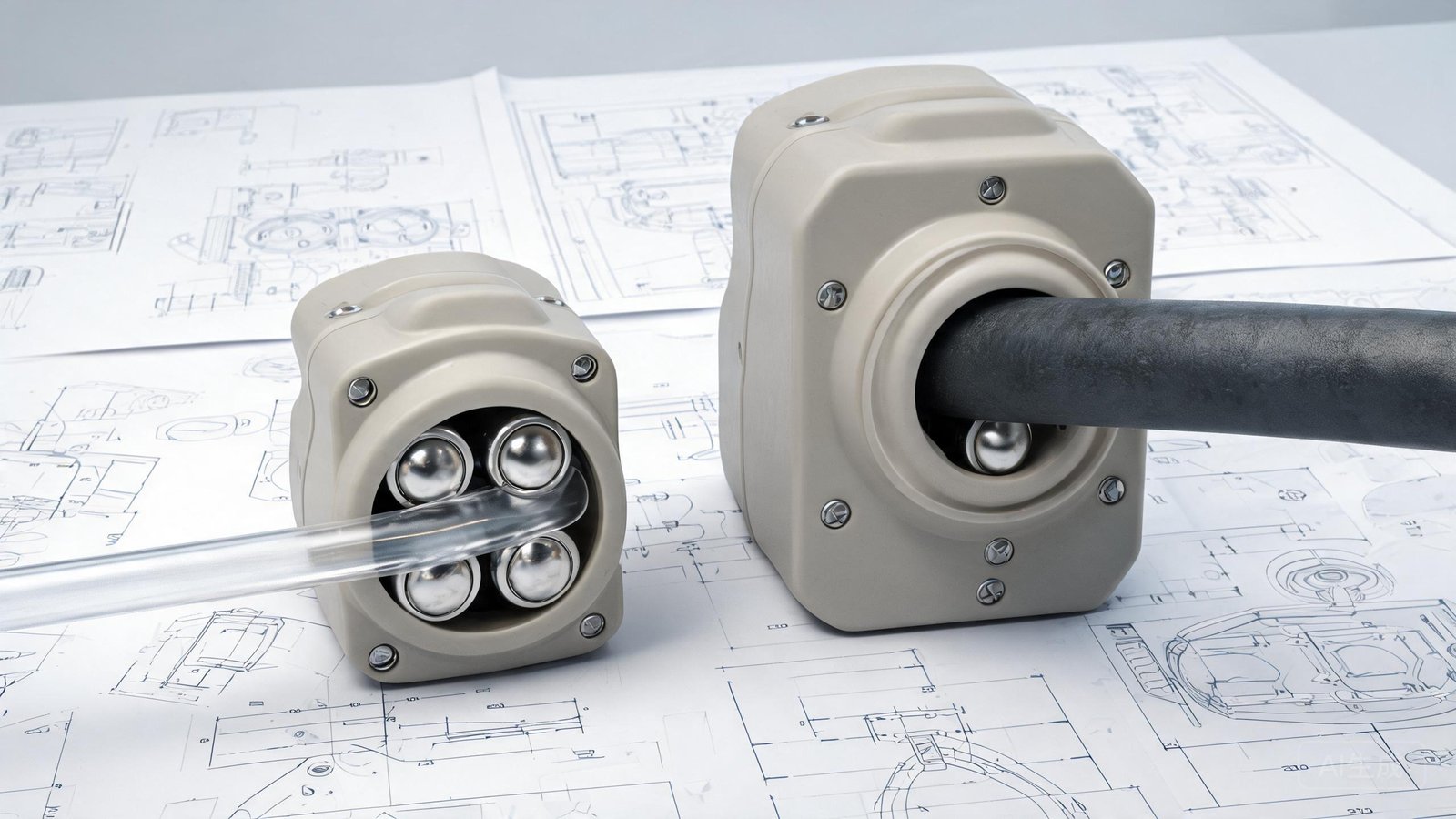
When a maintenance technician replaces a worn pump head, or an OEM engineer designs a fluid panel around a drive, the model number matters. YOORAIN builds two easy-load peristaltic pump heads that cover almost the entire bench-to-process range: the YZ15 easy load peristaltic pump head for laboratory and light-industrial flow rates, and the YZ35 peristaltic pump head for higher transfer volumes. The two heads look related, but they do not share tubing sizes, flow bands, or drive torque requirements. Choosing the wrong one shows up as poor flow accuracy, short tube life, or a motor that stalls under load.
This YZ15 vs YZ35 peristaltic pump head comparison uses the published YOORAIN specifications for both heads and walks through the four decisions that actually drive selection: required flow, tubing size already standardized in the machine, tube-change frequency, and the drive that will turn the head.
YZ15 and YZ35 at a Glance: Confirmed Specifications
Both heads follow the same design principle: stainless steel rollers compress a tube against a rigid polymer track, and the fluid never touches the head itself. Both use SUS304 rollers and support quick tube changes without tools. The differences are scale and tube compatibility. The table below lists only values published on the YOORAIN product pages, so maintenance and procurement teams can compare them without cross-checking a datasheet.
| Parameter | YZ15 easy-load head | YZ35 head |
|---|---|---|
| Catalog flow range | 0.01–2,280 mL/min | 1–12,000 mL/min |
| Accepted tube sizes | 14#, 16#, 25#, 17#, 18# | 73#, 82# |
| Roller material | SUS304 stainless steel | SUS304 stainless steel |
| Head body material | PSF / PPS engineering polymer | PPS engineering polymer |
| Loading style | Easy-load, lever-operated tube change | Easy-load tube change, larger frame |
| Typical role | Analyzers, dosing, laboratory transfer, small fillers | Process transfer, batching, high-volume dosing |
Read the flow ranges as the envelope across every supported tube size and speed. A single tube size never reaches the full span. The 14# tube delivers a fraction of the 18# tube’s output at the same rotor speed, and the same scaling applies between 73# and 82# on the YZ35. Flow in a peristaltic pump is set by three variables together: tube bore, rotor speed, and the degree of tube occlusion. For the underlying calculation, see the guidance on peristaltic pump flow rate calculation.
Flow and Tubing: Why the Two Heads Do Not Overlap
The cleanest way to separate the heads is tubing. The YZ15 accepts 14#, 16#, 25#, 17# and 18# tubing — small-bore and medium-bore lines used for reagents, additives, culture media and sampling circuits. Its 0.01 mL/min lower bound matters for analytical instruments that dispense microlitre-scale aliquots: the head can hold a nearly closed tube at very low rotor speed while still producing repeatable pulses. Its upper bound of about 2,280 mL/min covers most bench filling and pilot transfer duties.
The YZ35 accepts only 73# and 82# tubing. These are thick-walled, large-bore industrial hoses, which is how the head reaches 12,000 mL/min (12 L/min). That volume is useful for batch transfer, recirculation and high-rate chemical feed, but it makes the head a poor fit for a 1 mL dose: at the low end, minimum pulse volume from a 73# tube is already larger than many analyzer targets, and trying to dose small amounts by running the rotor extremely slowly produces long, uneven intervals between pulses rather than precision.
| Requirement | YZ15 fit | YZ35 fit |
|---|---|---|
| Single dose below 10 mL | Strong — small tube sizes keep pulse volume low | Weak — minimum pulse volume too large |
| Continuous transfer above 2–3 L/min | At the top of its range with 18# tube | Strong — designed for this band |
| Machine already standardized on 14#–18# tube | Direct match | Incompatible — tube conversion required |
| Machine already running 73#/82# hose | Incompatible | Direct match |
| Frequent tube changes between batches | Lighter tube, lower lever effort | Heavier hose, more handling effort |
If the machine already uses a specific tube size, that fact alone usually settles the head choice. Converting a YZ15 machine to a YZ35 is not a head swap — it means changing the tube, the fittings and possibly the motor. Teams standardizing a platform should read the YOORAIN guidance on how peristaltic pump tubing sizes differ before freezing the bill of materials.
Drive and System Matching
A pump head is only half of a pump. The YZ15 is the head fitted in YOORAIN’s compact housed systems. The peristaltic pump with housing uses YZ15-family heads and publishes 0.03–420 mL/min at 100 rpm, 0.03–1,200 mL/min at 300 rpm, and 0.03–2,600 mL/min at 610 rpm, with an LCD interface and SUS304 housing. Those numbers show how head, tube and speed combine on a real assembled drive.
The YZ35 needs more torque because it occludes thick 73#/82# wall against the track. It belongs on a frame with a stronger gear motor; in YOORAIN’s own line, the large-flow pumps that accept 73# and 82# silicone tube, such as the K45 large flow rate peristaltic pump (rated to 4,600 mL/min), sit in the same high-flow family. Mounting an YZ35 on a small light-duty motor results in speed sag under pressure and calibration shifts, even if the shaft coupling fits.
| System question | Check |
|---|---|
| Available drive torque | Small/stepper drives: YZ15. Geared industrial drives: YZ35. |
| Mounting and shaft interface | Confirm the head’s coupling matches the drive shaft and that the frame supports the larger YZ35 footprint. |
| Outlet pressure in the circuit | Thick-walled 73#/82# tube tolerates higher discharge loading; verify tube pressure rating for the duty. |
| Control resolution needed | Microlitre dosing needs the YZ15 with a fine-resolution drive; bulk transfer does not. |
| Spare-parts standardization | Keeping one head family per machine platform cuts tube and head SKUs for service teams. |
Tube Material, Wear and Replacement Intervals
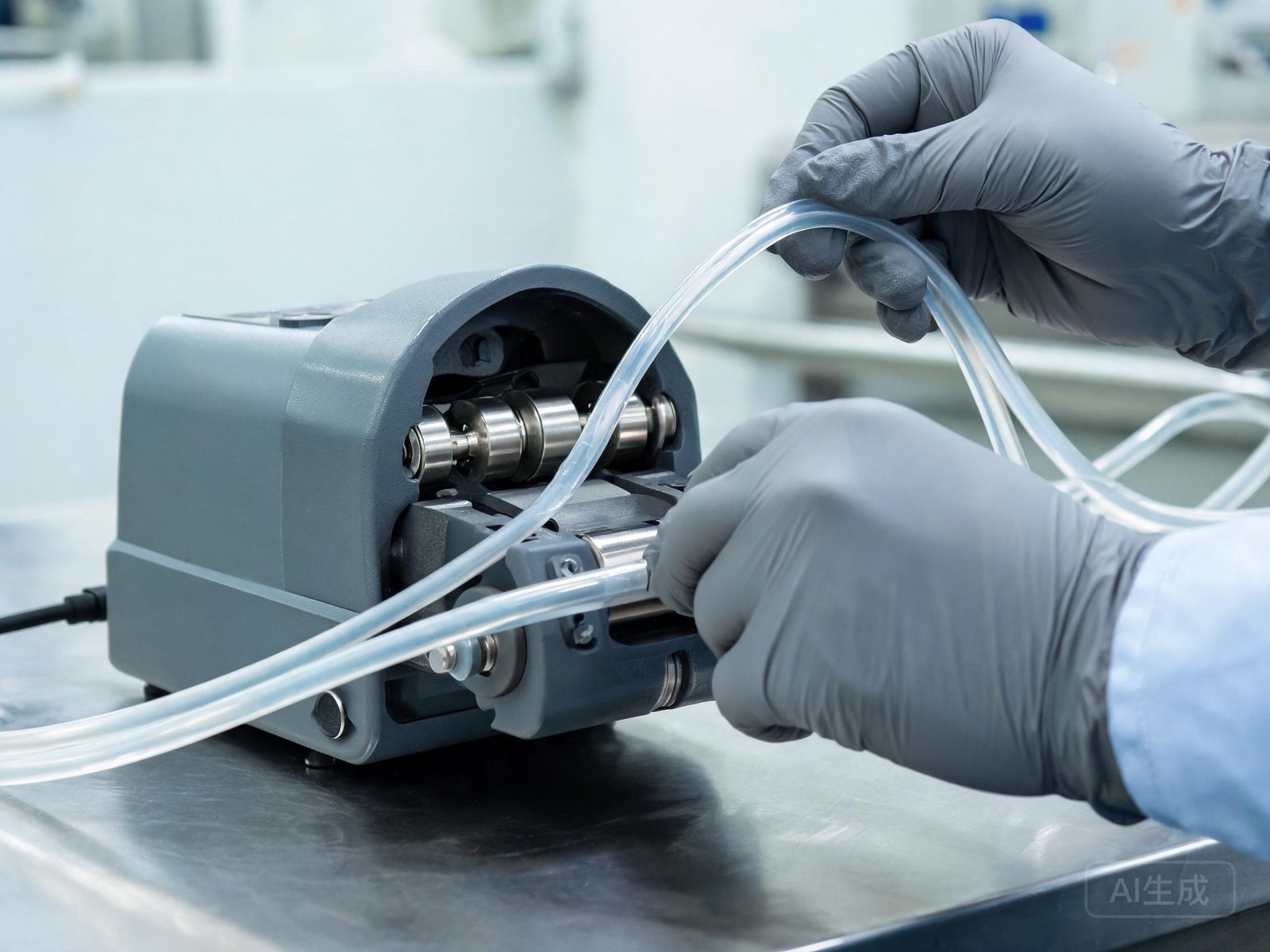
Both heads are wetted only through the tube, so the tube is the wearing part and the primary specification document for the fluid. YOORAIN supplies peristaltic pump tubing in silicone and BPT options across the listed sizes. Silicone suits general transfer and many food duties; BPT is chosen for longer flex life and broader chemical resistance. The head itself does not make a tube chemically compatible with a fluid — that decision belongs to the material data. For food and beverage contact in the United States, buyers commonly ask suppliers for conformance against 21 CFR 177.2600 for rubber articles intended for repeated food contact, and the material declaration should be requested in writing rather than assumed.
Wear behaviour differs with scale. The small bores on the YZ15 fatigue quickly if the pump is oversized and run at high speed; the fix is usually a smaller tube at higher rotor speed, which reduces occlusion stress per stroke. The heavy 73#/82# hoses on the YZ35 last longer per litre moved but cost more per replacement and are stiffer to load. Both heads use easy-load mechanisms specifically because the tube is the most frequently replaced component; when a line changes product daily, the seconds saved per tube change justify the easy-load frame over a fixed-bolt head. Field diagnosis of premature failure — abrasion marks, spiral cuts, swelling — follows the same pattern on both heads and should be worked through against the tube failure checklist before ordering replacement heads.
For calibration and flow verification, the engineering basis is the same at any scale. Volumetric output is measured rather than inferred from motor speed, using traceable gravimetric or volumetric methods; the NIST fluid metrology program publishes reference work on flow measurement, and the Hydraulic Institute standards program maintains pump terminology and test references that procurement specifications can cite.
Model Selection Summary
Choose the YZ15 when doses are small, tube sizes run from 14# to 18#, the machine uses a compact or stepper drive, or easy tube changes between batches dominate the duty. Choose the YZ35 when continuous flow sits in the multi-litre range, the circuit already uses 73# or 82# hose, and a geared drive with adequate torque is available. If the requirement spans both bands — microlitre dosing in one machine and bulk transfer in another — standardizing on two head families with a shared tube supplier is more reliable than stretching one head across duties it was not sized for.
Next step: send YOORAIN your drive model, shaft/interface drawing, target flow, tube size and fluid type. Engineering will confirm the head-to-drive fit in writing and provide the dimension drawing for panel mounting before you order, so the first unit bolts onto the machine without rework.