
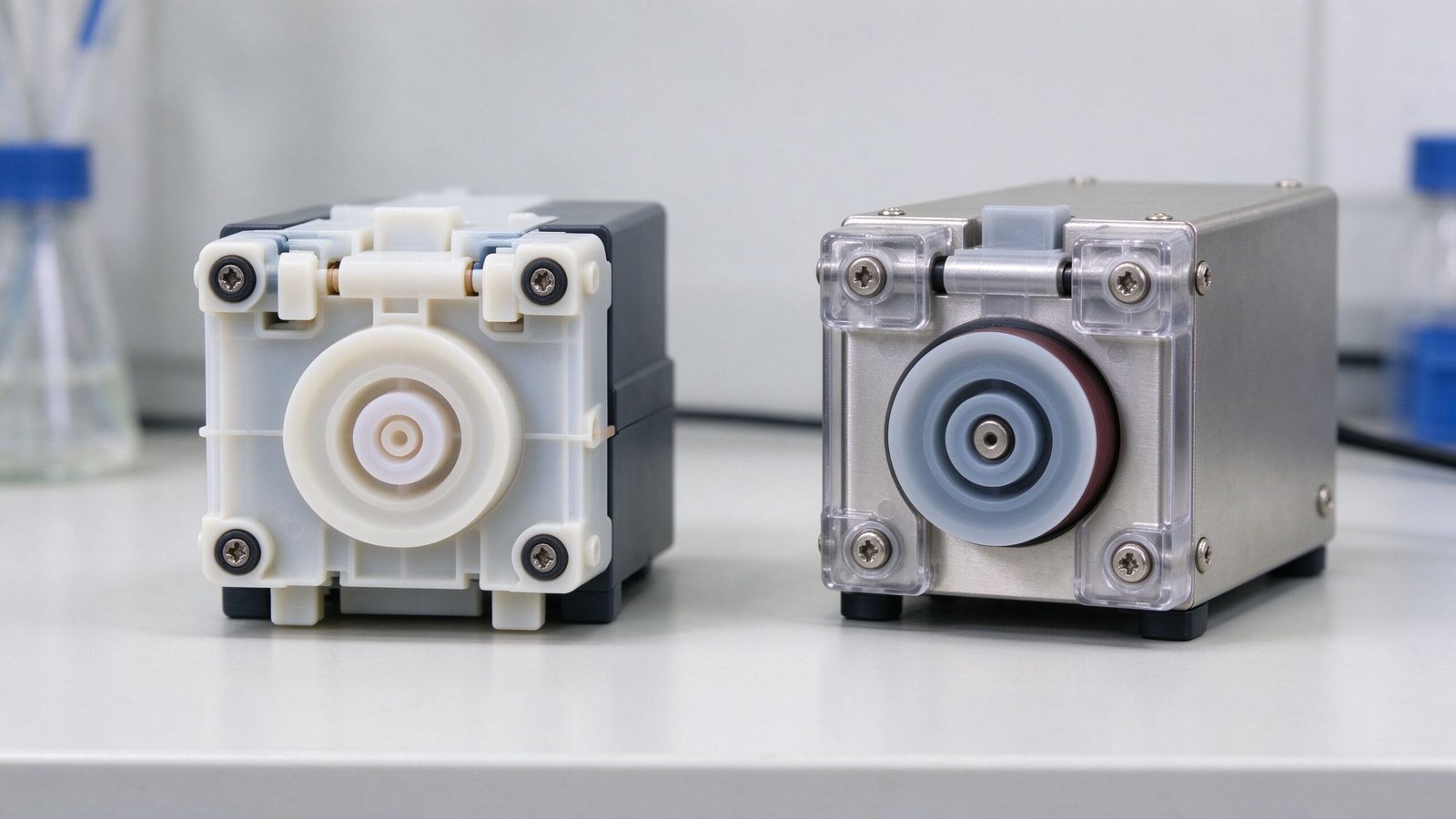
When you specify a peristaltic pump, the head material is often the last thing considered, but it decides how the pump survives the environment. A plastic head is light, cheap, and fine inside a dry instrument. A stainless head costs more, weighs more, but stands up to wash-down, corrosion, and hygienic cleaning. This buyer guide explains the real differences between plastic and stainless peristaltic pump heads so you can choose for your installation rather than defaulting to the cheapest option.
What the Head Material Actually Affects
The head material does not change the displacement, the flow, or the tube. Those are set by the bore and the rollers. What the material changes is how the head body survives the environment: moisture, cleaning chemicals, wash-down, abrasion, and the need to look clean in a hygienic area. A plastic head will not suddenly deliver more flow than a stainless one, but a stainless head will outlast a plastic one in a wet or corrosive room.
This is why the choice is about duty environment, not performance numbers. A pump running in a dry laboratory enclosure sees nothing the body needs to resist. A pump on a factory floor that gets hosed down, or one in a food or pharmaceutical line that must be cleaned, needs a body that survives that treatment. The wetted fluid is always inside the tube, so the chemical contact is not the issue — the room around the pump is.
| Factor | Plastic head | Stainless head |
|---|---|---|
| Weight | Light | Heavier |
| Cost | Lower | Higher |
| Moisture and wash-down | Resists mild, not aggressive | Stands up to regular wash-down |
| Corrosive atmosphere | Can stress or cloud | Unaffected |
| Hygienic cleanability | Acceptable for dry use | Easy to wipe and sanitize |
| Enclosure or bench mount | Ideal | Overkill for dry use |
When a Plastic Head Is the Right Choice
Choose a plastic head when the pump lives inside a dry, controlled enclosure. Instrument panels, analyzers, vending devices, and small dosing skids are the classic case. The plastic body is light, mounts easily, and is cheap to replace, and it does not see moisture or chemicals outside the tube. For an OEM product sold in volume, the plastic head keeps the bill of materials down without sacrificing anything the application actually needs.
A micro peristaltic pump and a mini peristaltic pump are the kind of compact, light units that belong inside an instrument, and a plastic head matches that role. If the pump will never see a hose, a wet floor, or a cleaning chemical sprayed around it, the plastic head is the sensible choice.
When a Stainless Head Earns Its Cost
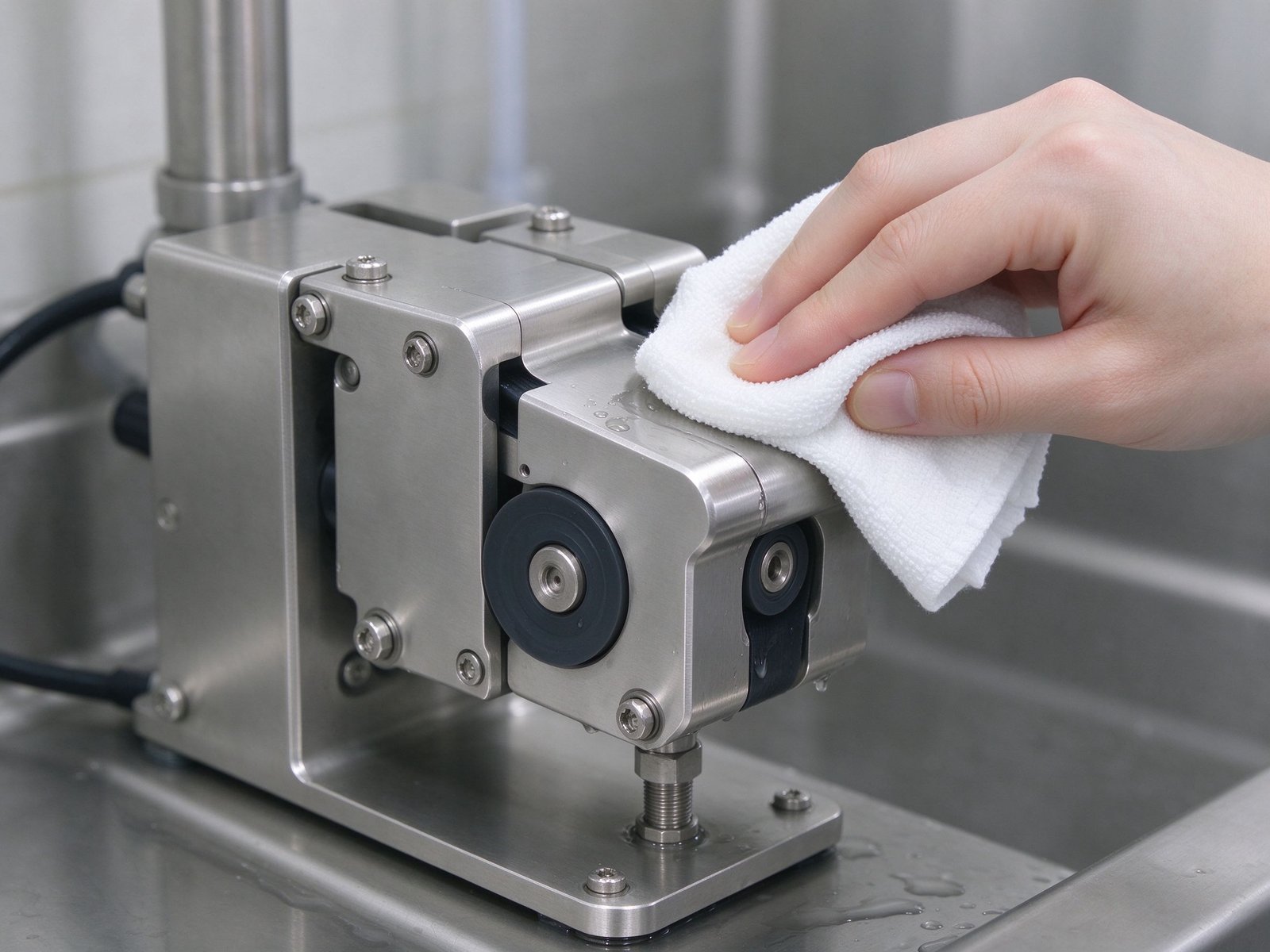
Choose a stainless head when the environment attacks a plastic body. Wash-down areas, food and pharmaceutical lines, chemical plants with a corrosive atmosphere, and any installation that must be wiped or sanitized regularly are the cases where the stainless body pays back. It does not rust, it does not cloud under cleaners, and it can be hosed or wiped without degrading. For a hygienic installation, the smooth stainless surface also cleans more readily than a textured plastic body.
The cost difference is real, but it is measured against what the plastic head would cost to replace once it weathers. A plastic head that yellows, crazes, or corrodes after a year in a wash-down area becomes a recurring service cost. A large-flow peristaltic pump on a process skid, or a dosing pump in a wet plant, is the kind of unit where the stainless head is the lower-cost long-term choice.
| Your situation | Recommended head |
|---|---|
| Inside a dry instrument or panel | Plastic |
| Consumer appliance or vending device | Plastic |
| Bench lab setup, occasional use | Plastic |
| Wash-down or wet floor area | Stainless |
| Food, pharma, or hygienic line | Stainless |
| Corrosive plant atmosphere | Stainless |
Does the Tube Care Either Way?
Not directly. The tube is the wetted part, and its chemistry is chosen for the fluid regardless of the head material. A plastic head running a chemical-resistant tube is fine; a stainless head running the same tube is also fine. The head body only matters for what touches the outside. The peristaltic pump tube choice is its own decision, and it should not be bundled with the head material decision. Pick the tube for the fluid, and the head material for the room.
The one place they interact is heat. A stainless head dissipates heat better than a plastic one, so on a high-duty or continuously running pump, the stainless body runs cooler, which helps the tube last. On an intermittent consumer shot, this difference is negligible. This kind of thermal and material performance is the kind of system-level consideration that a controlled driver, as in the motor-driver operating manual, helps you verify by letting you run the pump under real duty and read the load.
Cost and Total Cost of Ownership
The sticker price favors the plastic head, but total cost often flips it. A plastic head in a hostile environment is replaced on a short interval; a stainless head lasts the life of the installation. For a one-off bench build, the plastic head’s lower price wins. For a production line or a field-deployed product, the avoided service calls on a stainless head usually justify the upfront cost. Measure the environment realistically: a “mostly dry” installation that occasionally gets wiped down may still push the plastic head past its comfort zone, and a head that yellows or crazes in service is a recurring replacement rather than a one-time saving.
If you are unsure which environment your pump will actually see, a peristaltic pump driver paired with a sample head lets you run the pump under the real duty cycle and watch how the body holds up before you commit to a material across a production run. That bench check, the point-of-use approach described by NIST’s Physical Measurement Laboratory, removes the guesswork.
Weight, Mounting, and Product Design
The material choice ripples into the rest of the design. A stainless head is heavier, so a wall-mounted or compact instrument needs a bracket that carries that weight without sagging, and the enclosure must be designed for the extra mass. A plastic head is light enough to mount directly to a panel with small fasteners. For a portable or handheld product, the weight difference alone can favor plastic. For a fixed process skid, the extra weight of stainless is irrelevant, and the corrosion resistance wins.
Vibration is the other design factor. A heavier stainless head dampens vibration naturally, which can quiet a pump in a running plant. A light plastic head may transmit more of the roller vibration into the bracket, so it benefits from a rigid mount or a little isolation. Either way, the mounting should be specified for the actual head, not assumed.
When a Mixed Choice Makes Sense
You do not have to choose one material for every pump in a build. A wet, wash-down area can use stainless heads, while a dry analyzer beside it uses plastic. The decision follows the location, not the brand. A motor-driver operating manual keeps the control consistent across both, so the dosing logic is identical whether the head is plastic or stainless, and a peristaltic pump driver reference describes how that control is set up. This lets you right-size the material room by room rather than over-specifying the whole installation.
If you are choosing between a plastic and a stainless peristaltic pump head and want a recommendation, contact YOORAIN with where the pump will be mounted, whether it sees wash-down or a corrosive atmosphere, and the fluid it will dose. We can match the head material to the actual environment and supply a sample so you can confirm it on-site before production.