
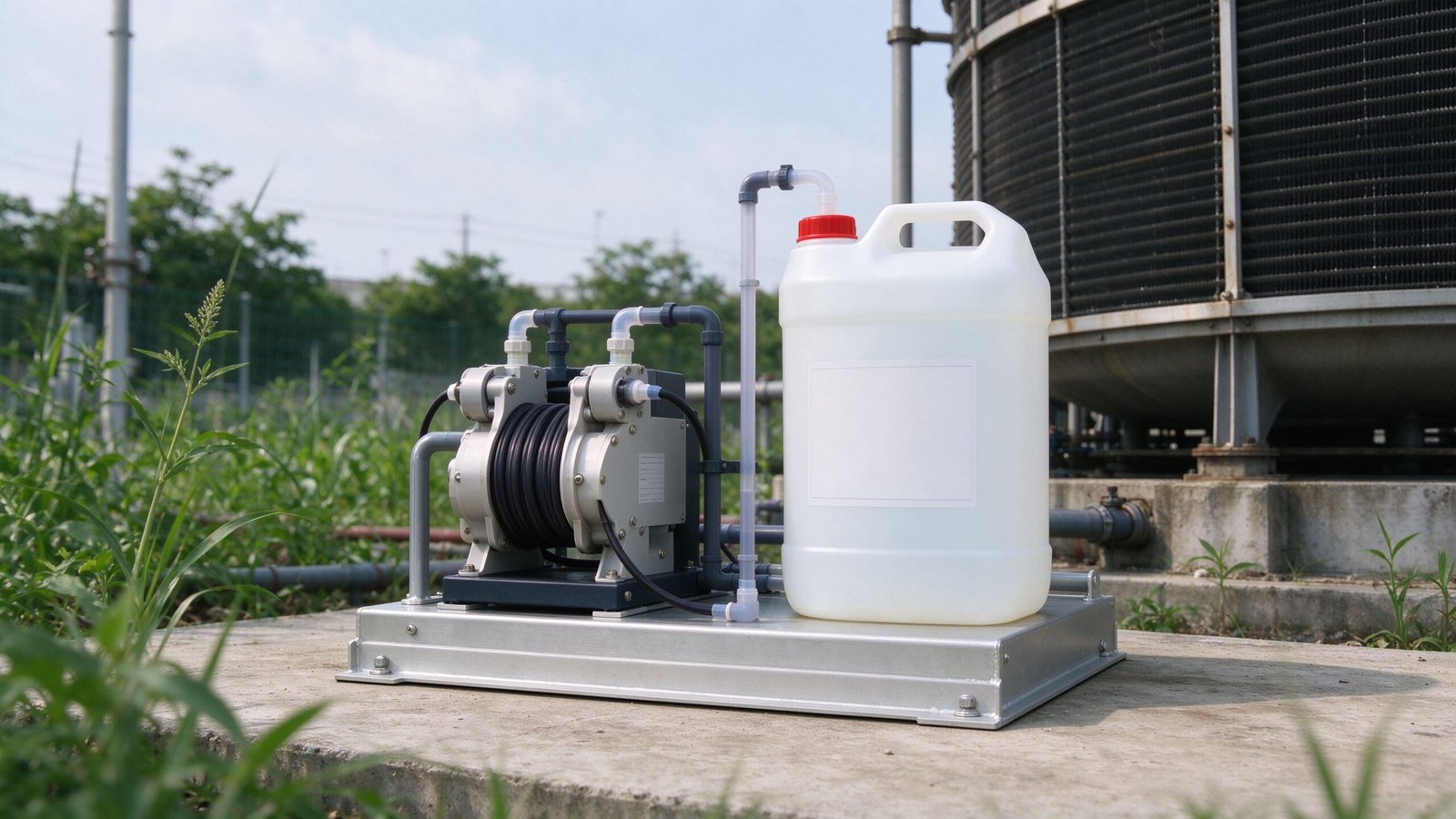
A cooling tower only works as well as the chemical program that protects it. Scale, corrosion, and biological growth build up on the fill, the basin, and the heat exchangers unless a small metering pump adds treatment chemicals at a controlled rate. The pump for this duty sees concentrated biocides, scale inhibitors, and pH adjusters, often in a warm plant room, and it must dose accurately without leaking on the floor. A peristaltic pump is a common choice for cooling tower treatment because the chemical never touches a seal, and the only wetted part is a cheap tube that is easy to replace.
What Gets Dosed on a Cooling Tower
Three classes of chemicals are fed to most cooling towers: scale and corrosion inhibitors that keep calcium from depositing on the fill, biocides that control bacteria and biofilm in the basin, and pH adjusters that hold the water in the range the inhibitor chemistry expects. Each is fed at a small, controlled rate based on tower load, make-up water, or a timer. The doses are small — often milliliters to a few liters per hour — which is exactly the range a small peristaltic dosing pump handles well.
These chemicals are corrosive. A shaft-seal pump on a biocide line will eventually weep, and a weep on a floor near a tower is both a housekeeping and a safety issue. A peristaltic pump has no seal in contact with the chemical; the fluid stays inside the tube. A 24V dosing pump on a small skid is the typical form factor, with the suction dropping into a chemical drum and the discharge running to the tower make-up line.
| Chemical | Typical feed | Why peristaltic suits it |
|---|---|---|
| Scale/corrosion inhibitor | Continuous or cyclic | Sealed tube, no seal weep |
| Biocide (oxidizing/non-oxidizing) | Shock feed, intermittent | Doses a measured shot, easy tube swap |
| pH adjuster (acid/caustic) | PID on tower pH | Accurate small volume, isolated path |
| Dispersant / anti-foulant | Cyclic | Handles small particulates in the fluid |
Why a Peristaltic Pump Over Other Metering Pumps
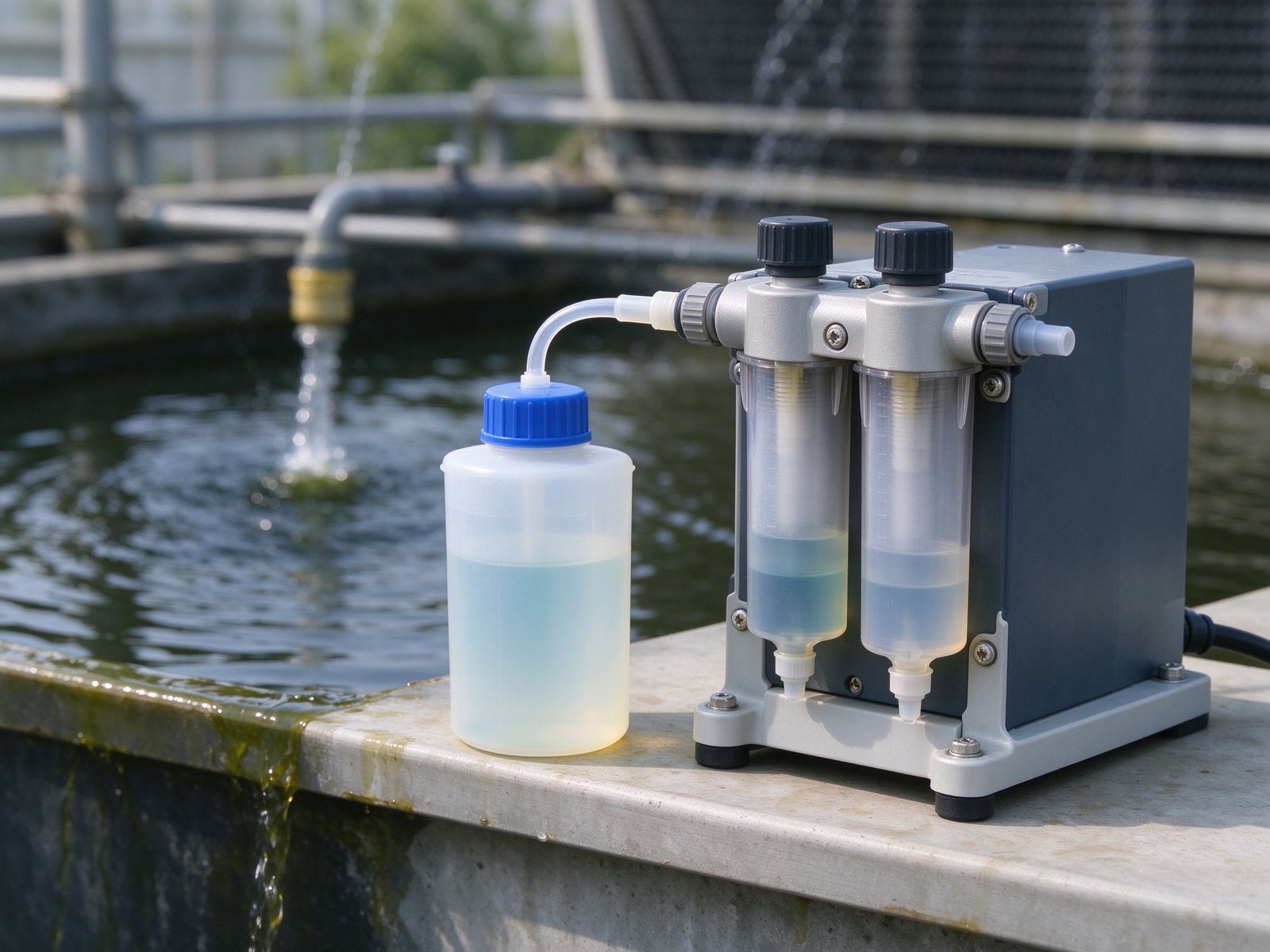
Diaphragm metering pumps are the traditional choice for cooling tower chemicals, and they work. But they have valves that can clog on dirty chemicals, and seals that can leak. A peristaltic pump has no valves in the wetted path — the tube is the valve, the seal, and the pump all in one. It will run a small particulate without clogging, and it can run dry on a drum change without damaging a seal. For a plant that wants low-skill maintenance, a tube swap in minutes beats a diaphragm rebuild with tools.
The peristaltic pump driver also makes the feed easy to control. On a pH loop, the driver accepts a signal from the tower controller and adjusts the speed, so the acid or caustic dose follows the measured pH rather than running on a fixed timer. The speed and run-time approach described in the motor-driver operating manual is how that control is set up. A 12V DC peristaltic pump is also easy to power from a remote cabinet or a solar-banded skid where mains power is awkward.
Tube Material for Cooling Tower Chemicals
The tube is the wetted part, so the tube chemistry must match the chemical. Oxidizing biocides and acids are hard on elastomers; silicone is not the right choice for those, and a more resistant tube material is required. A tube that swells in the chemical will soften, lose its seal, and under-dose. The right move is to confirm the tube material against the chemical supplier’s compatibility chart, and to keep a spare tube on the skid so the change is quick when the interval comes due.
The water-treatment and material-compatibility approach described by EPA’s guidance on industrial water management is to match the wetted path to the actual chemical, not to assume a generic tube will do. A peristaltic pump tube chosen for biocide service should be the rated material for that biocide, not the cheapest tube that fits the head.
| Service | Tube consideration |
|---|---|
| Oxidizing biocide | Resistant elastomer, shorter change interval |
| Acid pH adjustment | Chemically compatible, sealed fittings |
| Caustic pH adjustment | Compatible tube, watch for hardening |
| Inhibitor with small solids | Clear tube, easy to inspect |
| Warm plant room | Material rated for warm temperature |
Sizing the Feed
Cooling tower dosing is usually small. A small or small peristaltic pump is rarely the right choice by flow alone; it is the right choice because the dose is small and accuracy matters. Size the pump so it runs in the middle of its range, not at the top speed. A pump running at top speed on a continuous biocide feed will overheat and wear the tube fast. A pump running at a slow, controlled speed on a larger head stays cool and doses repeatably. This is the same duty-cycle logic that applies to any continuous dosing skid: slow, cool, and in the middle of the range.
For a shock biocide feed that runs for a few minutes each day, the pump can be a small intermittent unit. For a continuous inhibitor feed, use a continuous-rated setup. The point-of-use verification, as described by NIST’s Physical Measurement Laboratory, is to collect the discharge for a minute and weigh it, then confirm the delivered mL per minute matches the target before putting the skid online.
Installation on a Tower Skid
Mount the pump near the chemical drum, with the suction line short and airtight. A long suction run on a small pump introduces air, which shows up as uneven shots. The discharge line runs up to the tower make-up or return line, with a simple back-pressure or injection check at the tower. Keep the pump in a ventilated cabinet; a warm tower room plus a sealed cabinet is a recipe for a hot pump and a short tube life. Label the suction and discharge, and route the acid and caustic lines separately so a cross-connection is impossible.
Keep a bottle of neutralizer and eye wash near the skid, because the chemicals are concentrated. The pump itself is low-maintenance, but the chemistry it handles is not, and the skid should be installed with the same precautions as any chemical feed.
Maintenance Rhythm
The main maintenance on a cooling tower peristaltic pump is the tube. Track the tube by run time or by chemical volume, and change it before it hardens or swells. Inspect the suction foot valve for debris, and check that the drum level alarm works so the pump is not running dry on an empty tank. A dry peristaltic pump is not damaged the way a seal pump is, but it still delivers nothing, and the tower goes unprotected during a busy week.
| Task | Typical frequency |
|---|---|
| Inspect tube for swelling, cracks, hardening | Monthly |
| Weigh and verify delivered dose | After each tube change |
| Clean suction foot strainer | Monthly |
| Change tube on interval | Per chemistry, commonly quarterly |
| Check drum level alarm | Monthly |
When to Choose a Peristaltic Over a Diaphragm Pump Here
The honest answer is not that peristaltic is always better. A diaphragm metering pump is a robust, long-standing choice for clean, low-solids chemicals, and it handles high pressure well. The peristaltic wins when the chemical has a tendency to foul valves, when the operator wants a tube change in minutes rather than a seal replacement, or when the fluid contains small solids that would jam a diaphragm check valve. For a cooling tower program that changes chemistry seasonally or that handles dispersants with small particles, the peristaltic’s valve-free wetted path is the deciding factor. On a clean, high-pressure acid feed, the diaphragm may still be the better tool, and a good supplier will say so rather than sell the wrong pump.
If you are building a cooling tower dosing skid and need a peristaltic pump sized for inhibitor, biocide, or pH adjustment, contact YOORAIN with the chemical, the required mL/hour, the warmest room temperature, and whether the feed is continuous or shock. We can recommend a head, tube material, and driver that doses accurately without weeping on the tower floor.