
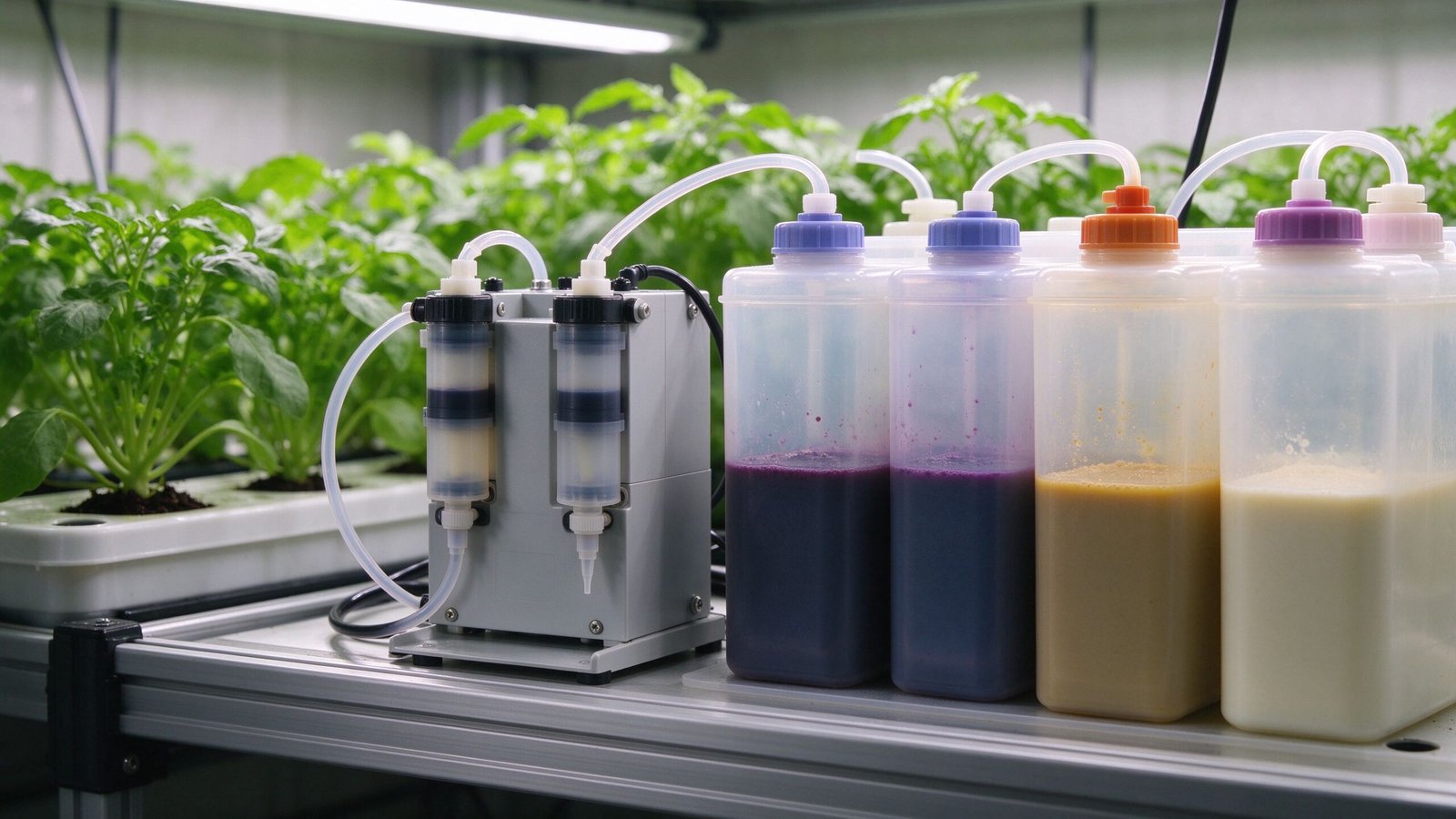
A hydroponic system only grows as well as the nutrient dose it receives. The water in the reservoir has to be topped up with concentrated A and B nutrients, pH adjusters, and occasionally supplements, and if the dose is off, the plants show it within days — burned tips, slow growth, weak stems. A peristaltic pump is the standard way to dose concentrated nutrients in small, measured shots, because the concentrate is corrosive, the dose is small, and the pump has to run quietly in a grow room. This application guide covers how peristaltic pumps fit hydroponic and nutrient-film systems, how to size them, and where they cause trouble.
What Gets Dosed in a Hydroponic System
Three categories of concentrate are fed to a recirculating hydroponic system. A and B nutrients are kept in separate concentrates because they would precipitate if mixed; they are dosed in small amounts into the reservoir. pH up and pH down adjust the solution into the range the plants want. Supplements — calmag, silica, beneficial microbes — are dosed occasionally or on a schedule. Each concentrate is corrosive, viscous when cold, and used in milliliter-per-day quantities, which is exactly the range a small peristaltic pump handles well.
A micro peristaltic pump on a small head is the typical form factor. The suction drops into the nutrient bottle, and the discharge runs into the reservoir return. The pump runs for a few seconds at a time, on a timer or a pH controller, rather than continuously. The sealed tube means the concentrated nutrient never touches a pump seal, which matters because nutrient salts crystalize on anything they touch.
| Concentrate | Dose pattern | Pump note |
|---|---|---|
| Nutrient A | Small timed shots | Corrosive, keep tube compatible |
| Nutrient B | Small timed shots | Separate pump from A |
| pH down (acid) | On pH signal | Reacts to pH controller |
| pH up | On pH signal | Small bore, accurate shots |
| Supplements | Occasional, manual | Can share a pump with flushing |
Why Peristaltic Over Gravity or Valve Dosing
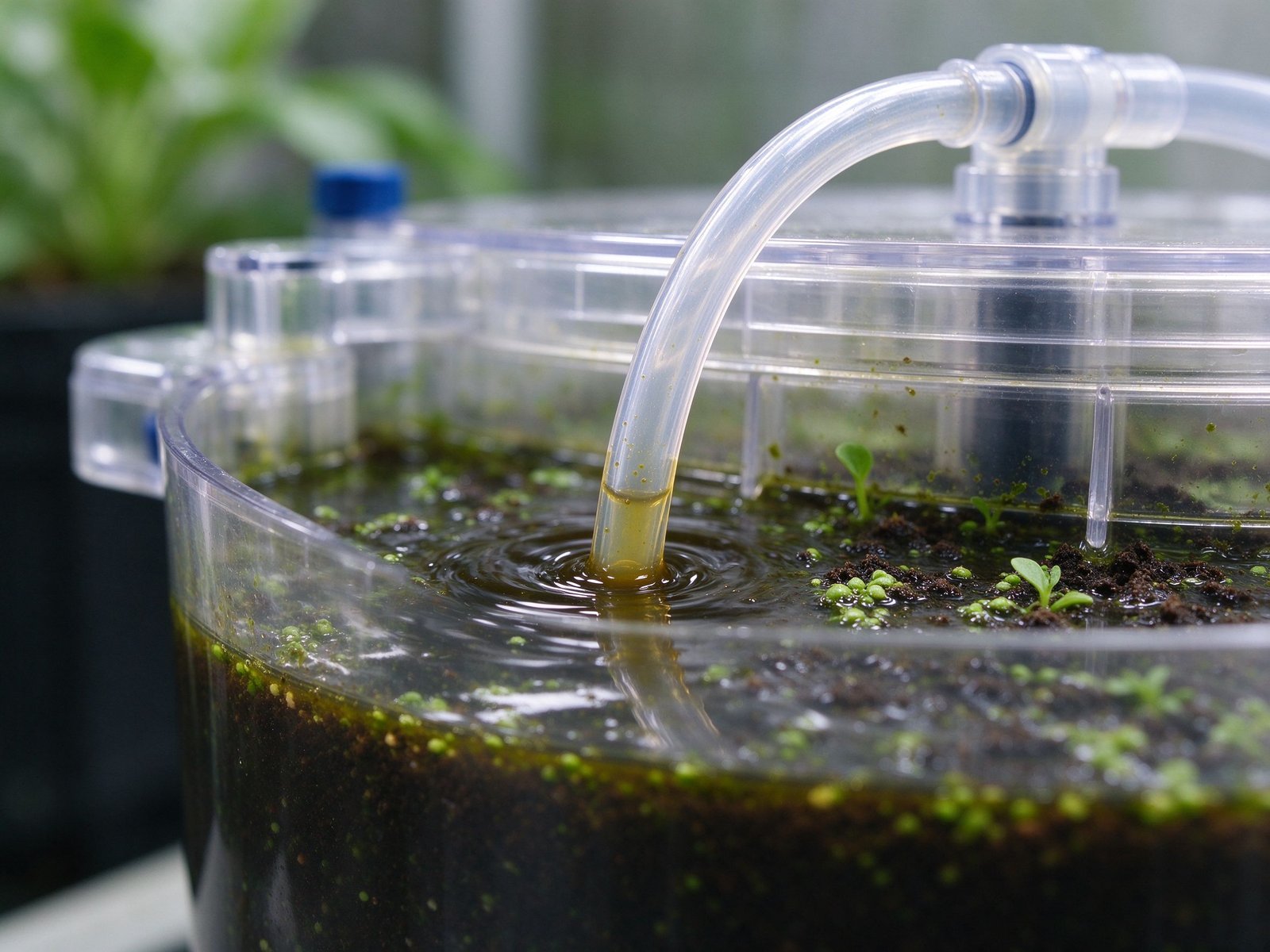
Small growers sometimes dose nutrients by gravity or by a valve opened for a timed interval. That works for a small system, but it is inaccurate: the flow depends on the bottle height, the temperature, and how open the valve is. A peristaltic pump doses a fixed volume per revolution, so a timed shot is repeatable from week to week. It also pushes the concentrate into the reservoir regardless of bottle height, and it primes itself when the bottle is changed.
A 12V DC peristaltic pump is popular in grow rooms because it runs from the same low-voltage supply as the pH controller and the timer, with no mains power near the water. The speed and run-time setup, as described in the motor-driver operating manual, lets the grower set each shot to the millisecond. The point-of-use calibration, as described by NIST’s Physical Measurement Laboratory, is to collect a shot in a measuring cup and confirm the mL before trusting the timer.
Sizing the Pump
Hydroponic dosing is small. A reservoir that holds 100 L might need 5 to 20 mL of concentrate per dose, a few times a day. A micro or mini peristaltic pump on a small bore covers this range easily. Size the pump so it runs for 5 to 30 seconds per shot, not a fraction of a second; too short a shot means the dose is dominated by the valve and tubing fill time. If the recipe requires a 2 mL shot and the pump delivers that in 0.5 seconds, the timer resolution and the tubing volume dominate the accuracy — choose a smaller pump or a slower speed so the shot takes 5 seconds or more.
For a multi-reservoir commercial grow, one small pump per reservoir per concentrate is simpler than a single pump with a valve manifold. A manifold adds valves that clog on nutrient salts; dedicated small pumps are cheap and reliable. A 24V dosing pump on each line is a common commercial setup.
| Reservoir size | Typical pump choice |
|---|---|
| Small (under 50 L) | Micro pump, small bore |
| Medium (50–500 L) | Mini or small pump, timed shots |
| Commercial (500 L+) | Dosing pump per reservoir per nutrient |
| Recirculating NFT | Small pump on pH and EC control |
Tube Material for Nutrients
Nutrient concentrates are salts in water, and pH down is usually an acid. The tube material has to handle both. A food-grade silicone or a thermoplastic tube works for the nutrient A and B concentrates; for the acid line, confirm the tube is acid-compatible. Nutrient salts also crystalize if the tube is left to dry between shots, so rinse the pump with clean water after a heavy dose, or keep a little fresh water running through the line. The peristaltic pump tube is cheap, and changing it annually is cheaper than dealing with a clogged, hardened tube.
The fluid-handling practice described by NSF’s engineering guidance on water systems is to keep the wetted path clean and compatible with the concentrate, which on a grow room means flushing and periodic tube swaps. A tube that has sat with nutrient residue for months grows biofilm inside, which then sloughs into the reservoir.
pH Control and Nutrient EC
On a recirculating system, the pH drifts as the plants take up nutrients, and the EC (electrical conductivity) drifts as the reservoir evaporates and concentrates. A peristaltic pump on a pH controller adds acid or base to pull the pH back into range, and a second pump adds fresh nutrient when the EC drops. The pump has to respond quickly to the controller without overshooting. A small pump that doses in short, adjustable shots is better here than a large pump that either doses too much or runs too fast to throttle. The speed and shot logic on the driver is tuned so each correction is a few milliliters, not a dump.
For a reservoir that mixes fresh water with nutrient concentrates, the order matters: water first, then nutrient, then pH adjustment. A peristaltic pump that doses nutrient directly into a concentrated acid line can precipitate salts in the tube, which clogs the head. The plumbing should deliver each concentrate into a flowing return, not into a dead corner. The fluid-handling practice described by NSF’s guidance on water systems is to inject into a moving stream, and the same rule applies on a grow reservoir.
Common Problems on a Grow Setup
The most common issue is an under-dose after a bottle change. The new bottle’s suction line has a column of air, and the first shots after the swap are short until the line primes. Keep a short priming pulse at the start of each dosing cycle, or accept that the first shot after a swap is approximate. The second issue is crystal buildup on the suction foot filter, which starves the pump. Rinse the foot filter weekly. The third is a tube that hardens on the acid line; check it quarterly and swap it before it cracks.
| Problem | Fix |
|---|---|
| Short shot after bottle change | Add priming pulse, re-prime manually |
| Flow slows over weeks | Clean suction foot filter |
| Tube hardens on acid line | Swap tube quarterly |
| Biofilm in line | Rinse with clean water, flush with mild acid |
If you are setting up hydroponic nutrient dosing and need a small peristaltic pump sized for the reservoir volume and the concentrate chemistry, contact YOORAIN with the reservoir size, the concentrates, the shots per day, and whether the pump runs from a timer or a pH controller. We can recommend a micro or mini pump and tube material that doses accurately without crystalizing on the seal, and bench-test the shot volume on your concentrate before the system goes live.