
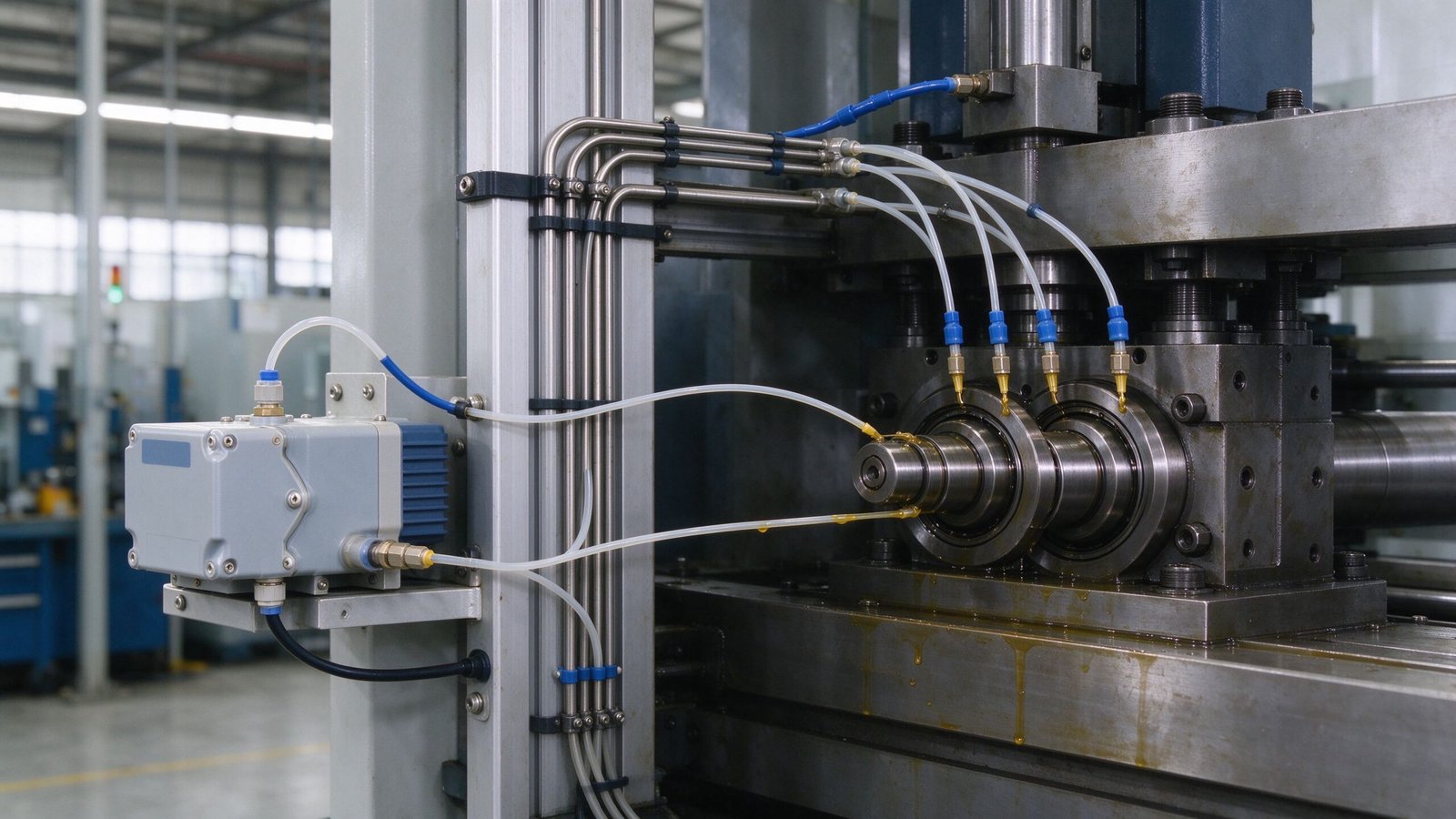
Automatic lubrication systems pump a small, measured shot of oil or grease to bearings, chains, and slide guides on a schedule. The job is not a big flow; it is a repeatable small dose, delivered reliably, on a machine that is often running. A peristaltic pump fits this role well because it isolates the lubricant in a tube, handles viscous grease, and doses without a valve that can clog. This application guide explains why OEMs and lubrication-equipment builders choose a peristaltic pump for oil and grease distribution, and how to size it for the lubrication point.
Why a Peristaltic Pump Fits Lubrication Dosing
Lubrication dosing is a metering task, not a transfer task. The system wants a fixed volume per cycle, repeated every few minutes or hours, to many points. A peristaltic pump delivers a bolus by roller displacement, isolates the lubricant from the pump internals, and has no check valve or piston that grease can jam. Because the only wetted part is the tube, changing the lubricant means changing or flushing the tube, which keeps the fluid path clean.
For oil, a small pump draws from a reservoir and sends a metered shot through distribution lines. For grease, the viscous load asks for a head and tube chosen for higher resistance, and a motor with enough torque to push the grease through cold lines. The large-flow peristaltic pump head family is suited to higher-viscosity and longer-line duties, while smaller heads handle light oil at a few points.
| Lubricant | Typical challenge | Pump approach |
|---|---|---|
| Light machine oil | Low viscosity, repeatable small shot | Small head, stepper or timed run |
| Multi-purpose grease | High viscosity, cold stiffening | Larger head, geared motor, warmed start |
| Way oil / chain oil | Long distribution lines | Account for back-pressure in sizing |
| Food-grade oil | Clean, replaceable wetted path | Tube material selected for food contact |
Sizing the Dose and the Head
The dose is set by the roller displacement per revolution and the run time. The system controller turns the pump on for a calculated number of seconds, delivering a set volume to the lubrication network. The first step is to define the required shot volume and how often it must be delivered, then choose a head and tube that produce that volume at a comfortable speed. A head run near its maximum speed to reach the dose will wear the tube faster; running it slowly and briefly is easier on the pump.
Back-pressure from long lines and cold grease is the sizing factor that is most often missed. A tube that seals against low pressure at 20 degrees C can leak back against a long, cold grease line. The fix is to size the head and motor for the real line resistance, not just the free-flow rate. The 24V dosing pump with a controlled driver is the usual building block for a timed-shot lubrication controller, because its speed and run time can be set by the machine PLC.
Contamination and Tube Life
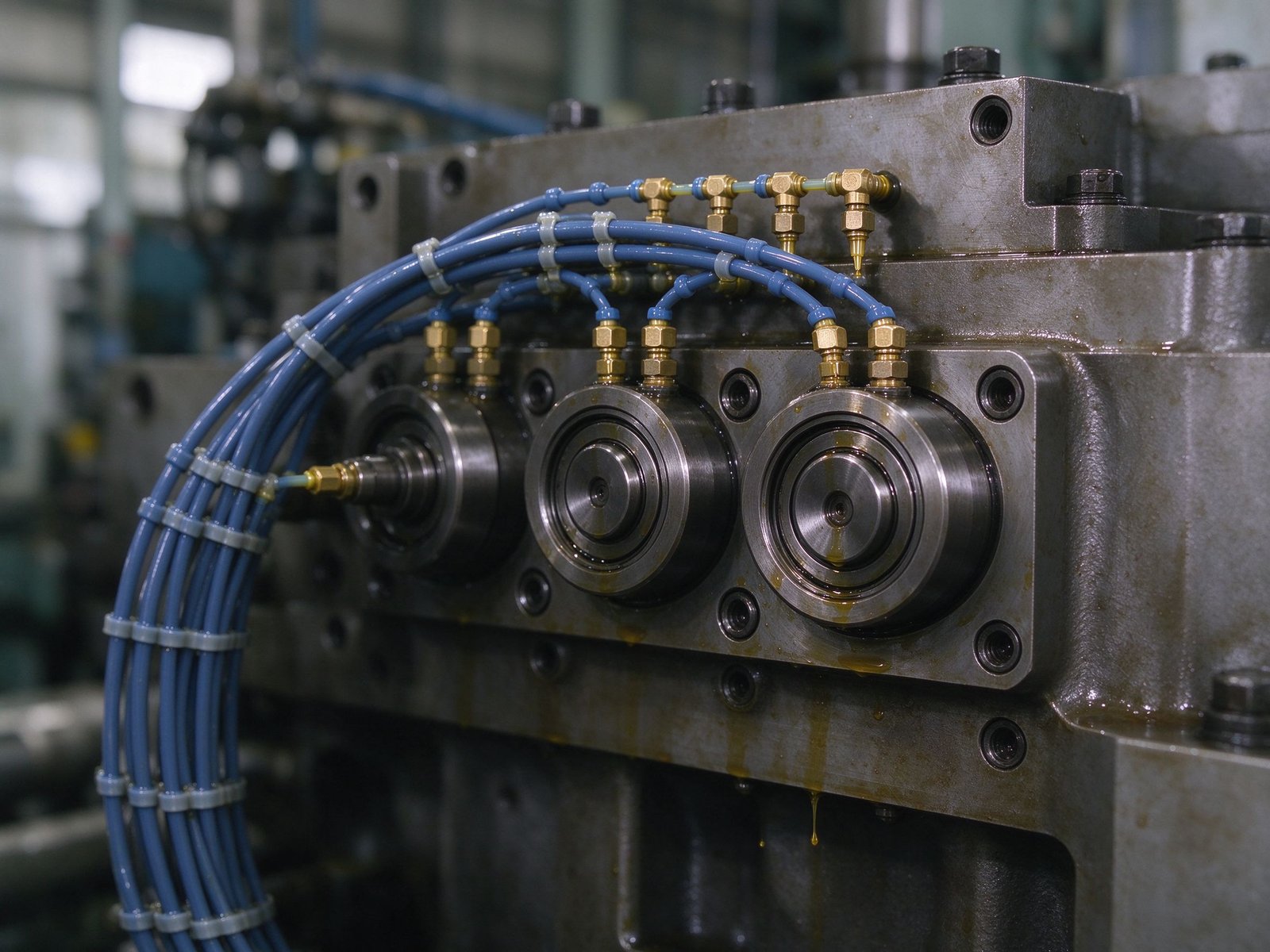
Lubrication systems live in dirty environments: metal chips, dust, and washdown water. A peristaltic pump’s closed tube protects the lubricant from outside contamination, and the pump itself has no exposed wetted parts to corrode. The tube is the consumable, and on a lubrication pump it should be replaced on a schedule tied to running hours, because the grease and the duty cycle wear it predictably.
Because the pump is usually on a timed cycle, monitoring is simple: watch whether the line pressure builds on each shot. A weak or partial shot points to a worn tube losing its seal, not to a pump failure. This is the kind of condition-based maintenance that measurement practice supports: compare the delivered shot against the expected volume on a schedule, and replace the tube when the shot drops. In washdown environments, the pump should be mounted where water cannot pool around the head, and the tube and fittings should be checked after cleaning, because water in the lubricant reservoir is a contamination path that the pump itself cannot prevent.
Starting Cold with Grease
Grease is the hardest lubricant to pump, especially in a cold machine room. At low temperature the grease stiffens, the back-pressure in the lines rises, and a pump that starts fine in a warm lab can stall on a winter morning. The response is not to oversize the motor for every day; it is to choose a head and geared motor with torque margin, and to let the system run a brief purge cycle on startup before the main equipment starts. A warm-up or slow start cycle lets the grease flow before the full shot is demanded.
Oil is far kinder. It flows at low temperature, settles fast in the lines, and leaves little residual pressure. Where the application allows oil instead of grease, the pump and lines simplify. Where grease is required for the bearing design, the sizing should be based on the coldest expected ambient, not the average, and a sample run at that low temperature confirms the pump will start and dose the right shot.
Distribution Blocks and Multiple Points
A single pump often feeds several lubrication points through a distribution block. The block splits the pump’s bolus to the bearings, and the pump must deliver enough total volume to fill all the divider outlets in one cycle. This changes the sizing: the dose is the sum of all points, and a worn tube that under-delivers leaves one or more points starved. Monitoring the block’s cycle indicator, rather than trusting the pump to run, is how real systems confirm the lubrication actually reached the points.
Because the peristaltic tube is the wearing consumable, it should be on a planned replacement schedule tied to running hours and the number of cycles. A tube that has delivered thousands of timed shots has fatigued, and replacing it on schedule prevents the one day a lubrication point goes dry and a bearing fails. This is the kind of planned maintenance that turns lubrication from a reactive repair into a predictable service task.
Integration in an OEM Lubrication Unit
For a lubrication-equipment builder, the pump is one component in a unit with a reservoir, a controller, and distribution blocks. The pump should accept the control signal the controller already uses: an analog voltage, PWM, or a simple run/stop with a timed output. Typical peristaltic drivers, as in common motor-driver manuals, accept these signals, and a defined speed-control input lets the unit tune the shot on the bench.
| Design step | What to decide |
|---|---|
| Dose volume | Shot per cycle and interval |
| Lubricant | Oil or grease, viscosity, temperature |
| Line resistance | Length, height, number of points |
| Control signal | Run/stop, analog, or timed PLC output |
| Tube schedule | Replacement interval from running hours |
A compact head such as a small peristaltic pump fits inside an integrated lubrication panel, and the peristaltic pump tube chosen should be compatible with the lubricant and rated for the duty cycle. Keeping the intake short and clean, and mounting the pump where washdown water will not pool on it, rounds out a reliable installation.
If you are building an automatic lubrication unit and need a pump for oil or grease shots, contact YOORAIN with the lubricant viscosity, the shot volume, the number of distribution points, and the control signal your controller uses. We can recommend the head, tube, and driver combination, and supply a sample to validate the shot on your reservoir and line layout. We can also advise on the tube replacement interval once the duty cycle and lubricant are known, so the maintenance schedule is set before the unit ships rather than discovered in the field.