
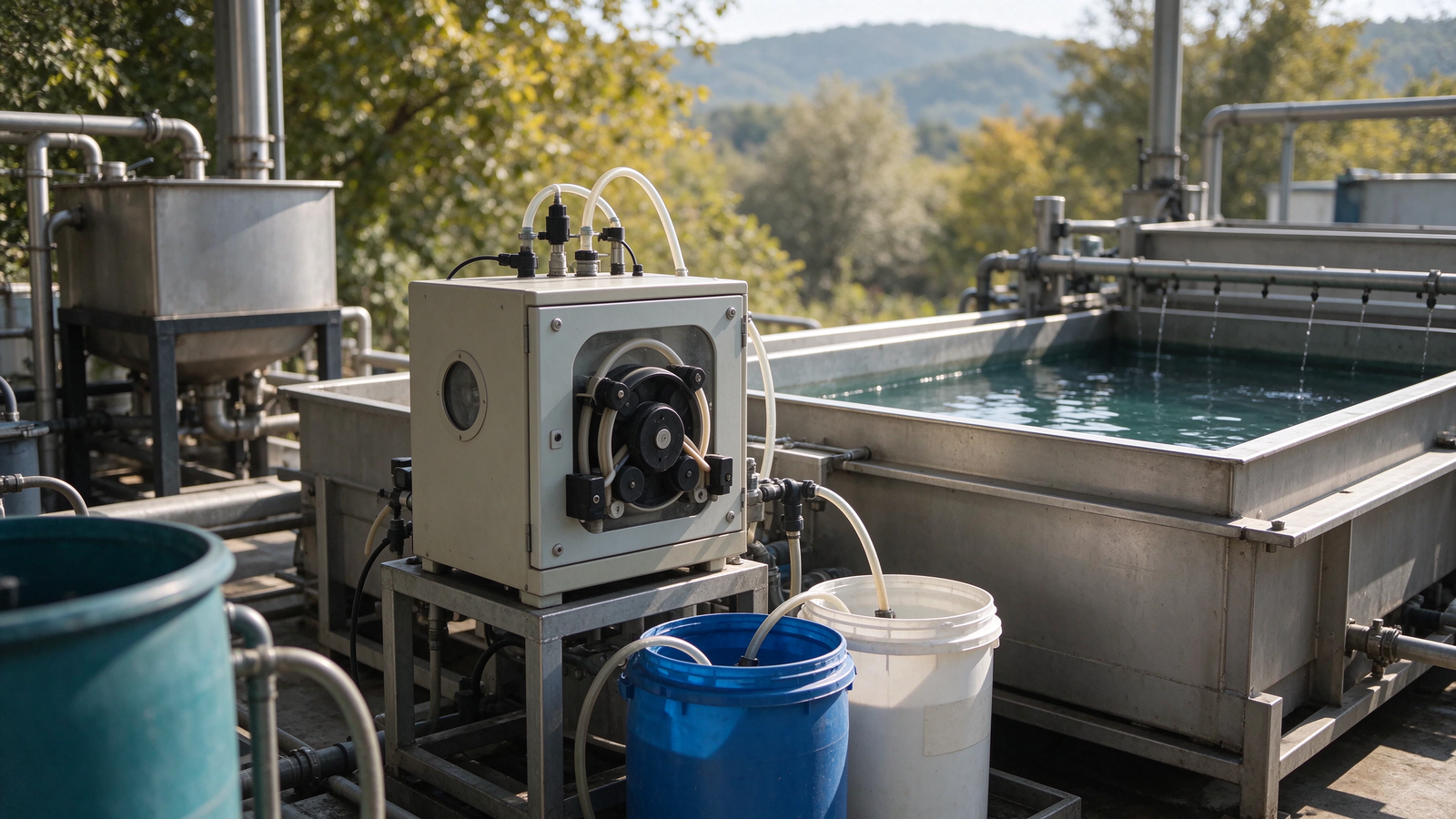
Textile dyeing and finishing runs on repeatable chemistry. A shade that drifts batch to batch, an auxiliary added late or unevenly, or a chemical left sitting in a valve chamber can change how the cloth takes color, how soft it feels, or how it passes a finishing check. Wet-processing houses dose dyes, dispersants, leveling agents, surfactants, softeners, acids and alkalis, and fixing or finishing agents through small metering and transfer pumps, and the pump has to move these fluids without contaminating them, without trapping particles, and without making every shade change a cleaning job. Peristaltic tube pumps are used in this kind of duty because the fluid stays inside the tube, the action is gentle on the formulation, and changing between chemicals mainly means flushing or swapping the tube. This guide covers where peristaltic pumps fit in textile dyeing and finishing, how the fluid properties affect the pump and tube, how to size and arrange the dosing point, and what to watch during operation, maintenance, and supplier review.
Why Dosing Consistency Matters in Wet Processing
In a dyeing or finishing cycle, a chemical is introduced at a set point in the recipe, at a set rate, and often over a set time. The target is the same delivered dose on each batch so the cloth responds the same way each run. A pump that slips as the tube ages, draws in air, or leaves residue between chemicals undermines that repeatability even when the recipe and the tank recipe are unchanged. For a dosing pump in this setting, the useful qualities are a sealed wetted path, a gentle fluid action, a repeatable displacement per cycle, and a service routine that keeps the delivered dose stable between tube changes.
Textile fluids are not all the same. Reactive and disperse dye liquors, pigment dispersions, auxiliary concentrates, and softener emulsions differ in viscosity, particle content, foaming tendency, and chemistry. The pump and tube should be matched to the actual fluid and concentration rather than to a generic “textile chemical” label.
Where a Peristaltic Pump Is Used in Textile Wet Processing
| Process position | Typical fluid | Dosing role | Pump consideration |
|---|---|---|---|
| Dye liquor preparation | Dye concentrate or dispersion | Meter into the preparation or dye tank | Watch particle content and tube compatibility with the dye class |
| Auxiliary addition | Leveling agents, dispersants, penetrants | Feed on recipe schedule during the cycle | Surfactant-heavy fluids may foam; keep suction flooded and lines vented |
| pH correction | Mild acid or alkali solution | Small metered additions through the cycle | Match tube material to concentration and temperature |
| Finishing and softening | Softener emulsions, finishing agents | Transfer or dose into finishing bath | Emulsions can shear; keep pump speed and tube suited to the fluid |
| Pigment or colorant addition | Pigment dispersion, colorant | Controlled batch or continuous addition | Particles pass through the tube without seating on a valve |
| Changeover between shades | Flush or wash fluid | Rinse the wetted path before the next chemical | Closed tube simplifies separation; flush thoroughly between products |
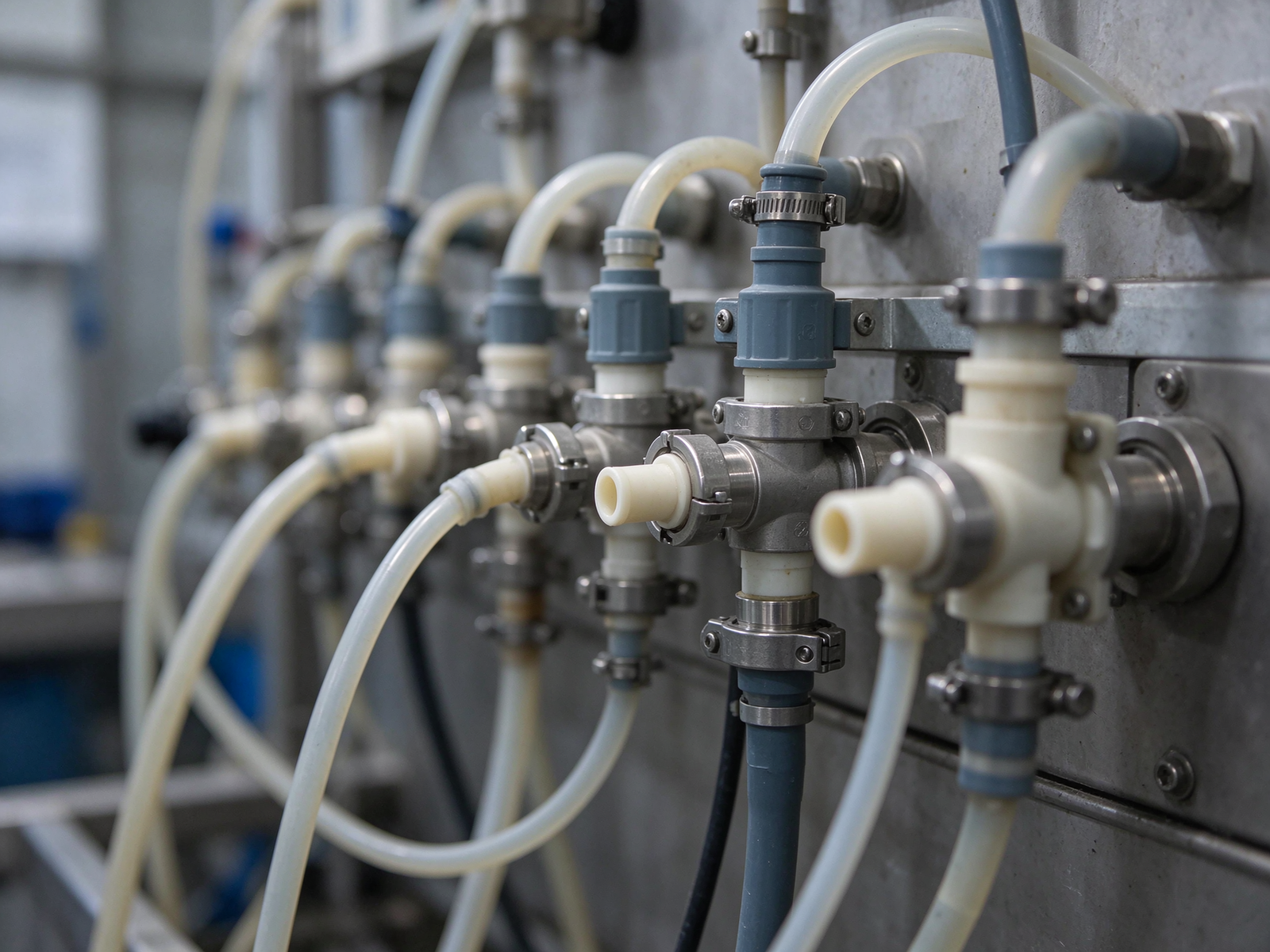
How Textile Fluid Properties Affect the Pump
Three properties drive most of the pump selection decisions in this application.
Viscosity. A thick auxiliary concentrate draws more effort to move through the tube and suction line. A pump sized for a thin water-like fluid may struggle on a viscous batch, drawing slowly or failing to prime. The head, tube bore, and drive speed should leave margin for the thickest fluid the line handles.
Particles and dispersion. Pigment and dye dispersions can carry fine solids. A valved metering design can let a particle hold a valve off its seat, while a peristaltic pushes the fluid through a continuous bore without a valve to trap material in. The tube still has to resist abrasion over the duty, and the concentration of particles should be reviewed with the supplier.
Chemistry and temperature. Acids, alkalis, surfactants, and dye carriers each attack different tube materials at different rates. The tube should be chosen against the actual chemical, concentration, and working temperature, and checked for swelling, hardening, or softening during early service. Warm process fluid also changes how the tube behaves, so compatibility should be reviewed at the operating temperature rather than at room temperature.
Temperature and conditioning. Some dye liquors and auxiliaries run warm to stay fluid; others settle or thicken if they cool in the line. A fluid that sits in a cold suction tube can thicken enough to slow the charge, while a hot fluid accelerates tube aging. Note the inlet temperature, whether the chemical holds temperature in the reservoir, and whether the line needs to be kept short or traced to keep the fluid within its working range. If the chemical is stored cold but dosed warm, review both states with the supplier so the tube and suction sizing cover the worst case.
Selecting the Pump, Head, and Tube
Selection starts from the duty rather than the pump catalog: the target dose per batch, how often the line runs, the discharge back-pressure in the tank or line, the fluid viscosity and particle load, and whether the pump follows a fixed recipe or a variable control signal. With those facts, the head size, tube bore and material, and drive are matched together.
| Selection factor | What to review | Why it matters |
|---|---|---|
| Required dose and flow | Volume per batch, addition window, repeats per day | Sets head size, tube bore, and whether the drive runs in a comfortable speed range |
| Fluid viscosity | Thinnest and thickest handled fluid, temperature | Affects suction, priming, and the load on the drive |
| Particle load | Presence and fineness of pigment or dispersion solids | Points to a tube path without valve seats and to a wear-resistant tube |
| Chemical compatibility | Chemical name, concentration, temperature, mixture | Determines tube material and expected consumable life |
| Back-pressure | Discharge line rise, filter, restriction, tank pressure | Keeps the pump within its pressure range so the tube is not overloaded |
| Control requirement | Fixed recipe, adjustable speed, or external signal | Chooses the drive and control arrangement |
| Changeover frequency | How often shades or chemicals switch | Affects flush procedure and whether spare tubes are kept ready |
For small auxiliary and reagent additions, a micro peristaltic pump keeps the dosing point compact. General dye and auxiliary feed commonly uses a small peristaltic pump head, while higher-volume transfers move to a larger-flow head. The peristaltic pump tube is the wetted consumable and should be specified by bore and material; the peristaltic pump driver sets speed and any control signal, and a panel-mounted 24V dosing pump drive suits automated recipe feed.
Dosing Repeatability and Calibration
Repeatability on a dosing line is checked by dispensing and measuring a known volume over a set number of cycles, rather than trusting the speed setting alone. The delivered volume changes as the tube wears, swells, or slips, so a fresh calibration after installation and after any tube service confirms the actual dose. Record the dispensed volume, cycle count, and date so the drift between tube changes can be watched. The NIST measurement practice describes weighing and volume checks that give a repeatable basis for that calibration.
Where several chemicals feed the same tank, keep the metering paths separated and label lines clearly so a dye, auxiliary, and finish are not cross-contaminated. Surfactant and emulsion fluids can foam at the suction, which makes the pump draw air; keep the suction flooded, the line airtight, and the inlet below the fluid level where possible.
Installation and Changeover Practice
A clean installation helps the pump hold its prime and deliver a steady dose. The suction line should be short, smooth-bored, and free of leaks or kinks so the tube can draw fluid without pulling air. The discharge line should carry the fluid to the tank without unnecessary restriction, and any rise or filter adds back-pressure that the head and tube must handle. Mount the head where it is easy to inspect and service, with the tube accessible for changes.
Between shades or chemicals, flush the wetted path with a compatible rinse before the next product, and where residue risk is high, keep a spare tube on hand so the wetted path can be changed rather than scrubbed. Changeover records should note which chemical ran last, when the tube was inspected, and when the last calibration was done.
Automation and Control on a Dosing Point
Textile recipes often follow a timed sequence: a base dose early in the cycle, an auxiliary added after a set ramp, and a finish introduced toward the end. The pump control should match that sequence rather than run at a single fixed setting for every chemical. A fixed-speed drive suits a steady, one-off addition; an adjustable-speed drive lets the operator match flow to the recipe; a signaled drive follows the line controller or batch system for timed or proportional dosing. Where several auxiliaries feed the same tank, a multi-channel arrangement can run parallel feeds from one controller, with each channel on its own tube path so chemistries stay separated. Before integration, confirm the signal type, the dosing resolution the recipe needs, and how the pump holds its setting if the controller resets or the line pauses.
Record which chemical each channel carries and the dose setting used for the recipe, so a repeat shade can be reproduced on the next batch. If the line steps through several additions, keep the flush and tube-change steps in the operating log alongside the recipe notes.
Maintenance and Consumables
On a peristaltic, routine service centers on the tube, the main fluid-contact consumable. Inspect it for swelling, cracking, hardening, surface wear, or a thin spot along the compression path, and replace it before it fails in a batch. Check that rollers turn freely and that the tube seats centrally in the head. After a tube change or head service, re-run the volume calibration before returning the pump to production. Keep spare tubes matched to the bore and material on each active dosing point so a change does not wait on a part.
The motor-driver operating manual and driver reference cover drive-side care and duty ratings; match that guidance to the line’s run hours and load. The NSF fluid-handling guidance supports keeping chemical paths documented and segregated, which is useful where multiple dyes and auxiliaries share a preparation area.
Common Problems and Checks
| Symptom | Likely source to check | First action |
|---|---|---|
| Dose drifts lower over the shift | Tube wear, slip, or swelling; suction drawing air | Check tube condition and suction seal, re-calibrate volume |
| Pump fails to prime or pulses | Leaky suction line, high viscosity, air in the line | Seal and vent the suction path, confirm fluid reaches the head |
| Tube softens or swells early | Material mismatch to chemical or temperature | Review compatibility with the supplier, change tube grade |
| Residue between shades | Inadequate flush or shared path | Extend flush, consider spare tube change between products |
| Foam at the inlet | Surfactant or emulsion drawing air | Keep suction flooded, reduce agitation near the inlet |
| Leak at the head or fittings | Loose fitting, fatigued tube, or displaced tube | Seat and secure the tube, inspect compression path |
Questions to Ask Before Sourcing
When putting a peristaltic onto a textile dosing duty, give the supplier the actual chemicals and concentrations, the working temperature, the target dose per batch and addition window, any particle or emulsion content, the discharge back-pressure, and the control signal the line uses. Ask which tube material those fluids recommend, what spare tube and lead time look like, whether the head can share spares across the line, and how calibration and service are documented. A supplier that asks for the fluid and duty before suggesting a head is more likely to match the pump than one that quotes on flow alone.
Frequently Asked Questions
Can a peristaltic pump handle dye dispersions with fine pigment? It can pass fine particles through the tube without a valve seat to trap them, but the tube material and wear life should be checked against the particle concentration and fluid chemistry. Discuss the dispersion with the supplier before committing the pump to the duty.
Why not use a diaphragm or solenoid metering pump for dyes? Those designs have check valves and chambers that particles or residue can affect, and the wetted internals contact the fluid. A peristaltic keeps the fluid in a sealed tube, which can simplify chemical separation and changeover, though the right family depends on pressure, fluid, and dose accuracy requirements.
How often should the tube be replaced? It depends on the chemical, concentration, temperature, abrasiveness, and run hours. Inspect on a set cycle, and replace at the first signs of swelling, hardening, cracking, or thinning rather than waiting for a failure in production.
How do I keep shades repeatable between batches? Calibrate the delivered volume on a known batch, record it, and re-check after tube service or a chemical change. Keep suction conditions consistent and lines free of air, and flush thoroughly between products.
What control options suit recipe-driven dosing? A drive set for a fixed recipe, an adjustable-speed drive, or one following an external control signal can be matched to the controller on the line. Confirm the signal type and dosing resolution before ordering.
If you are specifying a peristaltic dosing point for a dyeing or finishing line, contact YOORAIN with the dye or auxiliary type and concentration, working temperature, dose per batch, any pigment or emulsion content, discharge back-pressure, and your control arrangement. We can suggest the head, tube material, and drive setup for the duty and outline the spare-tube and service plan.