
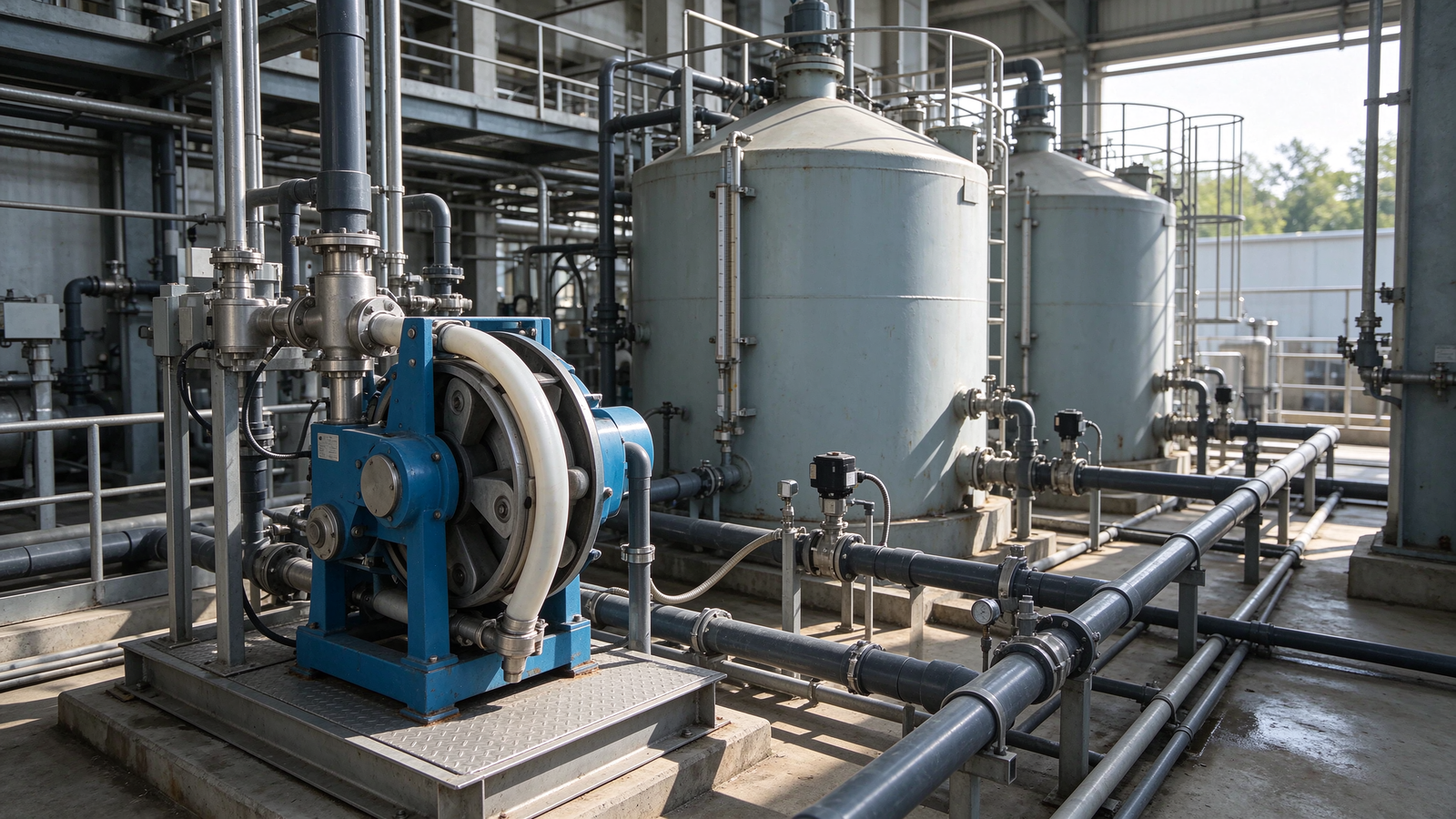
Industrial and process wastewater often leaves a line as an acidic or alkaline stream that has to be conditioned before discharge or further treatment. Adding acid, alkali, pH-adjusting reagent, or a neutralizing chemical in small, controlled doses is a common metering duty, and the pump on that feed line has to handle aggressive chemistry, intermittent operation, and fluids that may carry suspended matter. A peristaltic tube pump suits many of these reagent feeds because the fluid stays inside a replaceable tube, there are no valves or seals in the wetted path to foul, and the dose follows the drive speed. This application guide covers how the neutralization duty works, where a peristaltic fits, the chemistry and compatibility checks that matter, the control approach, and the maintenance and safety points that keep the feed reliable.
What the Neutralization Duty Looks Like
A neutralization loop usually pulls wastewater from a sump, equalization basin, or treatment line and adjusts its pH before the next stage or discharge. Acid or caustic reagent is metered into a reaction tank or into the flowing stream, often under feedback from a pH probe, and sometimes together with a coagulant, flocculant, or other conditioning chemical. The feed may run continuously on a steady stream, cycle with batch tanks, or step up and down as the incoming pH swings. The pump therefore has to deliver a repeatable dose, start and stop reliably, and hold up to the reagent concentration and temperature it sees.
Unlike a clean water transfer, reagent feeds in treatment service see chemicals that can attack tubing, and fluids that may contain traces of suspended solids, sludge carryover, or precipitated material. The metering pump’s wetted path should be simple to flush or replace, and the consumable should be sized to the service interval rather than left until output drops.
Why a Peristaltic Fits Reagent and Acid/Alkali Feeds
| Duty trait | Peristaltic arrangement |
|---|---|
| Aggressive reagent chemistry | Fluid contacts only the tube and fittings; the tube material is chosen against the acid, alkali, or concentrate |
| No check valves to foul | Flow moves by roller occlusion; there are no internal valve seats that trap solids or scale |
| Intermittent and cyclic operation | Starts and stops with the control; short idle periods do not rely on a primed internal seal |
| Replacement between chemistries | Flush the tube or fit a replacement when changing reagent; no chamber to strip and clean |
| Dose following speed | Delivery tracks drive speed, suited to batch or feedback-adjusted feed |
Dedicated dosing heads such as the C300 24V dosing pump are built for controlled chemical feed, while small head arrangements on a small peristaltic pump cover lower-rate reagent additions. The peristaltic pump tube is the part selected against the reagent, and the peristaltic pump driver sets how the feed follows the control signal or manual adjustment.
Chemistry and Compatibility Checks
The most important selection step for a neutralization feed is matching the tube and fitting material to the actual reagent. State the chemical name, concentration, and working temperature to the supplier, and include any rinse or flush agent used between batches. A material that suits a dilute caustic may not hold at full strength, and warm reagent ages the tube faster than the same chemical at room temperature. Mixtures and additives deserve the same review: a reagent that combines a base with a surfactant or a dispersant can behave differently from the single ingredient.
Watch for the tube signs that point to chemical incompatibility: swelling or softening, hardening and brittleness, discoloration, surface roughness, or cracking. If the tube fails early under these signs, repeating the same material will repeat the failure; the material choice has to change with the chemistry. Keep the reagent record on the skid so a repeat order uses the same verified tube material. Industrial water and chemical-management practice is referenced in the EPA industrial water management guide, and measurement practice for dose checks follows the methods described by the NIST measurement practice.
Flow Control and pH Feedback
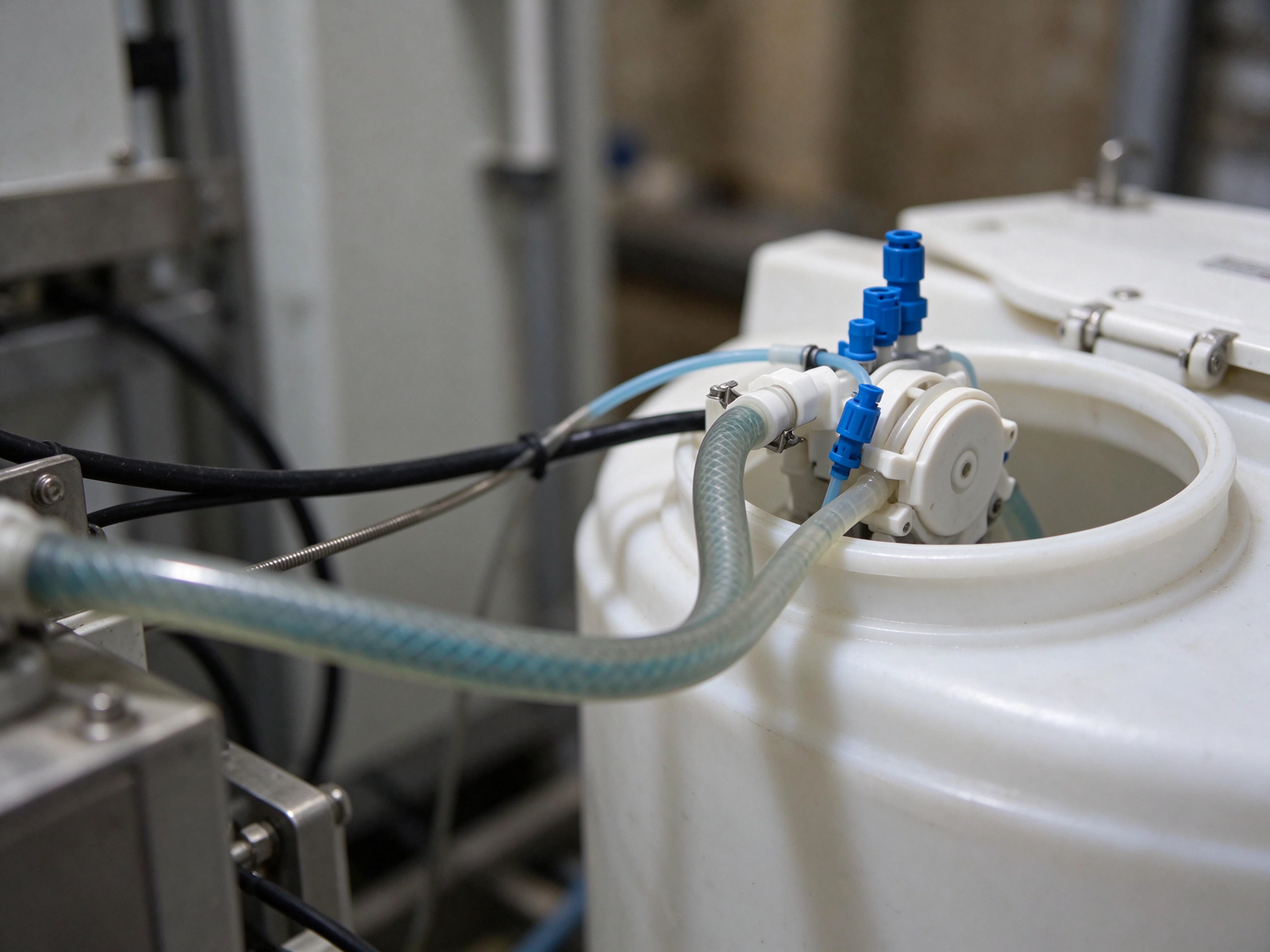
Neutralization feed can run on a fixed manual dose, an adjustable speed setting, or closed-loop control tied to a pH probe. A fixed dose suits a steady stream with little variation; an adjustable feed allows the operator to trim the addition as the incoming water changes; a signaled drive follows the probe or controller that calls for more or less reagent. The drive choice should match the control arrangement on the skid, and the delivered dose should be verified against the target over a timed catch rather than assumed from the speed setting. Where pH swings are wide or the stream changes composition, the pump should be sized so it can cover both the smallest correction and the largest expected addition without running at an extreme of its range.
Slip and tube wear affect dose over service life: as the consumable ages, delivered volume can drift under back-pressure, so a periodic delivered-volume check and a scheduled tube replacement keep the feed aligned with the controller. Re-check the dose after any tube change, since a new tube seats differently from a worn one.
Suspended Solids and Line Condition
Wastewater reagent feeds sometimes see trace solids, sludge carryover, or precipitation in the line. A peristaltic passes what fits through the tube bore, but solids that settle in the inlet or a strainer can block the feed. Keep the suction line short and unrestricted, use a strainer sized to the fluid where debris collects, and avoid traps that let material settle between batches. Flush the line after a reagent change or a long idle period so residue does not dry in the tube. If the fluid carries heavy or abrasive solids, review the concentration and particle size with the supplier before sizing the head and tube bore.
Installation and Wet-Environment Notes
On a treatment skid the pump usually sits near the reagent drum and the neutralization tank. Keep the inlet short and sealed against air leaks, support the outlet so it does not pull on the fitting, and leave room to inspect and replace the tube. Reagent drums and lines should be labeled and routed so a spill does not collect against the head or drive, and the electrical entry should face away from splash. Drivers used on these feeds are reviewed against wash-down and splashing exposure; wiring and signal runs are kept clear of chemical lines where practical. Drive-side setup and control references are covered in the motor-driver operating manual and the peristaltic pump driver reference, with fluid-handling background from NSF engineering research.
Maintenance and Safety
| Routine point | What to check |
|---|---|
| Tube condition | Swelling, softening, hardening, discoloration, roughness or cracking at each service |
| Dose verification | Timed catch against target dose; re-check after tube changes and chemistry changes |
| Inlet integrity | Sealed joints, no kink or settled material; strainer clear of debris |
| Reagent record | Chemical, concentration, temperature, installed tube material and replacement date |
| Spare consumable | Correct bore and material kept on the skid for the service interval |
Acid and alkali handling carries its own safety practices: follow the site’s material handling, personal protection, and spill procedures when connecting reagent lines or replacing tubing, and vent or isolate the reagent supply before any service work. The pump itself isolates the fluid inside the tube, which limits contact during routine consumable changes, but chemical handling around the feed line still follows plant safety rules.
Frequently Asked Questions
Which reagent concentrations can a peristaltic feed handle? It depends on the tube material, not the pump type alone. Provide the chemical name, concentration, temperature, and flush agent, and confirm compatibility before ordering. Strong concentrates and warm solutions may need a different material than dilute feeds.
Can a peristaltic run under pH probe feedback? Yes, when the drive accepts the controller or signal arrangement on the skid. The drive should be matched to the control scheme, and the dose verified by timed catch so the feedback and actual delivery agree.
What happens if solids enter the reagent line? Fine material that fits the bore may pass; larger or settling solids can block the inlet or strainer. Keep the inlet short and strainer clear, and review heavier slurries with the supplier before sizing.
How often should the tube be replaced on a treatment feed? The interval follows chemistry, concentration, temperature, cycles, and run time. Track condition and dose at each service and replace before swelling, hardening, cracking, or dose drift appears; keep the verified consumable in stock.
Does the pump need a pressure relief on the discharge? Where the line can close, rise to a high tank, or enter a pressurized stage, review back-pressure and any relief arrangement with the duty facts. The tube must hold the discharge pressure without bulging or opening slip.
If you are setting up an acid, alkali, or conditioning reagent feed for wastewater treatment, send YOORAIN the chemical names and concentrations, working temperature, target addition rate and duty cycle, pH control arrangement, any suspended solids, and the mounting space on the skid. We can advise on the dosing head, tube material, and driver for the feed, and confirm compatibility for the reagents the line will carry.