
When designing an in vitro diagnostic (IVD) device, engineers face a recurring fluid-handling problem: how to move samples and reagents with precision, avoid cross-contamination between tests, and keep the fluid path disposable without adding complex valve assemblies. Peristaltic pumps address these requirements directly because the fluid contacts only the inner wall of the tubing, leaving the pump head and rollers untouched. For hematology analyzers, clinical chemistry systems, and immunoassay platforms, this characteristic simplifies wash cycles, reduces carryover risk, and supports the disposable fluid paths that laboratories expect.
This article explains where peristaltic pumps fit in IVD equipment, what performance factors matter for reagent delivery and sample handling, and how OEM engineers should evaluate pump options during instrument design.
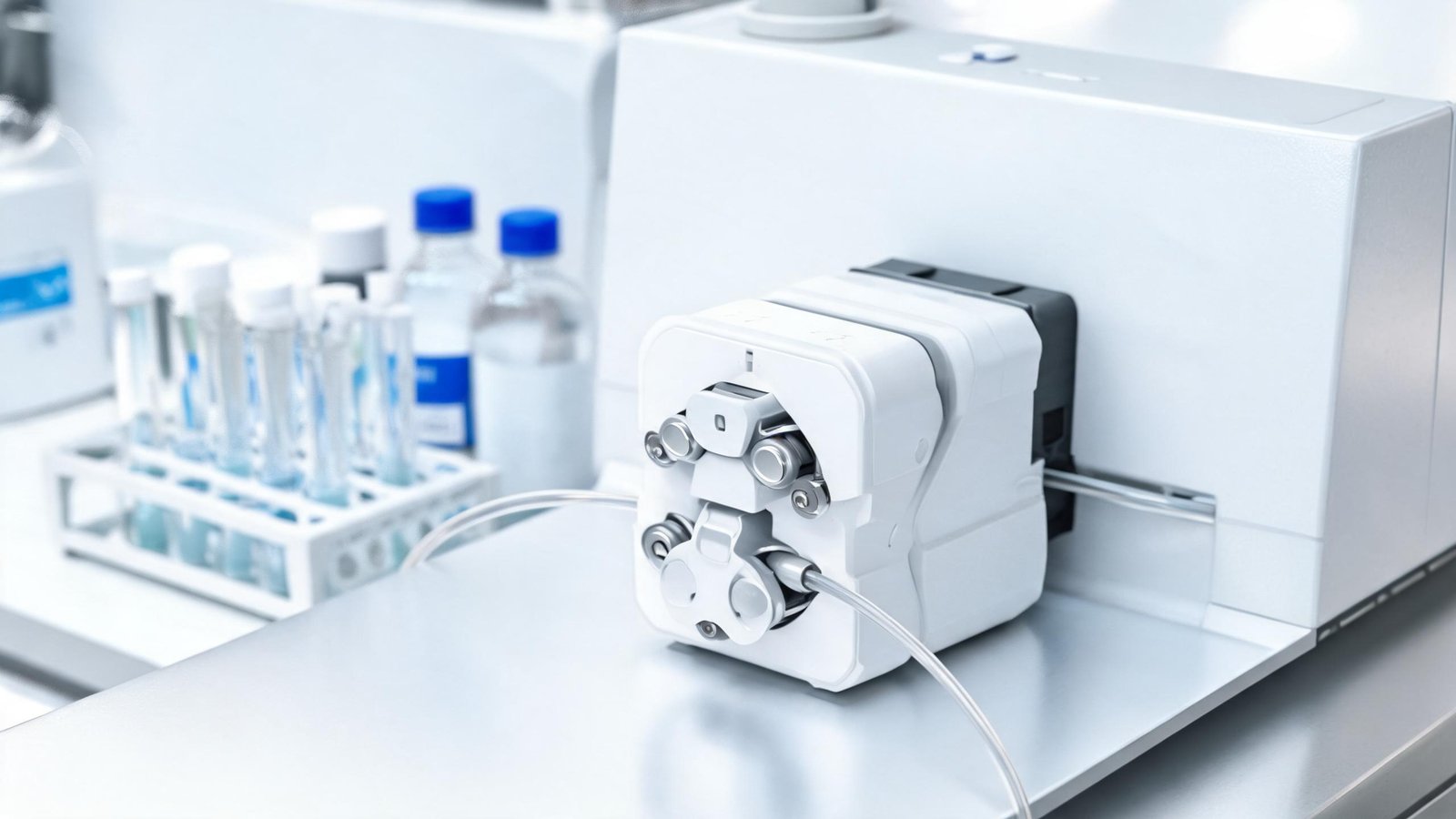
Why Peristaltic Pumps Fit IVD Applications
IVD devices handle biological samples, calibrators, controls, and reagents that must remain uncontaminated throughout the analytical process. Any fluid that contacts pump seals, valves, or pistons can introduce carryover, requiring extensive wash protocols between samples. Peristaltic pumps eliminate this problem by enclosing the fluid entirely within flexible tubing. The rollers compress the tubing from the outside, generating positive displacement without exposing the fluid to metal or elastomer seals.
Because the tubing is the only wetted component, manufacturers can specify disposable tubing sets for each test cycle. After sample aspiration or reagent dispensing, the instrument can advance the tubing slightly or replace the tubing segment entirely, resetting the fluid path to a clean state. This approach aligns with the ISO 13485 quality management expectations for medical devices, where design teams must demonstrate control over contamination risks.
Another advantage is the gentle fluid handling. Peristaltic pumps do not shear the fluid with high-speed impellers or trap it behind sliding seals. For whole blood, plasma, and serum samples, this low-shear transport helps preserve cell integrity and analyte stability until the sample reaches the reaction chamber.
Main Fluid-Handling Requirements in IVD Equipment
IVD instruments impose specific demands on fluid-handling subsystems. The pump must deliver accurate volumes across a range of flow rates, from microliter-scale reagent additions to milliliter-scale sample aspiration. It must also operate quietly enough for laboratory environments, maintain calibration over thousands of cycles, and integrate mechanically into compact instrument enclosures.
| Fluid-Handling Task | Typical Volume Range | Key Requirement |
|---|---|---|
| Sample aspiration | 10–500 µL | Accuracy and low shear |
| Reagent dispensing | 5–200 µL | Precision and repeatability |
| Wash buffer delivery | 100 µL–2 mL | Consistent flow rate |
| Calibrator transfer | 20–100 µL | Traceable dosing accuracy |
| Waste removal | Variable | Reliable self-priming |
The table above illustrates the narrow volume ranges that IVD pumps must handle. A compact micro peristaltic pump with stepper motor control can achieve the fine resolution needed for reagent dispensing, while a small peristaltic pump can manage larger wash buffer volumes without changing the pump architecture.
Pump Selection Considerations for IVD OEMs
Selecting a peristaltic pump for an IVD instrument requires evaluation of flow accuracy, tubing compatibility, motor control, and physical integration. Each factor affects the instrument’s analytical performance and regulatory submission.
Flow accuracy and repeatability. IVD reagents are often expensive, and over-dosing increases cost per test while under-dosing compromises assay sensitivity. Stepper motor or servo-driven peristaltic pumps provide programmable speed control, allowing engineers to calibrate flow rates against gravimetric or volumetric standards. CLSI standards for laboratory quality emphasize traceability in liquid handling, which means the pump control algorithm should support closed-loop calibration if the application demands it.
Tubing material and dimensions. The tubing must resist the chemicals in reagents, buffers, and cleaning solutions while maintaining elastic recovery after roller compression. Common materials include silicone, PharMed, and Viton fluorocarbon, each with different chemical compatibility profiles. Tubing inner diameter directly affects flow rate at a given pump speed, so engineers should select tubing that delivers the target flow range without requiring excessive motor speed.
Motor and control interface. Modern IVD instruments use microcontroller or FPGA-based control systems. The pump motor driver should accept standard step-and-direction or analog speed inputs, or provide a serial communication protocol such as RS-485. Pumps with integrated housings simplify mounting and reduce the mechanical design effort for OEM teams.
| Selection Factor | Engineering Question | Impact on IVD Performance |
|---|---|---|
| Flow range | Does the pump cover the lowest and highest required volumes? | Determines assay flexibility |
| Tubing material | Is the tubing compatible with all reagents and cleaning agents? | Affects tubing life and contamination risk |
| Motor resolution | Can the motor deliver sufficiently small step increments? | Controls minimum dispense volume |
| Physical envelope | Does the pump fit within the instrument chassis? | Determines mechanical feasibility |
| Noise level | Does the pump meet laboratory acoustic limits? | Affects user experience |
Common Design Problems in IVD Fluid Systems
Even with a suitable pump, IVD instruments can exhibit fluid-handling problems that trace back to system-level design choices. One common issue is pulsation. Peristaltic pumps deliver fluid in discrete boluses as each roller passes along the tubing. In applications requiring smooth flow, such as continuous-flow analyzers, pulsation can introduce noise into optical or electrochemical readings. Engineers can reduce pulsation by using multi-roller pump heads, adding pulsation dampeners, or selecting pump heads with optimized roller geometry.
Another problem is tubing creep. Over thousands of compression cycles, tubing material can migrate slightly in the direction of roller travel, changing the effective flow rate and eventually causing tubing misalignment. Anti-creep tubing retainers and periodic auto-calibration routines help maintain dosing consistency over the instrument’s service life.
Carryover between samples remains a concern even with disposable tubing. If the tubing inner surface retains fluid in microscopic surface features, residual sample can contaminate the next aspiration. Smooth-bore tubing with low surface roughness, combined with adequate wash buffer volumes, minimizes this risk. FDA recognized consensus standards for IVD devices address analytical specificity and interference, which indirectly govern fluid path cleanliness requirements.
Integration Into Diagnostic Equipment
Integrating a peristaltic pump into an IVD instrument involves mechanical, electrical, and software interfaces. Mechanically, the pump must mount securely without transmitting vibration to optical components or reaction cuvettes. Vibration isolation mounts or flexible couplings between the motor and pump head can reduce mechanical noise.
Electrically, the pump motor driver should accept the control signals available from the instrument’s main controller. For stepper motor pumps, this typically means step, direction, and enable inputs. Some pump drivers also provide fault outputs, such as stall detection, which the instrument firmware can use to trigger error handling routines.
From a software perspective, the instrument should implement calibration curves that map motor steps to delivered volume. These curves depend on tubing inner diameter, roller compression depth, and fluid viscosity. Because tubing properties can vary between lots, the instrument may need a recalibration procedure when the operator replaces the tubing set. NIST chemical sciences resources provide guidance on gravimetric and spectrophotometric methods for liquid delivery verification.
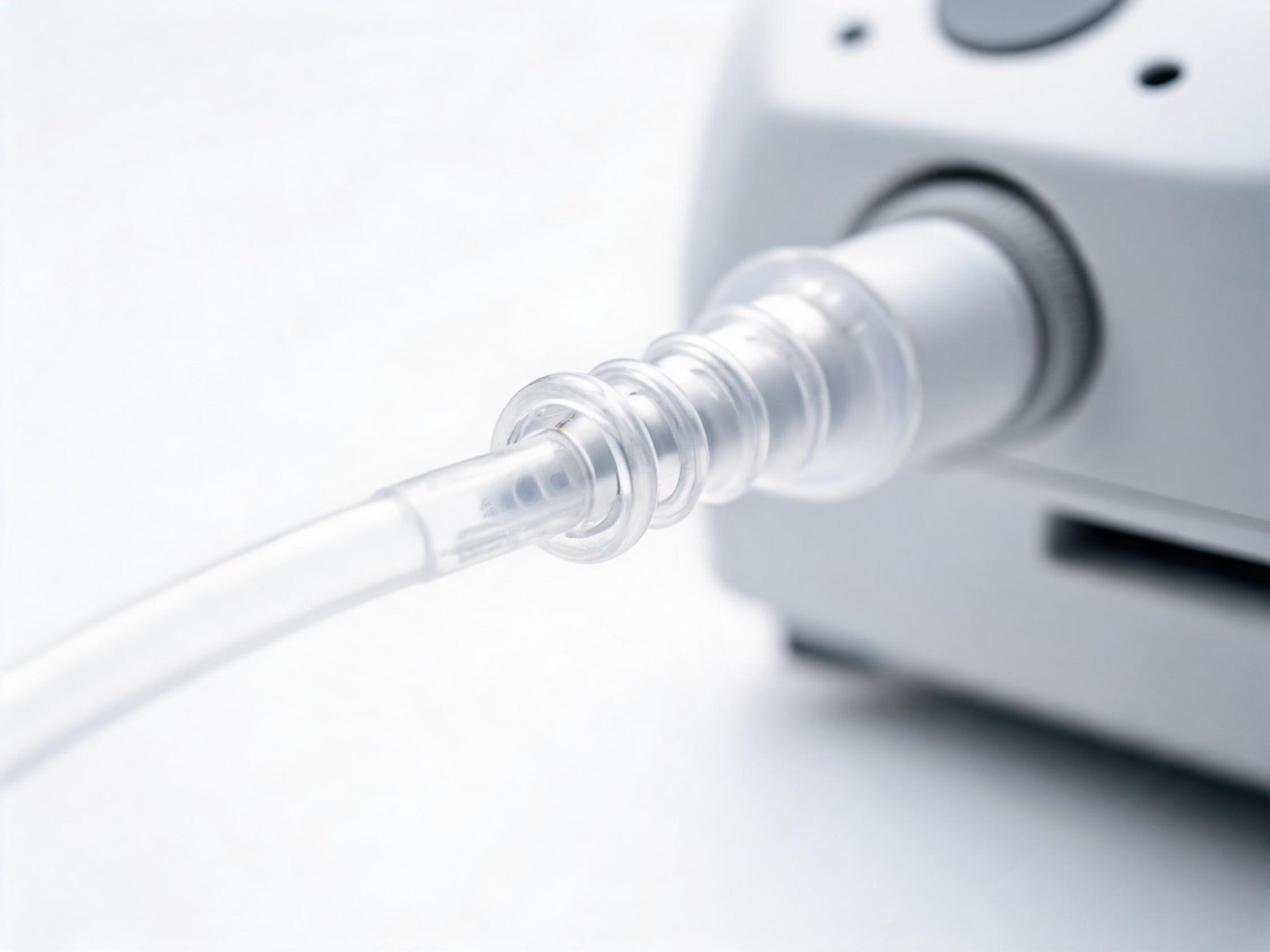
Procurement Checklist
Before selecting a peristaltic pump for an IVD project, confirm the following items:
- Required flow rate range and minimum dispense volume are documented.
- All reagents, buffers, and cleaning agents are listed for tubing compatibility review.
- Motor control interface matches the instrument controller architecture.
- Physical envelope, including tubing bend radii, fits the chassis layout.
- Noise and vibration specifications meet the target laboratory environment.
- Supplier provides tubing material certifications and lot traceability.
- Calibration and validation protocols are defined for regulatory submission.
- Maintenance access allows tubing replacement without disassembling adjacent modules.
For OEM projects, providing the required flow range, reagent list, and installation constraints can help suppliers recommend a suitable pump configuration. Peristaltic pump tubing selection should be reviewed early in the design cycle, because tubing dimensions and material properties influence flow calibration and fluid compatibility.
If you are developing laboratory or diagnostic equipment, you can contact YOORAIN to discuss the fluid-handling requirements of your system.