
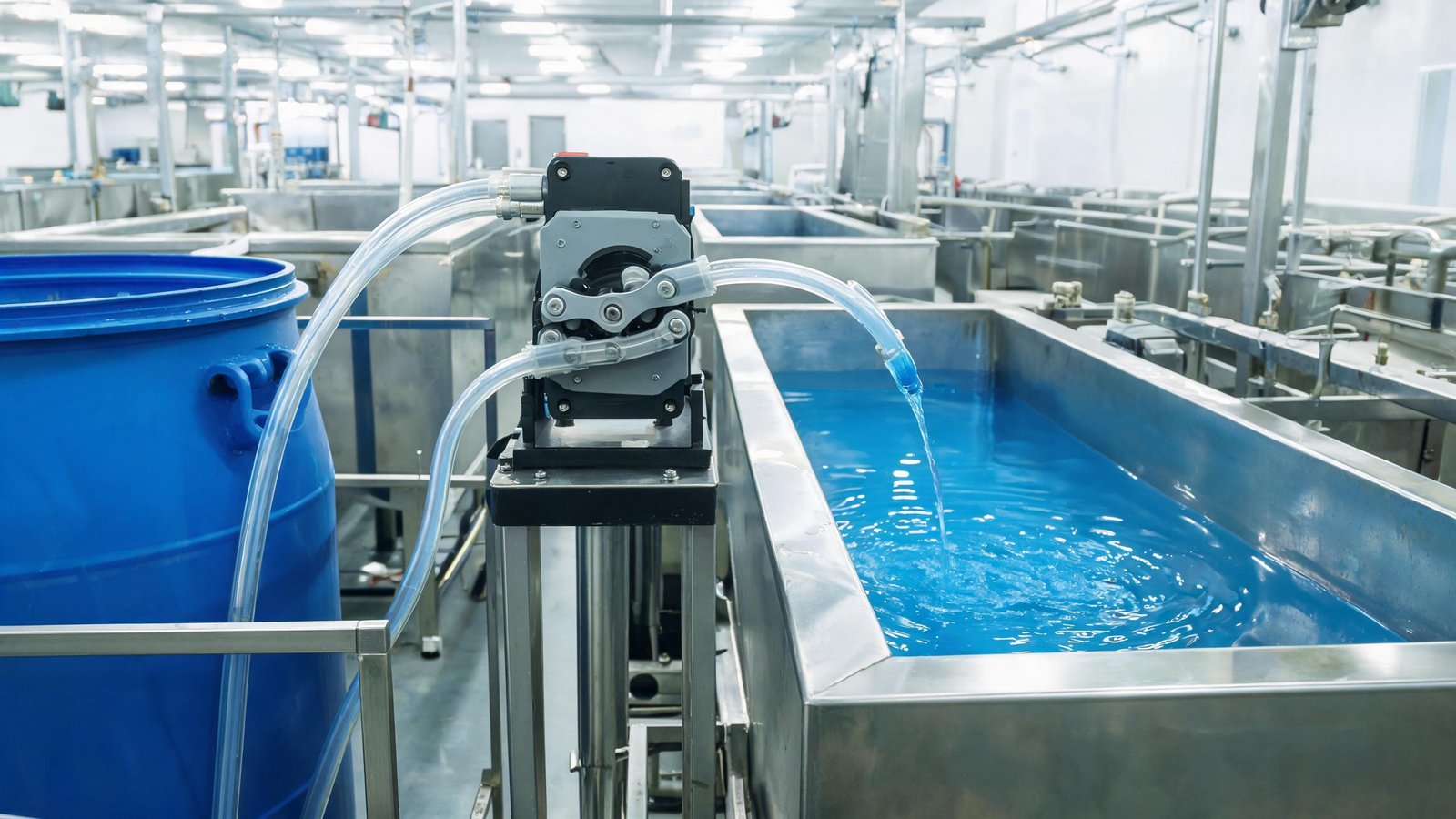
Electroplating and surface finishing operations handle some of the most aggressive chemicals in industrial manufacturing. Sulfuric acid, chromic acid, nickel chloride, sodium hydroxide, and cyanide-based solutions are routinely metered into plating baths, transferred between tanks, and treated in wastewater systems. Selecting a pump that can withstand these chemicals without introducing contamination or leaking is a primary engineering concern. Peristaltic pumps confine the fluid entirely within tubing, eliminating seals and valves that would otherwise be exposed to corrosive plating chemicals.
This guide covers why peristaltic pumps fit electroplating applications, the main fluid-handling requirements, pump selection considerations, and integration into plating line equipment.
Why Peristaltic Pumps Fit the Application
Electroplating involves multiple fluid-handling tasks where the pumped chemical is both corrosive and potentially hazardous. Traditional centrifugal or magnetic-drive pumps use mechanical seals or close-tolerance internal clearances that can degrade when handling chromic acid or cyanide solutions. Peristaltic pumps avoid this problem entirely — the only component in contact with the process fluid is the tubing.
This isolation matters for several reasons:
- No seal failure — There are no mechanical seals to corrode, wear, or leak. The failure mode is tubing wear, which is visible and predictable.
- No cross-contamination — Each plating bath can use dedicated tubing, preventing chemical carryover between tanks.
- Dry running capability — Peristaltic pumps can run dry without damage, useful when priming from chemical drums or during tank changes.
- Reversible flow — Pumping direction can be reversed for line clearing or emptying tubing back to the source container.
For surface finishing lines handling multiple plating chemistries, a peristaltic pump with housing provides a contained, mountable unit that can be moved between stations or integrated into automated line controllers.
Main Fluid-Handling Requirements
Electroplating facilities require chemical handling across several process stages:
| Process Stage | Typical Chemicals | Pump Requirement |
|---|---|---|
| Bath makeup | Sulfuric acid, nickel chloride, chromic acid | Controlled-volume transfer into plating tank |
| pH adjustment | Sodium hydroxide, hydrochloric acid | Precise dosing with feedback control |
| Rinse water treatment | Precipitation agents, flocculants, neutralizers | Intermittent dosing based on pH/ORP sensor |
| Chemical transfer | Concentrated acids, caustics, cyanide solutions | Sealed transfer from storage to process |
| Waste treatment | Hypochlorite, metal precipitants | Continuous or batch dosing into treatment tank |
Each stage has different flow rate and accuracy requirements. Bath makeup may need transfer of several liters per minute, while pH adjustment dosing may require less than 100 mL per dose. A single pump model rarely covers this range — facilities typically use different pump sizes for different duties.
Pump Selection Considerations
Selecting a peristaltic pump for electroplating requires evaluating chemical compatibility, flow range, and duty cycle simultaneously.
Chemical compatibility is the first filter. The tubing material must resist the specific plating chemical at its working concentration and temperature. For sulfuric acid and chromic acid solutions, PTFE or Viton tubing is generally required. For sodium hydroxide and many metal salt solutions, Tygon or PharMed tubing may be suitable. YOORAIN offers peristaltic pump tubing in multiple formulations, and compatibility should be confirmed against the actual chemical list.
Flow rate and dosing accuracy determine pump size and motor type. For precision dosing in pH control or metal addition, a K25 small peristaltic pump with a stepper motor provides the resolution needed for small, repeatable doses. For bulk bath makeup or transfer, a YD25 peristaltic hose pump handles higher flow rates with larger tubing.
Duty cycle affects tubing life. Continuous-duty applications like chemical circulation require tubing rated for extended operation, while intermittent dosing applications can use standard-grade tubing with longer replacement intervals.
Tubing replacement scheduling should be based on operating hours rather than calendar time. For continuous-duty pumps circulating chromic acid at elevated temperature, tubing may need replacement every 2–4 weeks. For intermittent pH dosing pumps running a few minutes per cycle, tubing can last several months. Implementing a log of pump operating hours per chemical service helps predict replacement needs and avoid unplanned downtime.
Mounting and accessibility matter in plating facilities where floor space is limited and chemical-resistant enclosures are required. Pumps should be mounted at a height that allows tubing changes without reaching over chemical baths or process tanks. Chemical-resistant pump housings protect the motor and drive components from acidic mists that are present in plating environments.
Common Design Problems
Several issues commonly arise when integrating peristaltic pumps into plating facilities:
Tubing degradation in strong oxidizers. Chromic acid and concentrated peroxide solutions can attack tubing materials over time, causing hardening, cracking, or swelling. Regular inspection and scheduled replacement based on chemical exposure hours — not just calendar time — prevents unexpected failure.
Suction lift limitations. Drawing concentrated acids from carboys or drums requires sufficient suction lift capability. Pump head design and tubing wall thickness affect how well the pump primes and maintains flow under suction conditions.
Crystallization at fittings. Plating chemicals that crystallize at ambient temperature can build up at tubing connections and pump head outlets. Insulated tubing or trace heating may be needed for chemicals with high crystallization points.
Flow drift from tubing wear. As tubing is repeatedly compressed by the pump rollers, the inner diameter changes, affecting flow rate per revolution. For dosing applications where volume accuracy matters — such as pH control or metal addition — periodic gravimetric calibration is recommended.
Integration Into Equipment
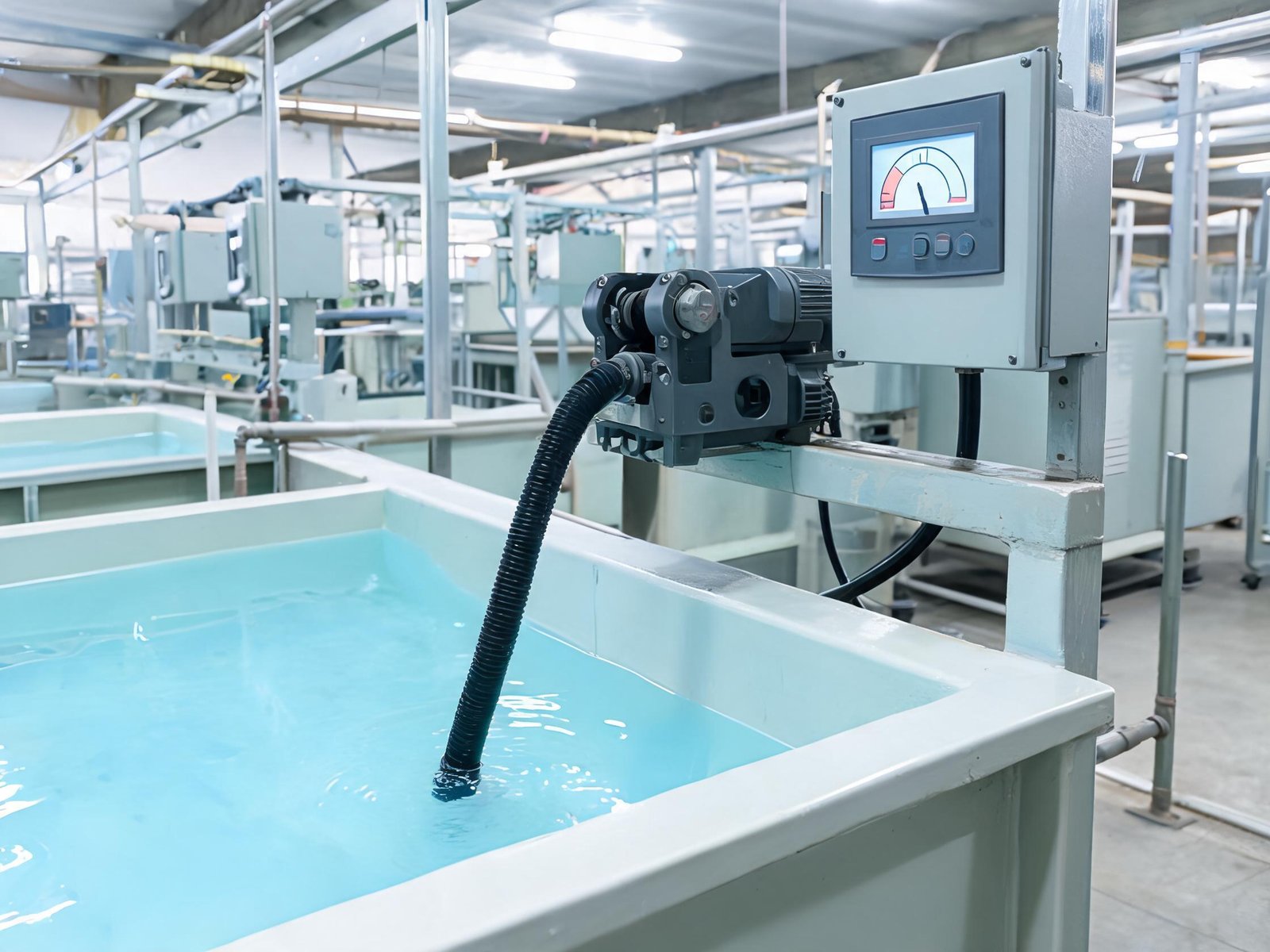
Modern plating lines increasingly use automated chemical dosing controlled by process logic controllers (PLCs). Integrating a peristaltic pump into such a system requires attention to the control interface.
Common control approaches include:
- Analog speed control (0–10V or 4–20mA) — Simple speed setpoint from PLC
- Pulse/direction — Stepper interface for volume-based dosing commands
- RS485/MODBUS — Digital command, status feedback, fault reporting
For pH control loops, the pump must respond quickly to dosing commands from the controller. A flow rate selection that matches the required dosing volume per stroke prevents overshoot and oscillation in the control loop. Oversizing the pump for pH dosing is a common mistake — a pump that delivers too much chemical per revolution cannot achieve fine pH adjustment and will cause the controller to oscillate between over- and under-dosing.
For wastewater treatment dosing, the pump must handle variable flow conditions. Treatment systems often process batch volumes at irregular intervals, requiring the pump to start and stop frequently. Peristaltic pumps handle start-stop cycles well because there are no valves to stick or seals to dry out during idle periods. The pump can sit idle between treatment cycles and resume accurate dosing immediately when called.
Environmental compliance is a significant driver for pump selection in plating facilities. The EPA’s Electroplating Effluent Guidelines under 40 CFR Part 413 regulate discharges of cyanide and metals — including lead, cadmium, copper, nickel, chromium, zinc, and silver — from electroplating operations. Precise chemical dosing helps facilities stay within permit limits for these pollutants.
OSHA standards for chemical safety in plating operations include requirements for hexavalent chromium exposure control under 29 CFR 1910.1026. Enclosed chemical handling with peristaltic pumps reduces worker exposure to chromium-bearing mists and splashes. The ASTM Subcommittee B08.03 on Engineering Coatings maintains standards for electrodeposited coatings that define process quality requirements relevant to bath chemistry control.
Key Takeaways
- Peristaltic pumps isolate aggressive plating chemicals within tubing, eliminating seal failure and cross-contamination risks
- Tubing material selection (PTFE, Viton, PharMed) is the primary engineering decision — confirm compatibility with each plating chemistry
- Different pump sizes suit different duties: precision dosing for pH control, higher flow for bath makeup and transfer
- Control interface (analog, stepper, MODBUS) must match the plating line’s PLC architecture
- Compliance with EPA 40 CFR Part 413 and OSHA chromium standards drives the need for precise, enclosed chemical handling
- Scheduled tubing replacement based on chemical exposure hours prevents unexpected failure
For plating line upgrades or new facility design, specifying the chemical list, flow requirements, and control interface to the pump supplier early helps ensure correct pump and tubing selection. YOORAIN can discuss peristaltic pump configurations for electroplating and surface finishing chemical handling.