
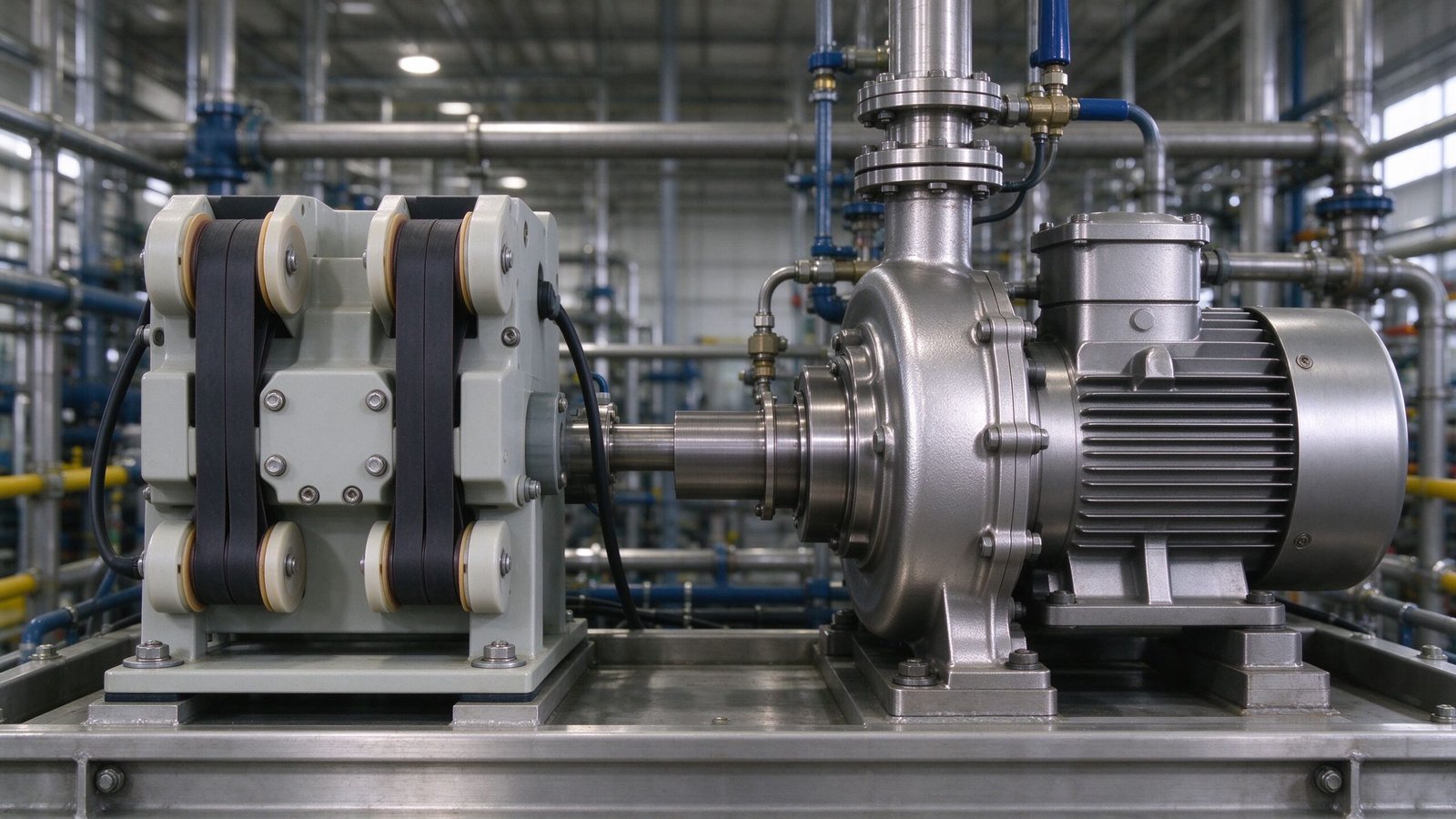
When a process needs to move liquid, the first pump most engineers reach for is a centrifugal pump. It is cheap, simple, and widely available. But for chemical dosing, viscous fluids, slurries, or any duty where the fluid must stay sealed, a peristaltic pump is often the better choice. This comparison explains where the two pump types overlap, where they diverge, and how to choose between them without defaulting to the familiar centrifugal.
How Each Pump Moves Fluid
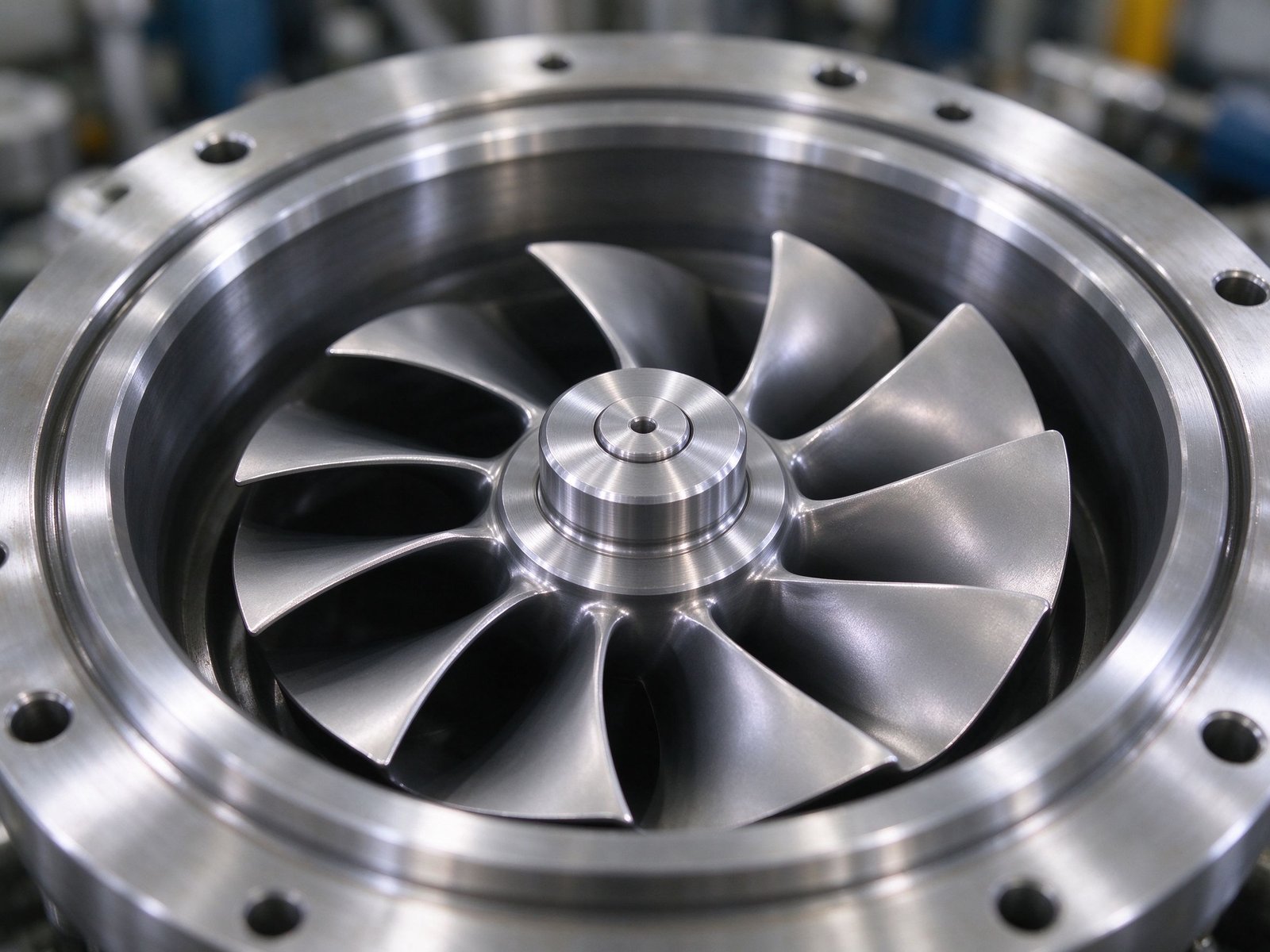
A centrifugal pump uses a spinning impeller to fling fluid outward, building velocity and pressure. It is a kinetic pump: the impeller is in contact with the fluid, and the seal around the shaft is the weak point. A peristaltic pump uses rollers to pinch a flexible tube, pushing a plug of fluid ahead of each roller. It is a positive-displacement pump: the fluid stays sealed inside the tube, and there is no shaft seal in contact with the fluid.
This single difference — sealed tube versus impeller with a shaft seal — drives most of the comparison. A centrifugal pump is efficient for high flow at low pressure, and it tolerates a wide range of clean fluids. A peristaltic pump is less efficient per watt, but it doses accurately, runs dry without damage, and keeps the fluid isolated. A peristaltic pump driver controls the speed precisely, which is what makes the peristaltic a metering pump rather than just a transfer pump.
| Factor | Centrifugal pump | Peristaltic pump |
|---|---|---|
| Principle | Kinetic, impeller | Positive displacement, rollers on tube |
| Fluid contact | Impeller, seal, casing | Only the inside of the tube |
| Seal leakage | Wear point | None, sealed tube |
| Dry running | Damages the seal | Handles dry running |
| Flow control | Valves, throttling | Speed and run time |
| Accuracy | Moderate, varies with pressure | Repeatable, time-based dosing |
Flow, Pressure, and Efficiency
A centrifugal pump wins on raw flow and efficiency. It moves large volumes at low head with a simple motor, and it is the right tool for circulation, transfer, and cooling loops where the duty is continuous and the fluid is clean. Its flow drops as back-pressure rises, and it cannot build high pressure against a closed valve, but that is rarely a problem in its intended duty.
A peristaltic pump moves less volume per watt and is not efficient for high-flow transfer. What it does well is deliver a known volume per revolution, regardless of moderate back-pressure. It is a dosing and metering pump, not a high-flow transfer pump. A large-flow peristaltic pump reaches a few liters per minute; a centrifugal pump of the same motor size reaches tens or hundreds. If the duty is “move a lot of clean water,” choose centrifugal. If the duty is “dose a measured shot of chemical,” choose peristaltic.
| Duty | Centrifugal | Peristaltic |
|---|---|---|
| High-flow clean water transfer | Best | Oversized, inefficient |
| Chemical dosing, measured shot | Poor, needs valves | Best |
| Viscous fluid transfer | Efficiency drops | Handles well with right bore |
| Abrasive slurry | Impeller wears | Tube wears, cheap to replace |
| Sealed, hygienic, no leakage | Shaft seal risk | Sealed tube, no leak path |
| Dry running or intermittent | Seal damage | Handles it |
Sealed Fluid and Contamination Control
Where the peristaltic wins outright is fluid isolation. The chemical never touches an impeller, a seal, or a casing; it lives inside the tube. That matters for corrosive chemicals, for hygienic fluids, and for any duty where a shaft-seal leak would be a hazard. A centrifugal pump on a caustic or acid line has a seal that will eventually weep, and the seal material must be compatible with the chemical. A peristaltic pump has no such seal, and the wetted path is a cheap, replaceable tube.
This is also why peristaltic pumps dominate in labs, dosing skids, and hygienic applications. The peristaltic pump tube is the only wetted part, and swapping it changes the fluid path in minutes. A centrifugal pump’s wetted path is the whole casing, and cleaning or changing it is a bigger job. The fluid-handling and material-compatibility approach described by the U.S. National Science Foundation’s engineering research is to match the wetted path to the actual fluid, and the peristaltic’s sealed tube is the simplest way to satisfy that.
Viscous and Abrasive Duty
Both pumps struggle with viscous and abrasive fluids, but they fail in different ways. A centrifugal pump on a viscous fluid loses efficiency fast, and the impeller is exposed to the particles, so it wears. A peristaltic pump on a viscous fluid slows down predictably with the right bore, and the tube — not a precision impeller — takes the abrasion. When the tube wears, it is a cheap swap; when a centrifugal impeller wears, the pump needs a rebuild.
For a slurry or a viscous chemical, the peristaltic’s consumable-wetted-part model is easier to live with. A small peristaltic pump on a dosing duty accepts a cheap tube change as routine maintenance, while a centrifugal on the same duty would need an impeller and seal replacement. The controlled speed that makes this repeatable is described in the motor-driver operating manual, and the point-of-use calibration practice described by NIST’s Physical Measurement Laboratory confirms the delivered volume under real duty rather than on a clean-water bench.
Cost and Maintenance
The sticker price favors the centrifugal, but total cost depends on the duty. A centrifugal pump is cheap to buy and cheap to run on a clean-water loop, but its seals and impellers wear and it needs a technician to service. A peristaltic pump costs more up front and consumes more energy per liter, but its maintenance is a tube change that an operator can do in minutes, with no tools and no alignment. For a dosing skid in the field, that low-skill maintenance is worth more than the small energy penalty.
| Cost factor | Centrifugal | Peristaltic |
|---|---|---|
| Purchase price | Lower | Higher |
| Energy per liter | Efficient | Less efficient |
| Routine maintenance | Seal, impeller, alignment | Tube swap, minutes |
| Service skill needed | Technician | Operator |
| Spare parts on hand | Seals, impellers | Tubes |
Noise, Vibration, and Installation
A centrifugal pump is a smooth, rotating machine that is easy to mount and quiet once aligned. A peristaltic pump pulses by nature, and each roller pass is a small mechanical event. That pulse is damped by the tube and the line, but it shows up as vibration and as a rhythmic flow fluctuation. In a tight installation, the peristaltic needs a rigid mount, supported tubing, and sometimes a pulse damper on the discharge; the centrifugal needs alignment and a foundation, but little else. For a silent, high-flow loop, the centrifugal is the quieter choice. For a small dosing skid, the peristaltic’s pulse is expected and easy to live with.
Installation also favors the peristaltic in tight spots. It mounts in any orientation, it tolerates a flooded suction or a lift, and it does not need to be primed like a centrifugal. A centrifugal loses prime if the suction line leaks or the tank runs dry, which is a recurring problem on open sumps. A peristaltic self-primes and recovers, which is why it is the default for intermittent and above-tank duties. The 24V dosing pump form factor is built for exactly this kind of compact, skid-mounted, always-ready duty.
How to Choose
Choose a centrifugal pump for continuous, high-flow, low-head transfer of clean fluid, where efficiency and low purchase cost matter and a shaft seal is acceptable. Choose a peristaltic pump for dosing, metering, sealed chemical transfer, viscous or abrasive fluids, hygienic service, and any duty where the fluid must stay isolated and the pump must survive intermittent or dry-running duty. Most real plants use both: a centrifugal for the main circulation loop, and peristaltic pumps for the chemical feed skids off that loop.
If you are replacing a centrifugal dosing pump that keeps leaking or wearing out, contact YOORAIN with the fluid, the shot volume, the back-pressure, and the duty cycle. We can recommend a peristaltic head, tube, and driver combination for the duty and bench-test the delivered volume on your fluid so the swap is confirmed before you remove the centrifugal.