
Industrial fermentation operations depend on precise fluid handling to maintain microbial growth conditions. Nutrient media must be supplied continuously or in scheduled feeds, pH must stay within narrow ranges through acid or base addition, and antifoam agents must be dosed before foam overflows the bioreactor. When these fluid-handling functions fail, batch yields drop, contamination risk rises, and downstream processing becomes more difficult. Peristaltic pumps are widely used in fermentation systems because they handle sterile and non-sterile fluids without complex seals, support multiple feed lines on a single multi-channel head, and allow operators to replace tubing without breaking sterile boundaries.
This article examines common fluid-handling problems in industrial fermentation, explains how to diagnose pump-related issues, and provides practical recommendations for maintaining reliable media transfer and pH control.
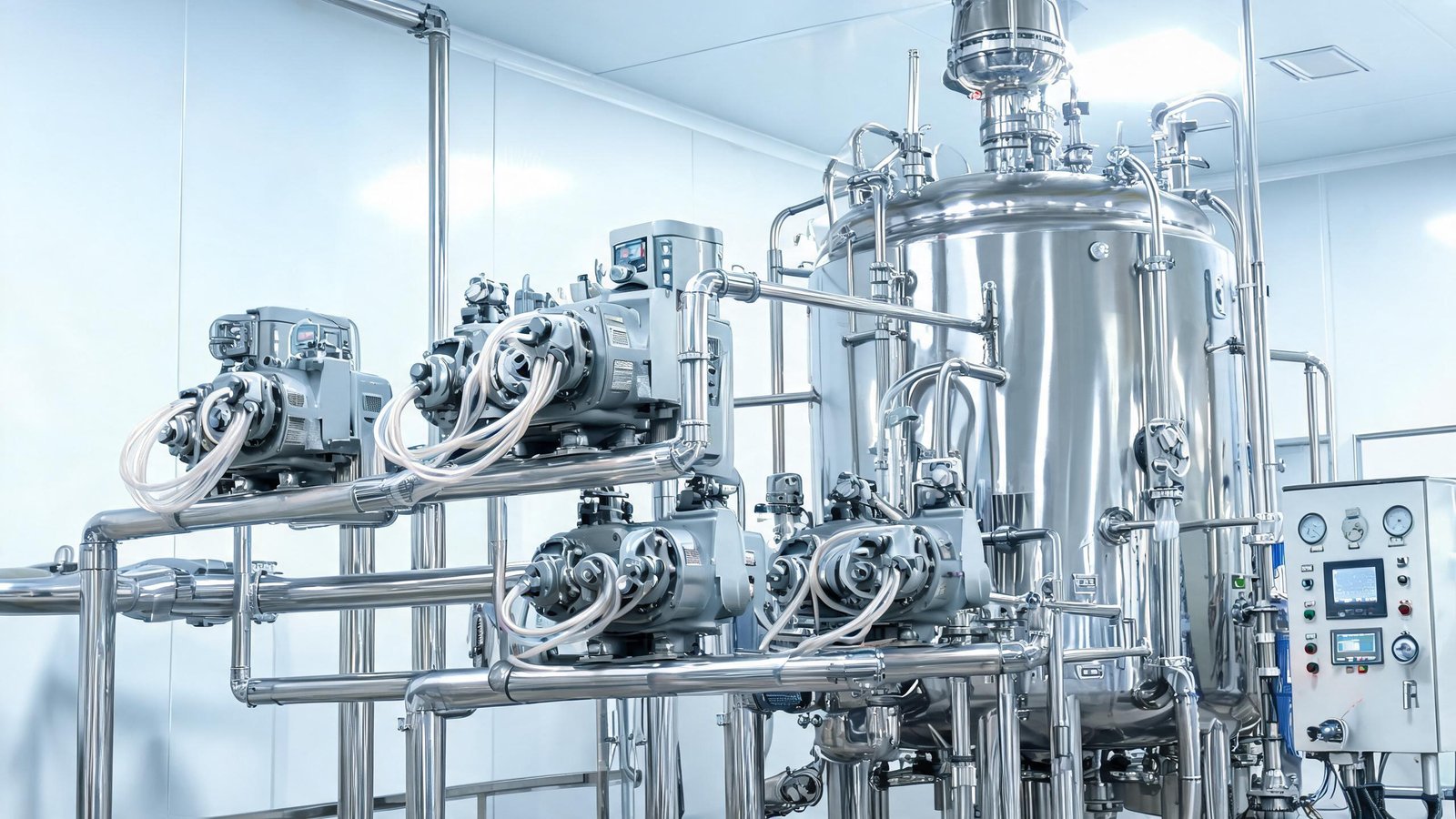
Common Problem: Inconsistent Media Feed Rate
One of the most frequent complaints in fermentation facilities is that the nutrient feed rate drifts over the course of a batch. The bioreactor controller calls for a constant feed of 5 mL per minute, but operators notice that the cumulative mass added after 24 hours falls short of the setpoint. In fed-batch processes, this shortfall starves the culture, reducing cell density and product titer.
Several factors can cause feed rate inconsistency. Tubing wear reduces the internal diameter and elastic recovery, so each roller compression moves less fluid than when the tubing was new. Roller tension may loosen over time, reducing occlusion depth and creating slip. Air bubbles entering the feed line compress rather than displacing, causing intermittent flow interruption. Finally, viscosity changes in the medium—due to temperature variation or concentration gradients—affect the relationship between pump speed and volumetric flow.
What Causes It
Understanding the root cause requires separating mechanical wear from process variability. Tubing degradation is accelerated by aggressive chemicals, high temperatures, and continuous operation. In fermentation, media often contain salts, sugars, and proteins that can deposit on the tubing inner wall, gradually reducing bore diameter. Acid and base solutions used for pH control are particularly harsh; sodium hydroxide and hydrochloric acid attack many elastomers, shortening tubing life from weeks to days if the material is poorly matched.
Roller tension affects occlusion consistency. If the tension is too low, the tubing does not fully close between the roller and the track, allowing backward slip during the non-compressed phase. If tension is too high, the tubing experiences excessive stress, accelerating fatigue and permanent deformation. Both conditions reduce dosing accuracy.
Air ingress typically occurs at tube fittings, especially when the supply vessel level drops and slight negative pressure draws air through loose connections. Peristaltic pumps are self-priming, but they cannot pump air at the same efficiency as liquid, so even small bubbles reduce average flow.
| Symptom | Likely Cause | Diagnostic Test |
|---|---|---|
| Gradual flow reduction over days | Tubing wear or bore deposition | Gravimetric flow check; inspect tubing inner surface |
| Intermittent flow interruption | Air bubbles in feed line | Visual inspection of transparent tubing; check fittings |
| Flow varies with fluid temperature | Viscosity change; tubing stiffness shift | Measure flow at multiple temperatures with same tubing |
| Pump runs but no fluid movement | Tubing rupture or severe slip | Inspect tubing for cracks; check roller occlusion |
| pH oscillates around setpoint | Acid/base pump overshooting or lagging | Review controller PID settings; verify pump response time |
How to Diagnose It
Diagnosis should proceed systematically. First, verify that the problem is pump-related rather than controller-related. Disconnect the pump from the bioreactor controller and run it at a fixed speed into a graduated cylinder. Measure the delivered volume over a timed interval, repeating the test three times. If the average flow matches the theoretical value based on pump speed and tubing diameter, the pump is performing correctly and the issue lies in the control signal, calibration curve, or sensor feedback loop.
If the measured flow is low, inspect the tubing. Remove it from the pump head and examine the inner bore for discoloration, deposits, or deformation. Hold a section up to a light source; pinholes or cracks indicate imminent failure. Check the roller track for grooves or residue buildup that might interfere with smooth rotation.
For pH control loops, observe the acid and base pump behavior during a setpoint change. The pump should respond within seconds to a controller output signal. If there is noticeable lag, check the tubing length between the pump and the injection port. Long tubing creates dead time that destabilizes the pH loop, causing oscillation. A compact peristaltic pump mounted close to the bioreactor vessel reduces this transport delay.
Engineering Fixes
Once the root cause is identified, apply the appropriate fix. For tubing wear, the solution is material selection and replacement scheduling. In fermentation applications, PharMed BPT tubing often outperforms standard silicone because it resists the oxidizing conditions created by repeated sterilization and exposure to nutrient media. For strongly acidic or alkaline pH control lines, Viton or Norprene tubing may be necessary despite their higher cost.
For roller tension issues, some pump heads offer adjustable occlusion. Follow the manufacturer’s procedure to set the gap so that the tubing is fully compressed but not flattened beyond its elastic limit. After adjustment, run a calibration check to confirm flow accuracy has returned to specification.
To eliminate air ingress, use barbed fittings with hose clamps rather than simple push-fit connectors on the suction side of the pump. Maintain a positive head pressure by placing the supply vessel above the pump inlet, or install a small day tank with level control to prevent the pump from drawing air when the main vessel empties.
For viscosity-sensitive applications, temperature control of the media vessel stabilizes fluid properties. If temperature control is impractical, consider adding a flow sensor in the feed line and implementing closed-loop speed control on the pump. ISO 13408-1 on aseptic processing emphasizes process control and validation, which applies to fermentation feed systems in pharmaceutical manufacturing.
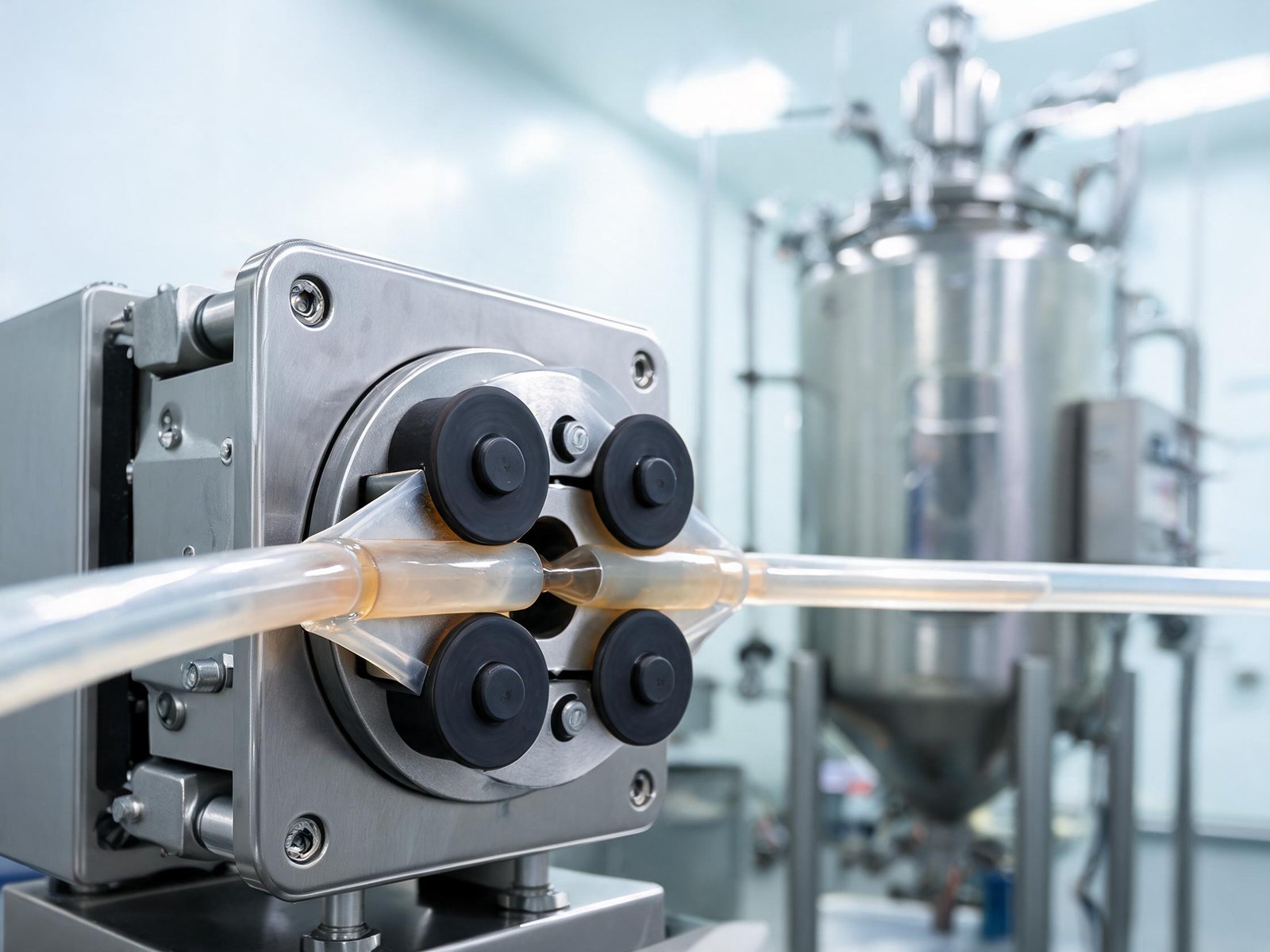
When to Change the Pump or Tubing
Tubing replacement should follow a preventive schedule based on operating hours and fluid severity, not simply wait for visible failure. In continuous fermentation, tubing handling nutrient media may last two to four weeks, while tubing in acid or base service may need replacement weekly. Document the replacement interval in the batch record to support ISO 13485 quality system requirements if the fermentation produces pharmaceutical intermediates.
Replace the entire pump head or drive unit when mechanical wear becomes evident. Signs include bearing noise, motor overheating, or inconsistent roller positioning. Some pump heads contain sealed bearings that cannot be serviced; when these fail, replacing the head is more cost-effective than attempting repair.
Upgrade to a larger pump if the existing unit cannot achieve the required flow without operating at maximum speed. Running a peristaltic pump at its speed limit increases pulsation, reduces tubing life, and leaves no headroom for process upsets. A large flow peristaltic pump or peristaltic hose pump may be appropriate for high-volume media transfer in industrial-scale fermenters.
Maintenance Checklist
Avoiding unplanned downtime requires regular inspection and preventive replacement. Include the following items in the fermentation facility’s maintenance routine:
- Inspect all tubing for discoloration, hardening, or cracks during every batch turnaround.
- Calibrate each feed pump gravimetrically after tubing replacement.
- Verify roller occlusion tension quarterly using the manufacturer’s gauge or procedure.
- Clean the pump head and roller track to remove crystallized salts or media residue.
- Check motor and driver cooling fans for obstruction or dust buildup.
- Test pH control loop response time monthly by inducing a small setpoint change.
- Document all maintenance activities in the equipment log for audit purposes.
Practical Recommendations
Peristaltic pumps remain a practical choice for fermentation fluid handling when the application is matched to the pump’s capabilities. For nutrient feeds and antifoam dosing, select tubing with demonstrated compatibility against the specific medium composition. Position the pump as close to the injection point as possible to minimize dead time. Implement a preventive tubing replacement schedule based on operating data rather than waiting for failures.
For pH control, use separate pumps for acid and base to avoid cross-contamination, and size each pump so that it operates in the middle of its speed range during normal correction events. This provides capacity for rapid recovery from pH excursions without running at maximum speed continuously.
In pharmaceutical fermentation, where environmental and waste regulations may apply to spent media and cleaning effluent, ensure that tubing materials and disposal procedures comply with local requirements. Spent PharMed and silicone tubing may require segregation as non-hazardous or chemical waste depending on the substances they contacted.
If you are developing laboratory or diagnostic equipment, you can contact YOORAIN to discuss the fluid-handling requirements of your system.