

When a peristaltic pump is bought for a production, pilot, or instrument duty, the headline unit price and a nominal flow rating rarely settle whether the pump will actually suit the chemistry, the mounting, or the after-sales plan. What protects the buyer is the documentation and compatibility data that come with the offer: the wetted material details, the compatibility guidance for the fluid, performance and mounting information, drive and wiring references, spare part details, and the supplier’s record for supporting repeat orders. A quote that cannot supply this material leaves the buyer to discover incompatibility or service gaps after the pump is on site. This procurement guide lists what to request before a volume order, how to read the compatibility information, and the red flags that should prompt a second supplier comparison.
Why Documentation Matters for a Peristaltic Duty
A peristaltic pump’s reliable service depends on matching three things together: the head and tube bore to the flow and fluid, the tube material to the chemistry and temperature, and the drive to the control and duty cycle. Each match needs information the supplier can provide. Without the right data, a buyer may select a tube material that attacks in service, a head that works only at part of the range, or a drive that does not match the control signal on the line. Documentation also matters once the pump is installed: replacement tubes and parts must match the original configuration, and the fluid record makes repeat orders faster and safer.
What to Request in the Quote Package
| Document or data item | What it should cover | Why the buyer needs it |
|---|---|---|
| Wetted material details | Tube material, fitting material, and any seal or contact parts | Confirms what touches the fluid and supports compatibility review |
| Chemical compatibility guidance | Material response to the named fluid, concentration, and temperature | Flags swelling, softening, or hardening before the tube fails in service |
| Performance information | Flow range for the head and tube bore, and notes on slip or back-pressure limits | Checks the pump covers both smallest and largest expected doses |
| Mounting and dimensions | Head size, mounting arrangement, inlet and outlet orientation, clearance | Verifies the pump fits the bench, panel, or equipment enclosure |
| Drive and control reference | Drive type, speed adjustment, and any signal or wiring detail | Matches manual, adjustable, or signaled control to the recipe or instrument |
| Spare part references | Replacement tube bore and material, fittings, and any service parts | Lets the buyer stock the correct consumables and plan service |
| Operating and service notes | Setup, tube change, calibration check, and inspection guidance | Supports consistent operation after the first install |
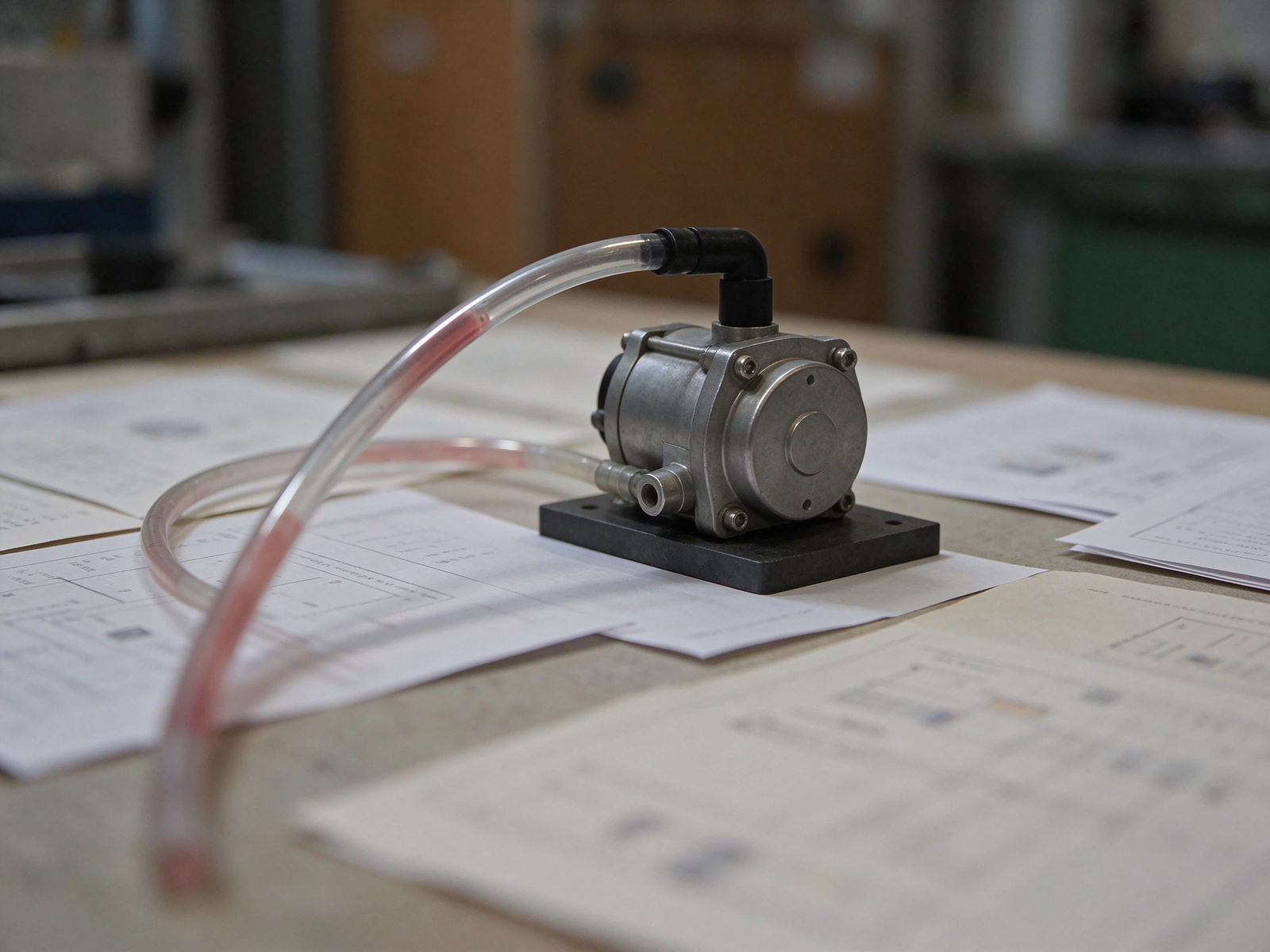
The compact and small head ranges appear in different duties: a mini peristaltic pump suits instrument and compact bench setups, a micro peristaltic pump covers low-volume reagent feeds, and a dedicated dosing head such as the C300 24V dosing pump lines up with controlled chemical feed. The peristaltic pump tube and peristaltic pump driver are the two components most worth documenting, because the material and the control scheme carry the duty.
Reviewing the Compatibility Data
Compatibility should be checked against the actual fluid, not a generic chemical class. Give the supplier the process fluid by name, its concentration, any mixture or additive, the working temperature, and the rinse or cleaning agent the line uses between batches. A material that suits a dilute solution may not hold up at full strength, and a warm fluid ages the tube faster than the same fluid at room temperature. Ask whether the guidance covers the temperature the pump will see, and whether the fitting and seal materials follow the same compatibility call. A chart that lists broad categories without the specific concentration or temperature is a starting point, not a final confirmation.
Mixtures deserve a separate check. A fluid that combines a solvent, an emulsifier, a salt, or an acidic and alkaline stage can behave differently from any single ingredient, and the supplier should review the blend rather than its components one by one. If the recipe changes over the year, note the most aggressive version the tube will see and size the material to that worst case. Long-running duties also age the material through cycles and temperature, so the compatibility note should cover steady operation rather than a one-off contact test.
Where the duty involves a regulated, food, pharmaceutical, or environmental context, request whatever material declarations or test information the supplier can provide rather than assuming certifications from a product description. Qualification practice for measurements and records aligns with the methods described by the NIST measurement practice, and engineering guidance for fluid-handling equipment is available from NSF engineering research; industrial water and chemical-management references are available through the EPA industrial water management guide. Keep the supplier’s written response with the project file so the material choice can be revisited if the chemistry changes.
Red Flags in a Supplier Response
| Signal | Risk | What to ask for |
|---|---|---|
| No wetted material named | Fluid compatibility cannot be checked | Tube, fitting, and seal materials for the offered configuration |
| Compatibility stated only for the product class | Concentration or temperature mismatch possible | Response for the named fluid, strength, and working temperature |
| No spare part references | Consumables hard to source after purchase | Replacement tube bore, material, and fitting references |
| Drive control not specified | Pump may not match the line or instrument signal | Drive type, adjustment range, and control or wiring detail |
| No mounting or dimension information | Fit on panel or bench cannot be confirmed | Outline dimensions, mounting, and port orientation |
| Consumable life left undefined | Service interval and stocking plan unclear | Expected tube service note and inspection guidance |
Trial and Validation Before a Volume Order
For a duty that will run in production, a sample or trial unit on the actual fluid confirms what the documentation predicts. Run the trial at the real concentration and temperature, watch the delivered volume against the target dose, and inspect the tube after the trial period for swelling, softening, or discoloration. Record the output, the run time, and the tube condition so the supplier can advise on consumable life. This step separates a configuration that looks right on paper from one that holds up on the line, and it gives the procurement record a baseline for repeat orders. The peristaltic pump driver reference and motor-driver operating manual are useful references when comparing drive setups and wiring details across suppliers.
Keeping the Record for Repeat Orders
Once the pump is accepted, keep the configuration record together: head model, tube bore and material, drive type, fluid and concentration, working temperature, spare part references, and any compatibility note the supplier returned. That record speeds reorders, makes it clear which consumable to stock, and prevents a later repeat order from substituting a different material or head without review. If the chemistry, concentration, or temperature changes, refresh the compatibility check before fitting the next tube.
Frequently Asked Questions
What compatibility information is minimum for a pump quote? The tube and fitting materials, the fluid name and concentration, the working temperature, and the supplier’s response on whether that material holds up. Without these, chemical fit cannot be assessed.
Does the supplier need the cleaning agent too? Yes. Rinse and flush chemistries can attack the tube more than the process fluid. Include them in the compatibility review.
What should a trial unit confirm? That the pump delivers the target dose at the real fluid and temperature, and that the tube stays in condition over the trial period without swelling, softening, or discoloration.
Are certifications required in every quote? It depends on the duty and any regulated context. Request the material declarations and test information relevant to your application rather than assuming a generic claim.
How many spare tubes should be stocked? Stock the replacement bore and material that match the installed configuration, sized to the service interval the duty suggests, and keep the fitting references with the pump record.
When sourcing peristaltic pumps for a production or instrument duty, send YOORAIN the fluid list and concentrations, working temperature, target flow and duty cycle, mounting space, control signal, and any documentation your application requires. We can provide the head, tube material, drive configuration, and spare part references to go with the package, and confirm compatibility for the fluids the pump will carry.