
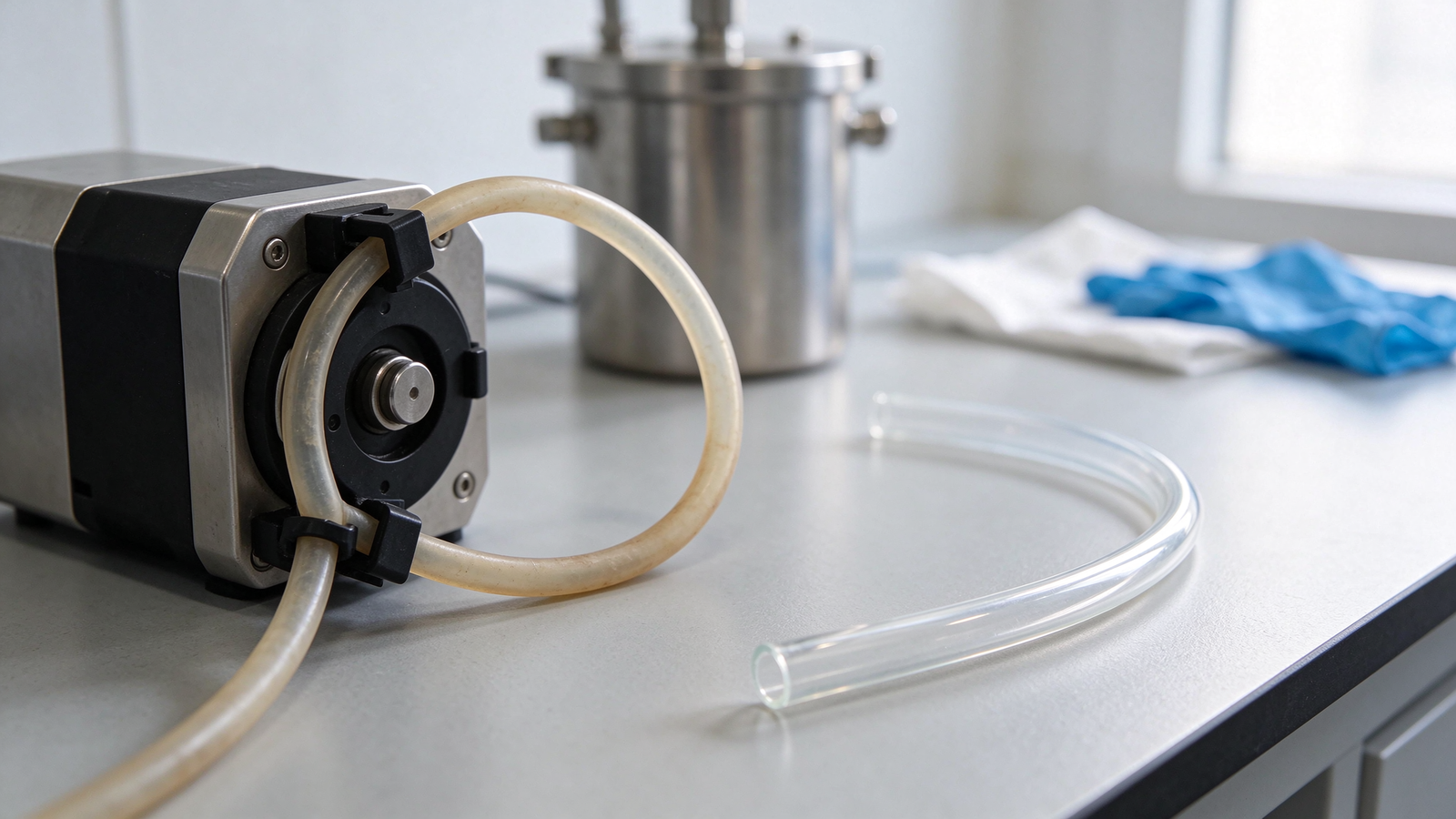
A peristaltic tube that fails early is often assumed to be worn out from normal service, but some failures come from chemical attack rather than roller fatigue. The signs are specific: the tube swells or softens, turns brittle and cracks, changes color, or develops a rough or tacky surface that a simple age-related wear pattern would not produce. Diagnosing the cause matters because fitting a new tube of the same material will repeat the failure if the chemistry or temperature was the root cause. This troubleshooting guide walks through how to recognize chemical attack, how it differs from mechanical wear, what to check on site, and how to correct the tube selection and operating conditions.
Signs of Chemical Attack on the Tube
Inspect the removed tube along its full length, including the section that sat in the head and the inlet and outlet runs. Chemical attack tends to show up as a change in the tube material itself, not just a flattened contact line from the rollers.
| Observed sign | What it suggests | Where to look |
|---|---|---|
| Swelling or expanded bore | Fluid absorbed into the material, softening the wall | Full tube length, especially wetted section |
| Soft, tacky, or rubbery surface | Plasticizer or binder extracted by the fluid | Outer and inner wall where fluid contacts |
| Hardening, brittleness, or loss of flexibility | Oxidation, hydrolysis, or material aging from chemistry or heat | Bends and head contact points |
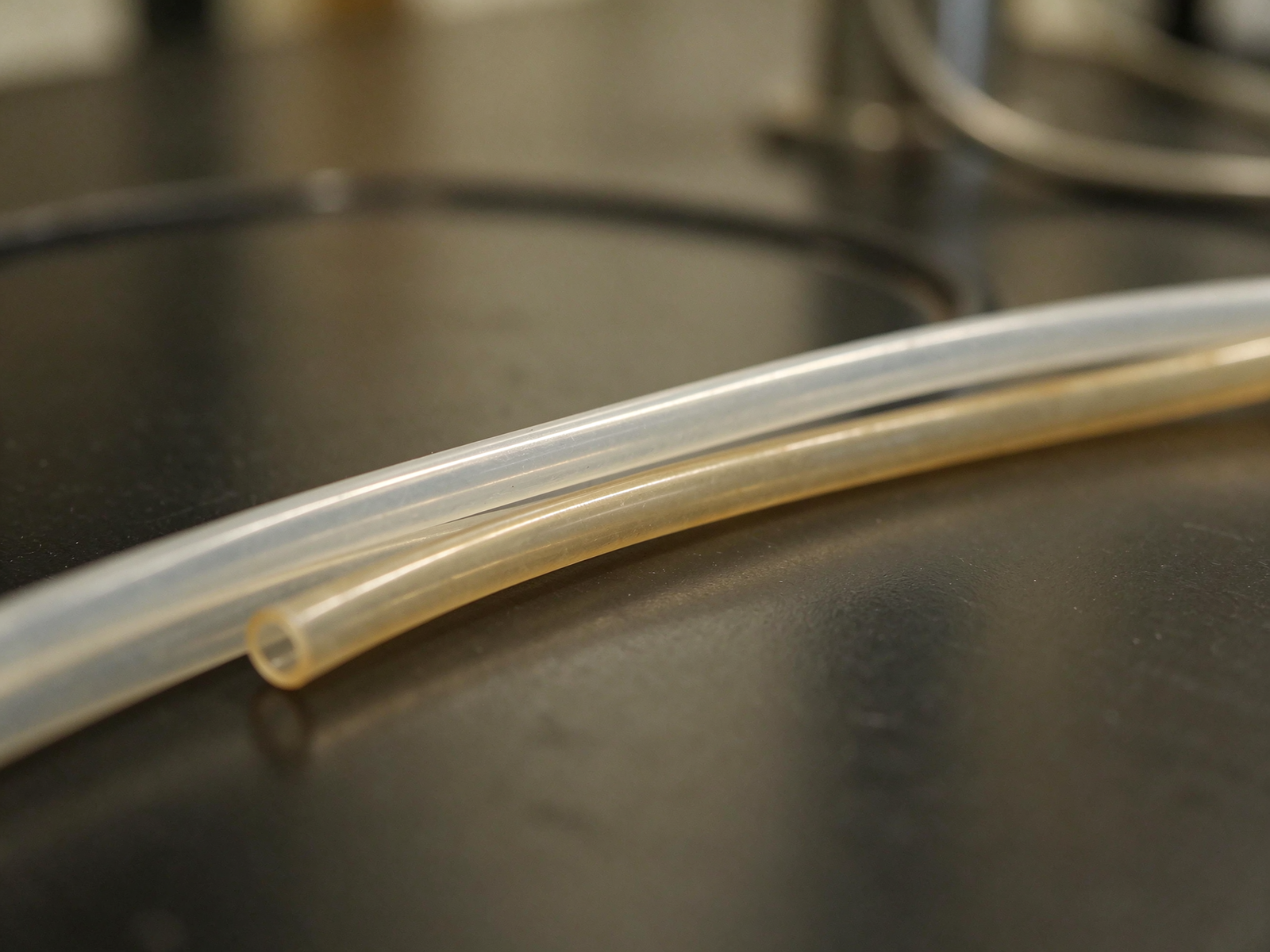
| Discoloration, staining, or clouding | Chemical interaction or extraction changing the material | Compared against a new unused tube |
| Cracking, crazing, or splits along the wall | Material embrittlement after attack, then flex fatigue | Tube bends and roller contact zone |
| Rough, pitted, or chalky surface | Surface degradation from chemistry or concentrated residue | Inner bore and discharge side |
| Unusual odor or residue on the wall | Extracted material or reacted film left behind | Freshly cut tube section |
How Chemical Attack Differs From Mechanical Wear
Normal roller wear follows the occlusion cycle: a contact line where the roller presses the tube flat, gradual thinning at the head, and loss of output as the tube no longer recovers fully. The material itself stays intact and flexible until late in life. Chemical attack changes the material before the wear cycle can account for it. A tube that was fitted recently, shows softening or swelling along the whole wetted length, or cracks without a deep flattened contact line points to chemistry rather than service hours.
Some failures combine both. A chemically softened tube wears faster under the rollers, and a brittle tube cracks sooner at the bends. The diagnostic question is which came first: a material change from the fluid, or a mechanical fatigue pattern from the occlusion cycle. Keep the removed tube for comparison against a new one of the same material.
How the Fluid Attacks the Material
Tube materials respond to chemistries in a few common ways. Solvents and some concentrates can absorb into the wall and leach out plasticizers, leaving the tube swollen or soft. Acids, alkalis, and certain reactive fluids can hydrolyze or oxidize the polymer, leaving it brittle and prone to cracking. Higher temperature accelerates any of these effects, so a compatibility decision made at room temperature may not hold when the fluid runs warm. Mixtures and concentrations matter too: a fluid that suits one material at a low concentration may attack it at full strength, and a rinse or cleaning agent between batches can be more aggressive than the process fluid itself.
Step-by-Step Diagnosis
| Step | Check | Finding to record |
|---|---|---|
| 1. Identify the fluid | Process chemical, concentration, any mixture, and the cleaning or rinse agent | Name and strength of each fluid the tube contacts |
| 2. Note conditions | Working temperature, suction and discharge condition, run time per day | Temperature range and duty pattern |
| 3. Inspect the removed tube | Swelling, softness, hardness, color, cracks, roughness, odor | Signs and where they appear on the tube |
| 4. Compare with a new tube | Flexibility, wall feel, color and bore of unused stock | Whether the used tube differs beyond normal wear |
| 5. Rule out other causes | Occlusion setting, kinked inlet, back-pressure, tube age, motor speed | Mechanical or installation factors that reduce tube life |
| 6. Review material choice | Check compatibility against the actual fluid and temperature | Whether the current tube material is a mismatch |
Before changing the material, confirm the pump side is not contributing. An over-tight occlusion setting, a kinked or restricted inlet, high back-pressure on the discharge, or running the pump faster than the head suits all shorten tube life, but they produce a mechanical wear pattern rather than a material-level change. The tube selection and peristaltic pump tube material should match the most demanding fluid the pump carries; the head and drive arrangement are reviewed against the duty in the same way a micro peristaltic pump or small peristaltic pump setup would be checked for speed and fit.
Corrective Actions
If the inspection points to chemical attack, start by removing the affected tube and flushing the line with a compatible rinse so no concentrated residue remains in the inlet or head. Replace the tube with a material confirmed compatible with the fluid, concentration, and working temperature. Where the chemistry changed recently, verify the new concentration or mixture against the material before the next batch. Keep a spare tube of the correct material on site so a failed tube does not hold up the line, and record the fluid, material, installation date, and condition at removal for the next service review.
Where the fluid runs warm, ask the supplier about compatibility at the operating temperature rather than at ambient, and check whether the line needs the fluid held at a steady temperature. If two chemistries share the pump, keep dedicated tube runs or a flush schedule between them so residue does not sit in the bore. The peristaltic pump driver speed should also be reviewed: running faster than the duty needs adds cycling stress on an already strained material.
Prevention and Inspection Routine
A periodic tube check catches attack before a split stops the line. At each service, flex the tube gently, feel for softening or brittleness, look for color change or surface roughness, and compare the delivered volume against the baseline. Log the fluid and material so a repeat failure can be traced to a specific chemistry. Where the duty handles strong acids, alkalis, solvents, or warm concentrates, shorten the inspection interval even if the pump appears to run normally.
The service record can follow the weighing and timing methods described by the NIST measurement practice, with fluid-handling background from NSF engineering research. Drive-side setup and speed reference are covered in the motor-driver operating manual and the peristaltic pump driver reference, which help confirm the pump is not being run faster than the head and tube suit.
Frequently Asked Questions
How is a swollen tube different from normal wear? Normal wear flattens the contact line and thins the tube where the rollers pass; swelling softens and expands the whole wetted length. A soft, expanded bore points to fluid absorption rather than roller fatigue.
Can a tube that turned brittle still be used? Brittle tubing loses its recovery and is likely to crack at the bends or in the head. Replace it, and review why the material hardened rather than simply fitting another identical tube.
Does temperature make chemical attack worse? Yes. Higher temperature speeds absorption, extraction, and oxidation. Check compatibility at the actual working temperature, not just room temperature.
What if the cleaning agent is more aggressive than the product? Rinse and cleaning chemistries can attack the tube even when the process fluid suits the material. Include the rinse agent and its concentration in the compatibility review.
Should I slow the pump down to save the tube? Lower speed can reduce cycling stress, but it does not fix a material mismatch. Correct the tube material first, then review speed against the head and duty.
If your peristaltic tube is swelling, hardening, cracking, or discoloring ahead of schedule, contact YOORAIN with the chemical names and concentrations, working temperature, current tube material, and how long the tube lasted. We can help identify whether the failure points to chemical incompatibility and suggest a compatible tube material for the duty.