
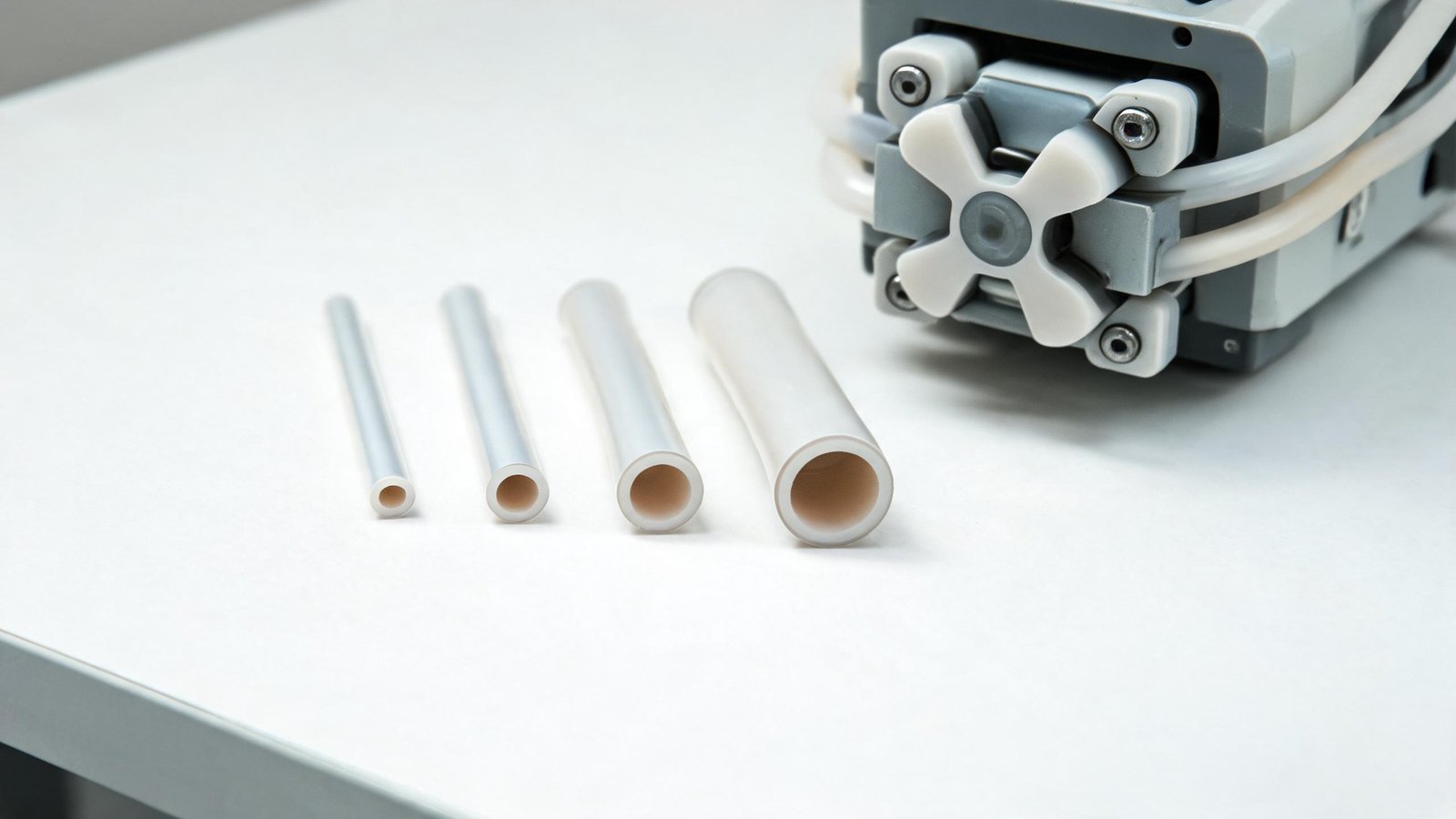
Procurement teams and design engineers selecting peristaltic pump tubing often face a basic but important question: what size tubing does the application need? Tubing diameter directly affects flow rate, pressure capability, suction lift, and tubing life, yet buyers sometimes select based on habit or a previous project rather than matching the size to current requirements.
The right tubing size balances several factors. A tube that is too small restricts flow and forces the pump to run at higher speed, accelerating wear. A tube that is too large may exceed the pump head’s capacity, cause excessive pulsation at low speeds, or waste fluid in the lines. This guide outlines what buyers should define first, how to compare tubing options, and how to confirm the selected size works in the actual system.
What Buyers Should Define First
Before comparing tubing options, establish the application’s core requirements. These parameters determine whether a specific tubing size can meet the performance needs.
Required flow rate. Define the minimum and maximum flow rates the system must deliver. Do not specify only the nominal rate — include the full operating range. Peristaltic pump flow depends on the volume displaced per revolution multiplied by pump speed, so tubing inner diameter is the primary variable affecting per-revolution volume.
System pressure. Determine the backpressure the pump must work against, including filter restrictions, elevation changes, and process pressure. Larger tubing generally produces lower pressure per unit of pump effort, but the pressure rating of the tubing itself depends on wall thickness and material, not just diameter.
Fluid characteristics. Note the fluid viscosity, presence of particulates, chemical composition, and temperature. Viscous fluids require larger tubing or higher drive torque. Abrasive particles accelerate tubing wear and may push the selection toward a larger bore to reduce speed.
Accuracy requirements. Specify the required dosing accuracy or flow repeatability. Tubing size affects accuracy because the volume per revolution is larger with bigger tubing, which can improve relative accuracy at higher flow rates but may make small volumes harder to dispense precisely.
Pump head compatibility. Each pump head accepts a specific range of tubing sizes. The YZ15 easy load peristaltic pump head is designed for a specific tubing diameter range, and using tubing outside that range causes poor occlusion, reduced flow, or accelerated wear. Always check the pump head’s accepted tubing sizes before selecting a tube.
Comparing Tubing Size Options
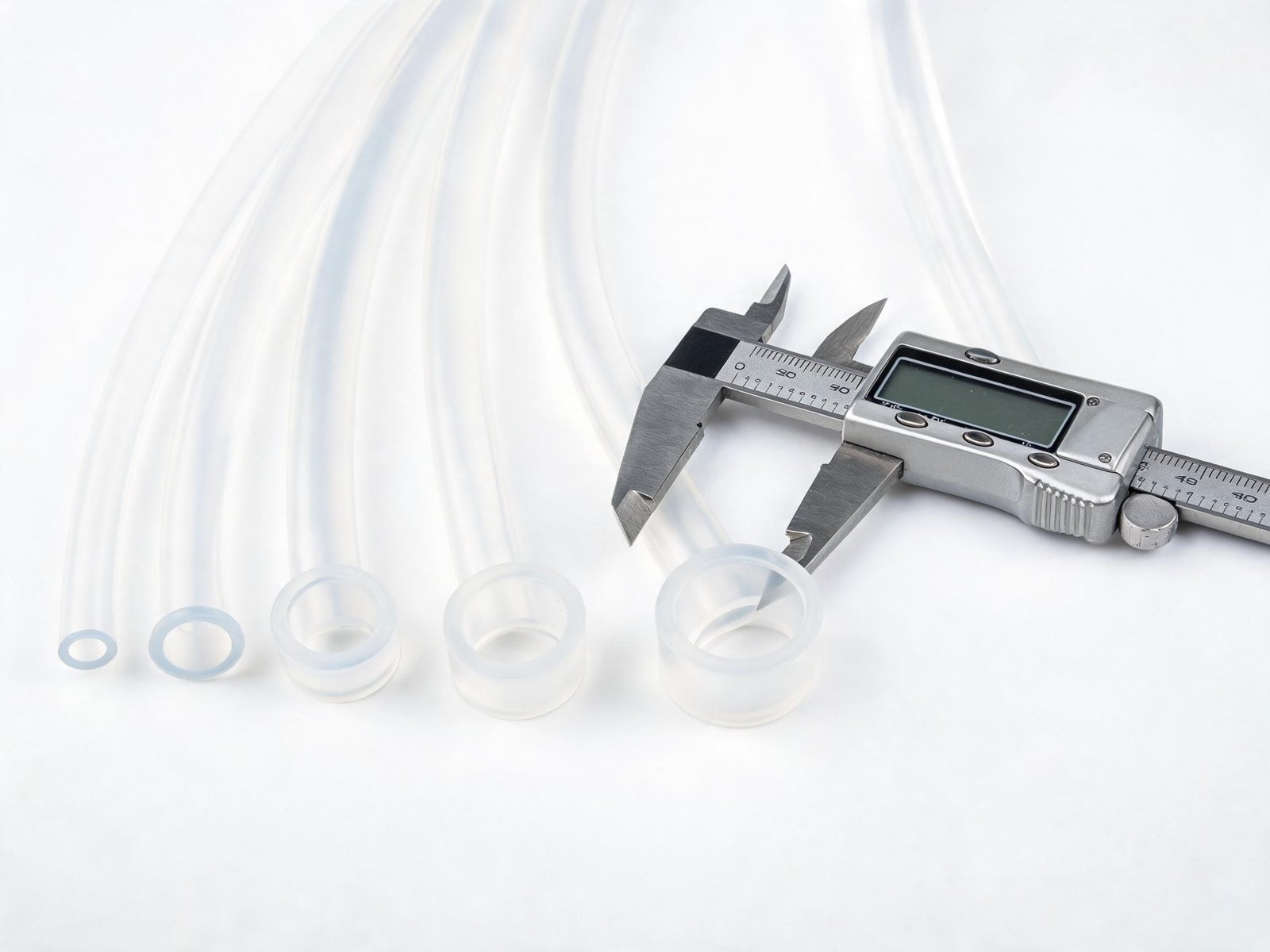
Once requirements are clear, compare tubing sizes against the following factors. The table below summarizes how tubing inner diameter affects key performance characteristics.
| Factor | Smaller Tubing | Larger Tubing | Why It Matters |
|---|---|---|---|
| Flow per revolution | Lower volume per turn | Higher volume per turn | Determines pump speed needed to achieve target flow |
| Pump speed for same flow | Higher speed required | Lower speed required | Lower speed extends tubing and motor life |
| Pressure rating | Often higher (thicker wall ratio) | Depends on wall thickness | Critical for systems with significant backpressure |
| Suction lift | Better (stiffer tube resists collapse) | May be lower at same wall thickness | Important for sampling from below-pump sources |
| Pulsation | Lower absolute pulsation | Higher absolute pulsation | Affects flow stability in precision applications |
| Tubing life | More cycles for same volume | Fewer cycles for same volume | Fewer compression cycles mean longer service life |
Flow Rate and Tubing Size Relationship
The volume of fluid moved per pump revolution is approximately proportional to the cross-sectional area of the tubing bore (pi times radius squared). This means small changes in inner diameter produce disproportionately large changes in flow rate. For example, increasing tubing inner diameter from 1.6 mm to 3.2 mm roughly quadruples the per-revolution volume, not doubling it as a linear comparison might suggest.
Because of this relationship, the tubing diameter is the most efficient way to change flow capacity. If a system needs twice the flow, increasing tubing size is usually more effective than doubling the pump speed, which would also roughly double tubing wear rate and motor stress.
Pressure Considerations
Pressure capability depends more on tubing material and wall thickness than on inner diameter alone. However, larger-diameter tubing with the same wall thickness tends to have lower burst pressure because the hoop stress is higher. If the application requires both high flow and high pressure, select tubing with a thicker wall designed for pressure service rather than simply increasing the diameter of a standard tube.
For most OEM laboratory and dosing applications, system pressures are relatively low and tubing size selection is driven primarily by flow rate requirements. But for applications involving filter lines, long discharge tubing runs, or discharge into pressurized vessels, verify that the selected tubing maintains its rated pressure at the operating temperature.
OEM Customization Considerations
For OEM equipment, tubing size is often locked in during product design and affects multiple system components. Changing tubing size after design freeze can require pump head changes, fitting changes, and sometimes enclosure modifications. Consider the following early in the project.
Future flow range expansion. If there is a reasonable chance the instrument will need a higher flow rate in a future model, specify a pump head that accepts multiple tubing sizes. This gives the design team room to increase flow by changing tubing without replacing the entire pump assembly.
Standardization across product lines. Using the same tubing size across multiple instrument models simplifies inventory and service procedures. A peristaltic pump with housing that accepts a common tubing size can be deployed across multiple product platforms, reducing the number of spare parts service teams must carry.
Supplier availability. Standard tubing sizes are more readily available from multiple suppliers and often cost less than custom sizes. Working with common sizes reduces supply chain risk and makes second-source qualification easier. The peristaltic pump tube options from YOORAIN cover the most commonly specified sizes for OEM equipment.
Regulatory and compliance materials. For medical, pharmaceutical, or food-contact applications, the tubing material must meet relevant standards. The FDA 21 CFR 177.2600 regulation covers rubber articles intended for repeated use in food contact, and similar standards apply in other regions. In the UK, the Medicines and Healthcare products Regulatory Agency oversees medical device regulation, including components that contact patient fluids. Verify that the selected tubing size is available in the required material grade before finalizing the design.
Supplier Evaluation
Not all tubing suppliers provide the same level of consistency or documentation. For OEM production, evaluate suppliers on the following criteria.
Size consistency. Tubing inner diameter and wall thickness must be consistent from batch to batch because these dimensions directly affect flow rate. Suppliers that provide dimensional tolerances and lot-to-lot verification data help ensure consistent pump performance across production runs.
Material traceability. For regulated industries, full material traceability from raw polymer to finished tubing is required. Ask for material certificates, batch records, and change notification policies. Any change in tubing formulation can affect pump performance and may require revalidation of the instrument.
Custom cutting and assembly. Many OEM applications require tubing cut to specific lengths, with end fittings pre-assembled, or with kink-resistant reinforcements. Suppliers that offer these value-added services reduce in-house assembly time and improve consistency.
Technical support. A supplier that can help match tubing size to the application — rather than simply selling from a catalog — reduces engineering time and helps avoid costly sizing mistakes. Ask whether the supplier can provide flow rate data for specific pump head and tubing combinations.
Quality and Testing
Once a tubing size is selected, verify it works in the actual system rather than relying solely on calculated values. Real-world conditions such as fluid viscosity, tubing length, elevation changes, and fitting restrictions can reduce actual flow compared to theoretical values.
Flow rate verification. Measure actual flow rate at the minimum and maximum operating points using the actual fluid and system configuration. Compare the results to theoretical values and adjust pump speed or tubing size as needed. Gravimetric measurement — weighing the dispensed fluid over a measured time — provides the most accurate results.
Pressure testing. Test the tubing at maximum system pressure, including any transient pressure spikes that may occur during startup or shutdown. Verify that the tubing does not expand excessively, slip from the fittings, or show signs of stress.
Life testing. Run the pump continuously at the highest expected operating speed and pressure until the tubing fails. Record the total volume pumped and the failure mode. This data helps set appropriate maintenance intervals for end users and provides input for reliability calculations.
Temperature testing. Tubing flexibility and pressure ratings change with temperature. Test the system at the minimum and maximum expected operating temperatures to ensure performance remains within acceptable limits across the full operating range.
Key Takeaways
Selecting the right peristaltic pump tubing size involves balancing flow rate, pressure, accuracy, and tubing life. Start by clearly defining the application requirements, then compare tubing sizes against the pump head’s accepted range. Use the smallest tubing that meets the flow requirement at a reasonable pump speed to maximize accuracy, or size up to reduce speed and extend tubing life.
For OEM equipment, standardize on common tubing sizes where possible to simplify the supply chain and service procedures. Verify the selected size through actual system testing rather than relying on theoretical calculations, and work with suppliers that provide consistent dimensions, material traceability, and technical support. Taking the time to get the tubing size right during development reduces field issues and simplifies production. Readers interested in broader tubing material considerations may also find this guide to peristaltic pump tubing material selection for chemical dosing useful.
If you are sourcing peristaltic pump tubing for OEM equipment or evaluating different tubing sizes for a new instrument design, contact YOORAIN to discuss your requirements. Providing the target flow range, fluid characteristics, pressure conditions, and pump head model helps suppliers recommend the most suitable tubing size and material for your application.