
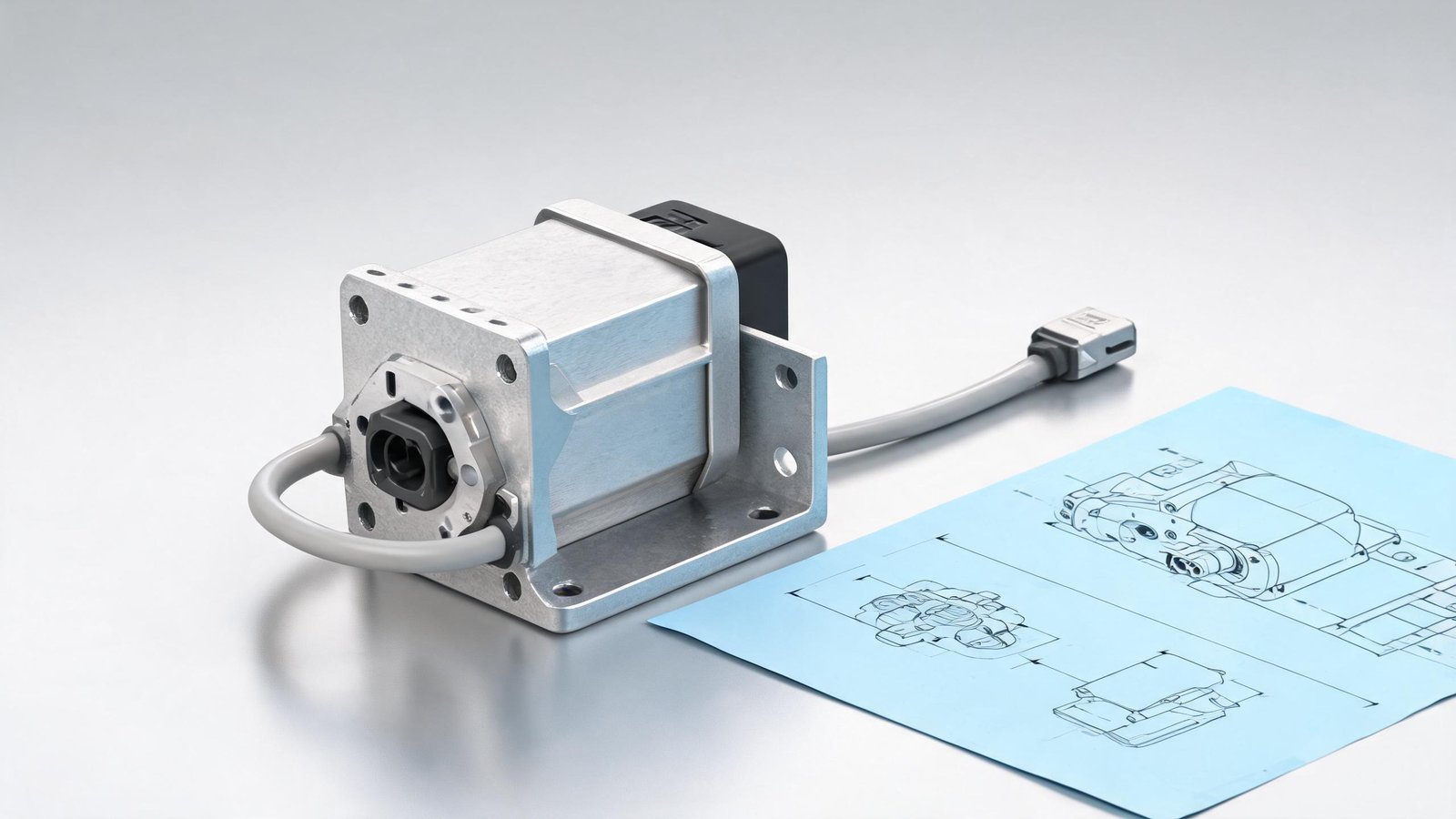
OEM manufacturers sometimes find that standard peristaltic pump models do not exactly match their instrument’s mechanical, electrical, or fluidic requirements. A minor modification — a different mounting bracket, a custom shaft length, a specific motor voltage, or a branded housing — can make the difference between a clean integration and a series of design compromises.
But customization is not always as straightforward as asking for a change. Different suppliers handle custom orders differently. Some offer extensive modification options with documented lead times, while others treat any change from catalog specs as a full custom engineering project. Procurement teams that understand the customization landscape — what changes are common, what they cost, what they require from the buyer — get better results faster. This guide covers what procurement should define before requesting customization, how to evaluate supplier capabilities, and what to expect in terms of lead times and quality documentation.
What Procurement Teams Should Define
Before contacting a supplier about a custom peristaltic pump, gather the following information. The more complete the requirements, the more accurate the supplier’s proposal and the fewer iteration cycles needed.
Base model reference. Start with the standard pump model that is closest to what you need. This gives the supplier a starting point for modification. For example, the peristaltic pump with housing is often used as a base for customizations because the enclosed design provides a structure that can be modified with different mounting points, connectors, or labels.
Required changes. List each modification clearly and separately. Common customization categories include:
- Mechanical changes: mounting brackets, shaft length, housing dimensions, custom inlet/outlet orientation
- Electrical changes: motor voltage, connector type and pinout, cable length, control interface
- Material changes: specific tubing material, alternative roller material, different housing plastic
- Cosmetic changes: custom labeling, brand colors, logo printing
- Performance changes: custom speed range, modified roller count, special calibration
Annual volume and lifecycle. Suppliers set pricing and tooling investment based on expected volume. A 1,000-unit-per-year program justifies more tooling investment than a 50-unit-per-year program. Also indicate the expected product lifecycle, because long-running programs may justify more extensive customization.
Regulatory requirements. If the end product is a medical device, the pump supplier’s quality system matters. The ISO 13485 quality management standard for medical devices outlines requirements for suppliers in the medical device supply chain. In the United States, the FDA 21 CFR Part 820 quality system regulation sets expectations for medical device manufacturing, including component suppliers. Specify any regulatory requirements up front so the supplier can confirm whether they can provide the necessary documentation.
Target price range. Sharing a target price helps suppliers determine which modifications are feasible within the budget. It also signals that you have done your homework and are evaluating the project realistically.
Technical Requirements
The technical specification package for a custom pump should include enough detail that the supplier can design the modification without repeated questions. At minimum, provide the following.
| Requirement Category | What to Specify | Why It Matters |
|---|---|---|
| Flow rate | Minimum, nominal, and maximum flow rates with tolerances | Determines pump head size, tubing, and motor selection |
| Pressure | Backpressure range and any pressure spikes | Affects tubing selection and motor torque requirements |
| Voltage and control | Supply voltage range, control signal type, connector pinout | Determines motor type and drive electronics |
| Mechanical envelope | Maximum dimensions, mounting hole pattern, weight limit | Ensures the pump fits within the available space |
| Environment | Temperature range, humidity, ingress protection level | Affects material selection, motor rating, and sealing |
| Life expectancy | MTBF, expected tubing life, duty cycle | Helps supplier recommend appropriate components |
| Compliance | Regulatory standards, material certifications, documentation needs | Determines whether supplier’s quality system can support the project |
Drawings are essential for mechanical customizations. A dimensioned drawing of the available space, the required mounting interface, and any clearance constraints lets the supplier evaluate feasibility quickly. For electrical customizations, provide a connector drawing or a pinout table along with voltage and control signal specifications.
Supplier Evaluation
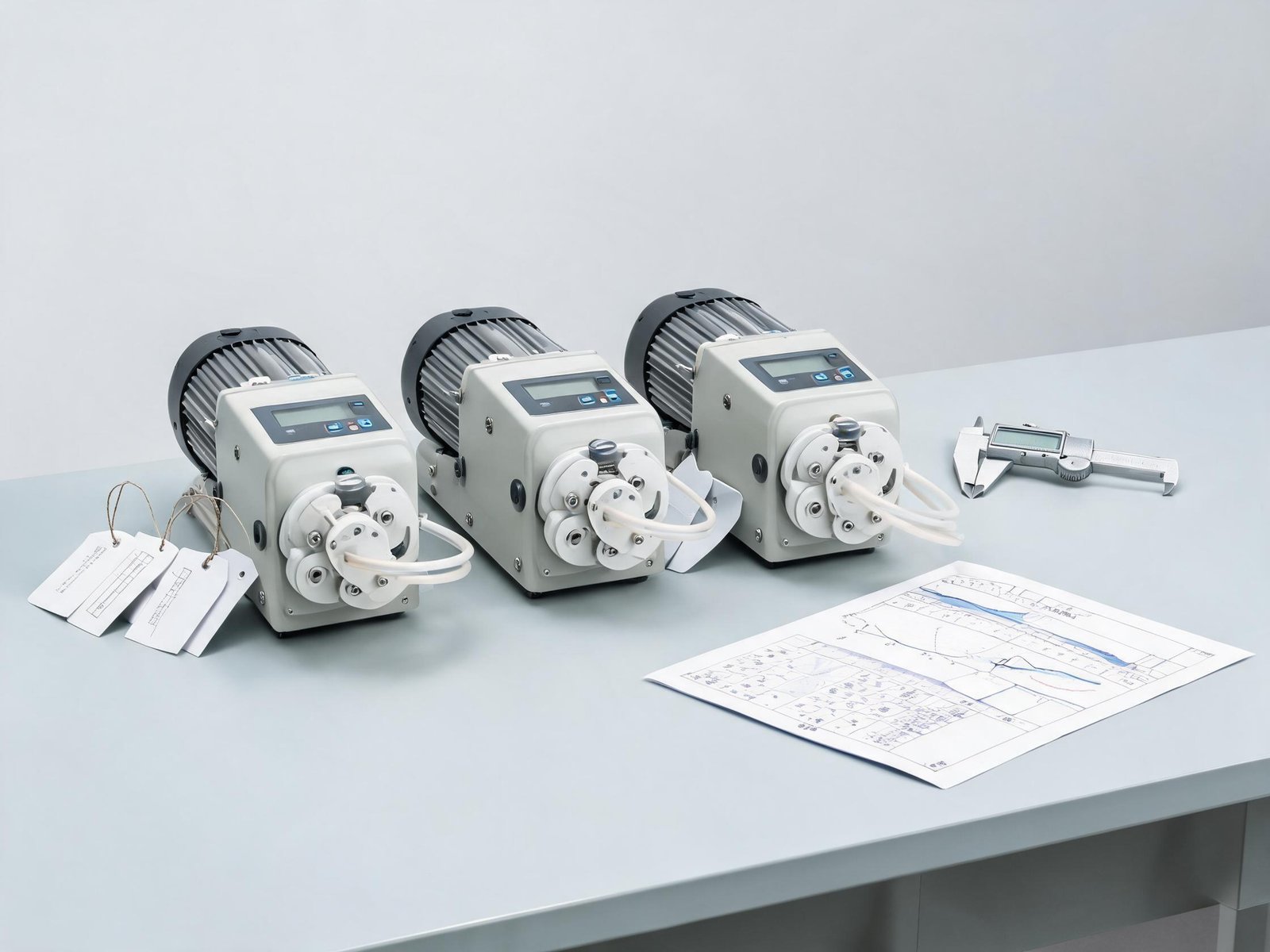
Not every peristaltic pump supplier offers meaningful customization. Some only sell catalog models with no modifications. Others offer a menu of standard options. A few provide fully custom design services. Evaluate suppliers against the following criteria.
Customization track record. Ask for examples of similar customizations the supplier has done for other customers. A supplier that has already modified a particular pump model for a different OEM will likely have lower engineering costs and faster turnaround than one starting from scratch.
Engineering capabilities. Determine whether the supplier has in-house engineering resources or whether they outsource design work. In-house engineering usually means faster response, better communication, and tighter integration between design and production. Suppliers with strong engineering teams can also suggest alternative approaches that reduce cost or improve performance.
Minimum order quantity. Customizations almost always have minimum order quantities. Simple changes like custom labels or cable lengths may have low MOQs, while mechanical modifications requiring new tooling may require hundreds or thousands of units. Clarify MOQ up front to avoid wasting time on options that are not feasible at your volume.
Tooling costs. Custom mechanical parts usually require tooling investment. Find out whether the tooling cost is paid up front, amortized into the unit price, or some combination. Also ask who owns the tooling and whether it can be transferred if needed.
Quality documentation. For regulated industries, the supplier must be able to provide the appropriate quality records. This may include material certificates, dimensional inspection reports, first article inspection reports, and change notification procedures. Suppliers that operate under OEM customization processes with established quality procedures reduce qualification effort for the buyer. Compact pump models such as the K15 micro peristaltic pump are frequent candidates for customization because they are commonly designed into instruments where space is constrained and minor mechanical changes make a significant integration difference.
Sample Testing
Before committing to production, test prototype or first-article samples in the actual application. Custom pumps sometimes behave differently from catalog models because the modifications can affect flow rate, noise, vibration, or service life.
Functional testing. Verify that the custom pump meets the flow rate, pressure, and accuracy requirements in the actual system configuration. Pay attention to any differences between the prototype and the standard model, especially if the modification changed the motor, drive, or pump head geometry.
Mechanical fit. Confirm that the pump mounts correctly, that all connections align properly, and that there are no interference issues with surrounding components. Check both assembled and service configurations — a pump that fits on the bench may be difficult to remove for maintenance in the final instrument.
Life testing. For high-volume programs, run accelerated life tests on prototype units to identify any reliability issues introduced by the customization. Changes that seem minor on a drawing can sometimes affect wear rates or fatigue life in unexpected ways.
Electrical compatibility. Verify that the custom electrical interface works correctly with the instrument’s control electronics. Check for signal compatibility, connector mating, and any electromagnetic interference that might affect other circuits.
Quality Control
Once production starts, quality control for custom pumps requires additional attention compared to standard products. The following measures help ensure consistent quality across production runs.
First article inspection. Conduct a full dimensional and functional inspection of the first production units. Compare measurements against the approved drawings and performance specifications. Document the results and obtain supplier sign-off before releasing the part for full production.
Process controls. Work with the supplier to define critical-to-quality characteristics and the inspection methods used to verify them. For custom components, make sure the supplier has updated their work instructions and inspection procedures to reflect the changes.
Change management. Establish how the supplier will notify you of any changes to the custom pump, including material changes, supplier changes for sub-components, or process modifications. This is especially important for regulated industries where any change may require revalidation.
Receiving inspection. Develop an incoming inspection procedure for the custom pump that checks the key characteristics. Even with a qualified supplier, periodic incoming inspection catches any production drift before it affects the final product.
Ordering Considerations
Custom pumps have longer lead times than standard models. Plan accordingly to avoid production delays.
Lead time expectations. Simple customizations like custom labels or cable length changes may add only a few days to the standard lead time. Mechanical changes requiring tooling can take several weeks for the tooling plus production time. Fully custom designs may require months of development, prototyping, and qualification before production starts. Get a written lead time estimate from the supplier and build a buffer into the project schedule.
Order quantity. Because custom pumps are made to order, they often have minimum order quantities and may have price breaks at higher volumes. Understand the price-quantity curve and consider ordering larger quantities less frequently if the total cost is lower and the product has a long shelf life.
Forecast sharing. Sharing demand forecasts with the supplier helps them plan production and maintain appropriate raw material inventory. For custom parts, long lead times make forecasting especially important because the supplier cannot draw from finished goods inventory to meet unexpected demand spikes.
Supply chain risk. Custom components carry supply chain risk because there is usually no second source. Consider whether the customization is important enough to justify the risk, or whether a standard model with minor in-house modification would reduce dependence on a single supplier. For high-volume programs, dual-sourcing critical custom components may be worth the additional qualification effort.
Specification Checklist
Use this checklist when preparing a custom peristaltic pump specification for supplier quotation:
| Category | Item | Status |
|---|---|---|
| Base model | Standard pump model used as starting point | Define by part number or reference |
| Performance | Flow rate range with accuracy/tolerance | Specify min/nominal/max |
| Performance | Pressure range and backpressure | Include any transient spikes |
| Mechanical | Mounting interface and dimensions | Provide dimensioned drawing |
| Mechanical | Weight and envelope constraints | Specify maximum values |
| Electrical | Voltage, control type, connector | Include pinout and cable length |
| Materials | Wetted parts and housing materials | List all material requirements |
| Environment | Temperature, humidity, IP rating | Specify operating and storage ranges |
| Regulatory | Standards and documentation needs | List applicable standards and certificates |
| Volume | Annual quantity and product lifecycle | Include forecast where possible |
| Quality | Inspection requirements and documentation | Specify FAIR, C of C, etc. |
| Logistics | Packaging, labeling, delivery terms | Define shipping and packaging needs |
If you are evaluating custom peristaltic pump options for an OEM instrument, you can contact YOORAIN to discuss your requirements. Sharing your technical specifications, target volume, and any regulatory requirements up front helps the supplier provide a realistic proposal with clear pricing, lead time, and modification scope.