
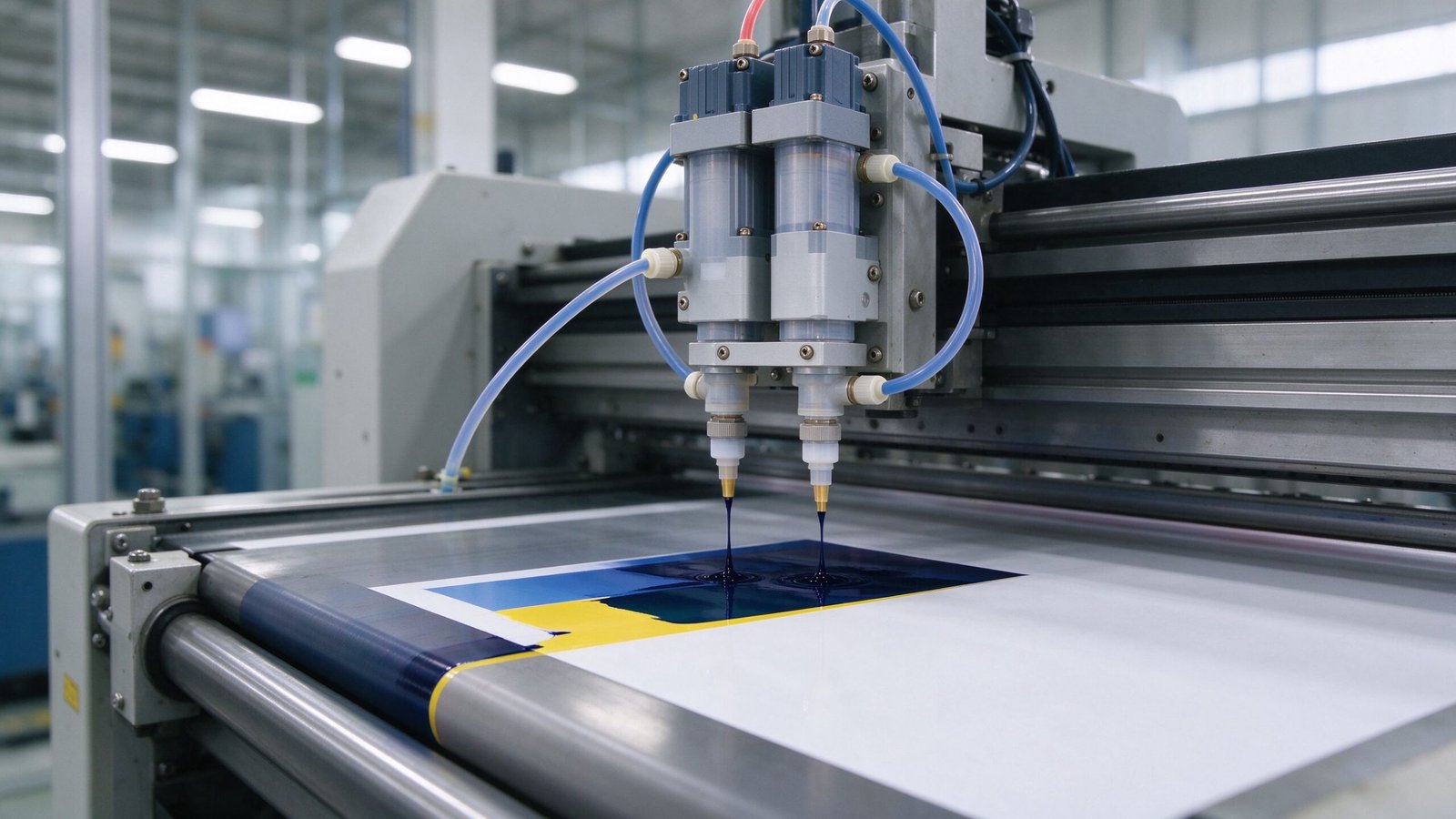
Printing and coating equipment relies on controlled delivery of ink, coating, adhesive, or cleaning fluid to a print station. When that delivery has to be repeatable over long runs, equipment builders often turn to peristaltic pumps because the fluid touches only the inside of the tube, the flow is easy to control, and the pump is simple to integrate. Sourcing the right pump for an OEM printing line is not a catalog exercise. It depends on the fluid, the dispense accuracy, the duty cycle, and the control signal the printing controller provides. This article walks through what procurement teams should define, the technical requirements to check, and what to confirm before ordering.
What Procurement Teams Should Define
Before contacting a pump supplier, the buying team should lock down the operating envelope. A pump quoted on flow rate alone will often miss the real requirement, because the same pump behaves differently with a thin ink, a viscous coating, or a solvent-based wash. The first items to define are the fluid to be dosed, the target flow range, the required dispense accuracy, and how often the pump runs per shift.
Procurement should also document the control interface. A printing machine that sends an analog speed signal, a PWM pulse train, or a simple fixed-speed supply needs a driver that matches. Asking the supplier for a pump that supports the exact signal the controller produces avoids a bench fix later. Finally, note the mounting space and the tubing-replacement expectation, because field service teams are the people who will change the tube between ink colors or between jobs.
| Item to define | Why it drives the pump choice |
|---|---|
| Fluid type and viscosity | Determines tubing compatibility, suction, and how speed converts to flow. |
| Flow range (min and max) | Sets pump head size and usable turndown. |
| Dispense accuracy | Determines whether open-loop speed control is enough or closed-loop is needed. |
| Duty cycle per shift | Affects motor type, heat, and tubing life. |
| Control signal from the printer | Must match the pump driver (analog, PWM, or fixed speed). |
| Mounting and service access | Defines pump form factor and tube-loading style. |
Technical Requirements
For ink and coating dispensing, the critical technical points are repeatability, chemical compatibility, and control resolution. Repeatable dosing means the same commanded speed delivers the same volume job after job, which matters when a print line runs many short jobs and the operator expects consistent laydown. Chemical compatibility means the tube material stands up to the ink or solvent without swelling, hardening, or leaching.
The control signal matters because printing equipment often ramps flow up and down as the line speeds up or slows. An OEM dosing pump that accepts an analog or pulse command lets the printer’s software set flow in real time. Compact pump drivers commonly accept 0–5 V or 0–10 V analog inputs, as shown in a stepper-driver speed-control reference, while other units list 4–20 mA, 0–5 V, 0–10 V, and pulse-frequency inputs configurable over communication, as described in a motor-driver operating manual. The buying team should ask which interface the proposed pump uses and how the speed-to-flow mapping is configured.
| Technical factor | What to ask the supplier |
|---|---|
| Repeatability | What dispense repeatability can be held over the defined flow range? |
| Tubing compatibility | Which tube material is recommended for the ink or solvent, and what is the expected life? |
| Control resolution | How finely can speed be set with the controller’s signal, and is feedback used? |
| Suction and lift | Can the pump prime from the reservoir height in the equipment? |
| Motor and heat | Is the motor rated for the duty cycle, and how much heat does it generate near the fluid path? |
Supplier Evaluation
Evaluating a peristaltic pump supplier for an OEM printing line goes beyond price. Consider the supplier’s experience with the fluid type, the documentation they provide, and their willingness to support samples. A supplier that can provide a datasheet with the actual signal interface, the recommended tubing, and a realistic tubing-replacement interval is easier to integrate than one that quotes a generic pump.
Communication and technical support matter during production ramp. When a printing line needs a small change in flow or a different tube material, a supplier that responds quickly with engineering input reduces downtime. Ask whether the supplier can supply the dosing pump configuration in the volumes your production line needs, and whether the same pump can be configured with different heads or tubing for other fluids on the same platform. It is also worth asking whether the supplier will support the sample test by reviewing your duty cycle and control signal before you commit to a production quantity.
Sample Testing
A sample run is the most reliable way to confirm a pump before committing to a production order. Test the pump with the actual ink or coating, at the actual flow and duty cycle the equipment will use. Measure the dispense repeatability, check how the tube wears over the test run, and confirm the pump primes reliably from the installed reservoir height.
Sample testing should also cover the control loop. Send the printer’s real control signal and verify the pump tracks it as expected. Measurement-science practice from sources such as NIST, the U.S. National Institute of Standards and Technology, supports treating dispense repeatability as a measured, documented result rather than an assumption. If the sample holds up under those conditions, it is a credible candidate for production.
Quality Control

Once a pump is qualified, define how incoming units will be checked. A simple acceptance check—running the pump on a test fixture, confirming flow at the setpoints, and verifying the control signal response—catches assembly variation before the pump goes into a machine. Keep the qualified tubing part number tied to the pump configuration, because substituting a tube of a different material can change both compatibility and flow.
Procurement should also plan the spare-parts picture before the first production order. The tube is the wear item on a peristaltic pump, so confirm the supplier can ship replacement tubing as a stocked part and that the part number will stay stable over the product’s life. Lead time and minimum order quantity matter too: a supplier that can deliver pilot quantities quickly but requires long lead times for production volumes can stall a ramp. Ask whether the same pump platform supports different heads and tube materials, so that a printing line adding a second ink chemistry can reuse the qualified pump rather than requalify a new unit.
Document the recommended tube replacement interval and the priming procedure. Those two items determine whether the printing line keeps producing consistent laydown after months of use. A small peristaltic pump with easy tube access is often preferred on production lines where color changes and routine maintenance are frequent.
What to Confirm Before Ordering
Before placing the production order, confirm the following with the supplier:
- The pump head, motor, and driver match the defined flow range and the printer’s control signal.
- The recommended peristaltic pump tube material is compatible with the ink or solvent and its expected life is documented.
- The dispense repeatability has been validated on a sample with the actual fluid.
- The supplier can meet production volumes and lead times, and can supply replacement tubing as a spare part.
- The control signal mapping (analog, PWM, or fixed speed) and fail-safe behavior are defined.
- Incoming quality control and the tube-replacement interval are documented for the production line.
If you are sourcing peristaltic pumps for printing, coating, or dispensing equipment and want to discuss OEM options, contact YOORAIN with your fluid, target flow range, and the control signal your equipment uses. Providing those details up front helps the supplier recommend a pump head, motor, and tubing combination that fits the application rather than a generic catalog part, and it shortens the sample-testing cycle before production.