
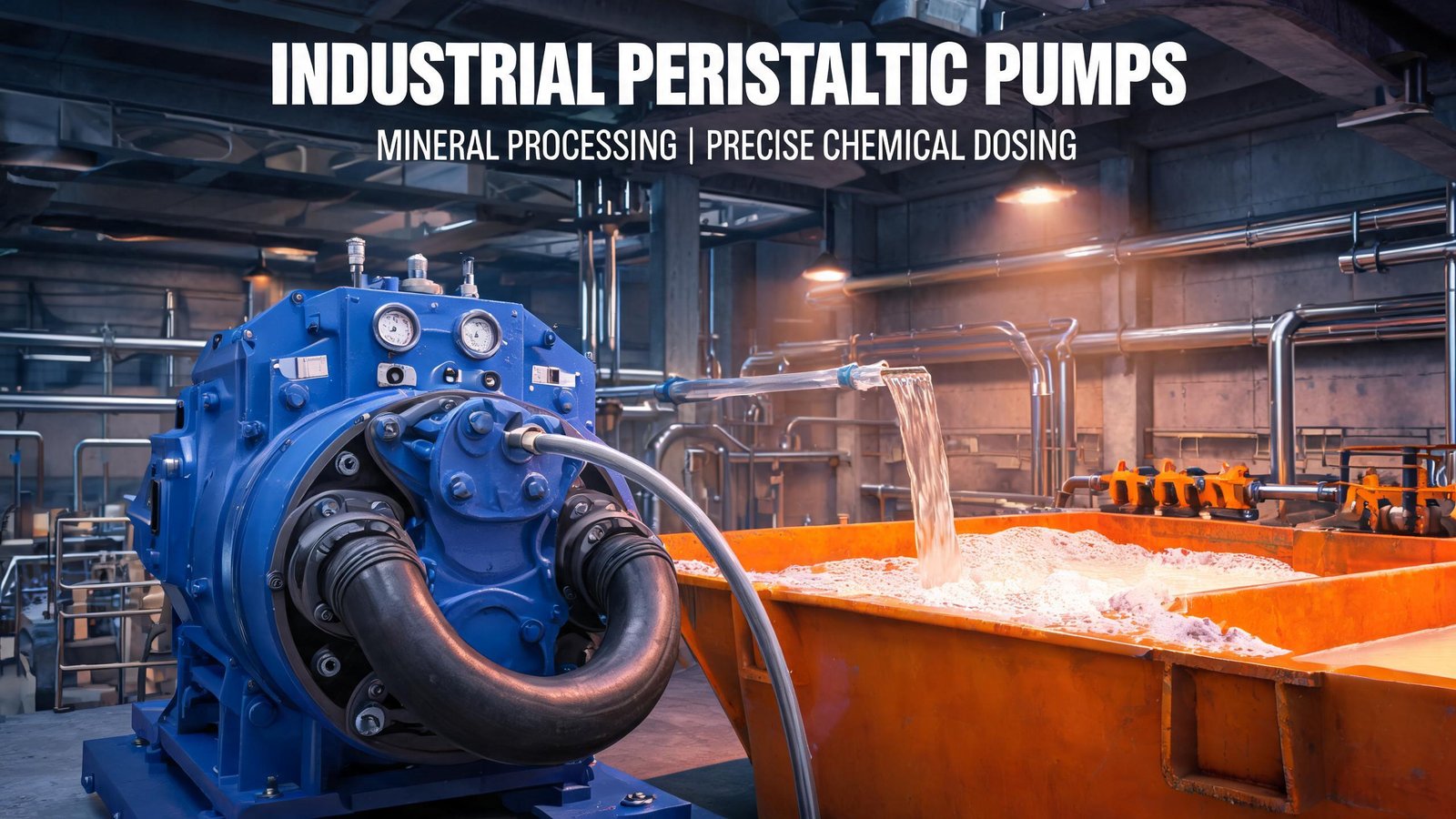
Mineral processing plants dose flotation reagents, pH modifiers, and flocculants at controlled rates throughout the production cycle. The pump handling these chemicals must survive abrasive slurries, corrosive reagents like cyanide and xanthate, and continuous operation in remote locations. For procurement teams sourcing pumps for mining applications, the selection process involves defining chemical and flow requirements, evaluating hose pump construction, and verifying supplier capability to deliver equipment that performs reliably under site conditions.
What Buyers Should Define First
Before contacting suppliers, compile a reagent specification sheet for each dosing point. Mining reagents vary widely in chemical aggressiveness, viscosity, and solids content. A cyanide solution dosing pump faces different challenges than a lime slurry transfer pump, and the supplier needs this information to recommend the correct hose material and pump size.
Define the following parameters for each application:
| Parameter | Information Needed | Why It Matters |
|---|---|---|
| Reagent type | Chemical name and concentration | Determines hose material compatibility |
| Flow rate range | Minimum and maximum dosing rate (L/min or mL/min) | Sizes the pump and motor |
| Discharge pressure | Static head plus line losses (bar) | Affects hose selection and motor power |
| Duty cycle | Continuous or intermittent, hours per day | Influences hose life expectation |
| Solids content | Percentage and particle size if dosing slurry | Determines hose bore and roller design |
| Temperature range | Ambient and fluid temperature | Affects hose material rating |
Comparing Pump Requirements
Mining reagent dosing typically falls into two categories: low-flow precision dosing for reagents like cyanide and xanthate, and higher-flow transfer for lime slurry or flocculant solutions. A single pump type rarely handles both efficiently.
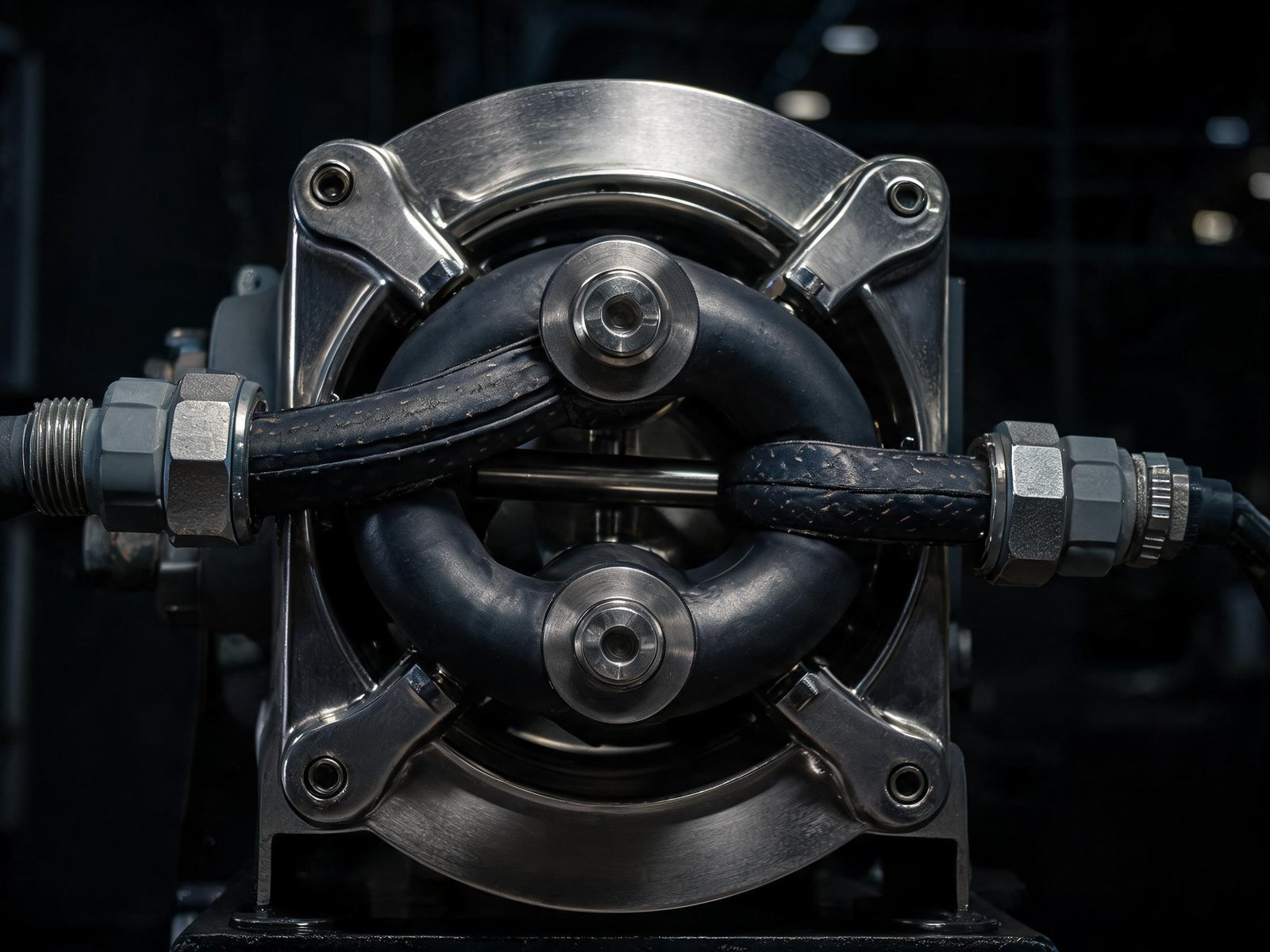
For low-flow reagent dosing (0.1 to 10 L/min), compact peristaltic pumps with stepper motor control provide the accuracy needed for flotation control. The K45 large flow peristaltic pump handles mid-range flows, while smaller units serve micro-dosing applications where reagent consumption is measured in milliliters per minute.
For higher-flow transfer applications, a YD25 peristaltic hose pump or similar hose pump design handles abrasive lime slurry and flocculant transfer. Hose pumps use reinforced rubber hoses that can pass solids without clogging, and the only wear part is the hose itself. This simplifies maintenance compared to diaphragm pumps, which require valve and seal replacement.
The comparison below outlines the trade-offs:
| Requirement | Compact Peristaltic Pump | Industrial Hose Pump |
|---|---|---|
| Flow range | 0.1–20 L/min | 10–500+ L/min |
| Pressure | Up to 3 bar | Up to 15 bar |
| Tubing/hose life | 500–2000 hours | 2000–10000 hours |
| Solids handling | Limited to small particles | Handles 40%+ solids |
| Best for | Reagent dosing, pH control | Slurry transfer, flocculant feed |
| Typical replacement part | Tubing cartridge | Reinforced hose |
OEM Customization Considerations
Mining sites often require pumps configured for specific installation constraints. A pump destined for a flotation cell deck needs different mounting and control than one installed in a reagent preparation area. When discussing OEM peristaltic pump customization with suppliers, address these areas:
Material selection: The hose or tubing material must match the reagent chemistry. Natural rubber (NR) handles abrasive slurries well but degrades with oil-based reagents. NBR suits oil-resistant applications. EPDM works for a range of chemicals but has different wear characteristics. For cyanide solutions, verify that the hose compound does not react with the reagent at operating concentrations.
Drive configuration: Mining installations may require specific motor voltages (e.g., 380V 3-phase, 415V 50Hz for Southeast Asian sites) and IP65 or higher enclosures for dust and moisture protection. Variable frequency drives allow flow rate adjustment based on process feedback.
Control integration: Dosing pumps in flotation circuits often receive 4–20 mA or Modbus signals from the plant DCS. The pump controller should accept these inputs and provide flow feedback for closed-loop control.
Supplier Evaluation
Selecting a supplier for mining reagent pumps requires evaluating more than the pump itself. The operating environment is harsh, and downtime is expensive. Assess suppliers against these criteria:
Industry experience: Does the supplier have documented mining or mineral processing references? A supplier familiar with flotation reagent handling understands the chemical compatibility and maintenance implications that a general-purpose pump vendor may overlook.
Material documentation: The supplier should provide hose material compatibility data for the specific reagents in use. This includes chemical resistance charts and, ideally, test data from comparable applications. The EPA effluent guidelines for coal mining set discharge limits that affect reagent dosing accuracy requirements, so the pump must deliver consistent performance over its maintenance cycle.
Spare parts availability: Hose replacement is the primary maintenance task. The supplier should stock replacement hoses and deliver them within the site’s maintenance window. For remote sites in Southeast Asia or other mining regions, local distribution or express shipping capability is necessary.
Technical support: Commissioning support, troubleshooting assistance, and documentation in English are baseline requirements. The Mine Safety and Health Administration establishes safety standards that affect equipment installation, and suppliers should understand these requirements when configuring pumps for U.S. mine sites.
Quality and Testing
Before accepting a pump order, verify that the supplier conducts functional testing. For peristaltic hose pumps, this includes:
- Flow calibration: Verify actual flow rate against the specified range at the expected discharge pressure.
- Pressure test: Confirm the pump maintains flow at the maximum system pressure without hose rupture or leakage.
- Continuous run test: Operate the pump at rated duty for a minimum period (typically 24–72 hours) to detect early-life failures in bearings, seals, or hose mounting.
- Chemical compatibility verification: If possible, request test data using the actual reagent or a chemically equivalent fluid.
The EPA ore mining effluent guidelines under 40 CFR Part 440 regulate discharge from mineral processing operations, including froth flotation circuits. Pumps dosing reagents that affect effluent chemistry must maintain accuracy throughout their maintenance cycle to avoid compliance deviations. The NPDES permit program establishes the reporting and monitoring framework that makes pump performance a compliance-relevant factor.
For peristaltic pump tubing and hoses used in mining, request the supplier’s quality control documentation, including material certificates, dimensional inspection reports, and batch traceability. This documentation supports site quality audits and maintenance planning. The peristaltic hose pump category at YOORAIN includes pumps designed for industrial fluid transfer applications.
FAQ
What hose material is recommended for cyanide dosing?
Natural rubber (NR) is commonly used for cyanide solution dosing because of its abrasion resistance and chemical compatibility with dilute cyanide solutions. However, the specific concentration, temperature, and duty cycle should be confirmed with the supplier’s compatibility data. EPDM may be suitable for some cyanide applications but has different wear characteristics.
How often should hoses be replaced in mining reagent pumps?
Replacement intervals depend on the reagent, pressure, duty cycle, and hose material. For continuous-duty applications dosing abrasive slurries, expect 2,000 to 5,000 hours. For low-flow reagent dosing with clean solutions, intervals may extend to 10,000 hours. Monitor flow rate decline as an indicator of hose wear, and establish a preventive replacement schedule based on site-specific data.
Can peristaltic pumps handle lime slurry?
Yes, industrial hose pumps with reinforced hoses and appropriate bore sizes handle lime slurry effectively. The peristaltic principle passes solids without valve clogging, which is a common failure mode in diaphragm pumps dosing slurry. Ensure the hose material and pump speed are matched to the slurry solids content and particle size.
What flow accuracy can peristaltic pumps achieve in mining applications?
Peristaltic pumps typically achieve ±1 to ±2% repeatability under steady-state conditions. In mining applications, accuracy depends on maintaining consistent suction conditions, stable discharge pressure, and timely hose replacement. Flow verification should be conducted at the discharge point, not at the pump outlet, to account for line losses.
Need pump specifications for a mining reagent dosing application? Contact YOORAIN with your reagent type, required flow range, discharge pressure, and site power supply details. The team can recommend pump configurations and hose materials matched to your mineral processing requirements.