
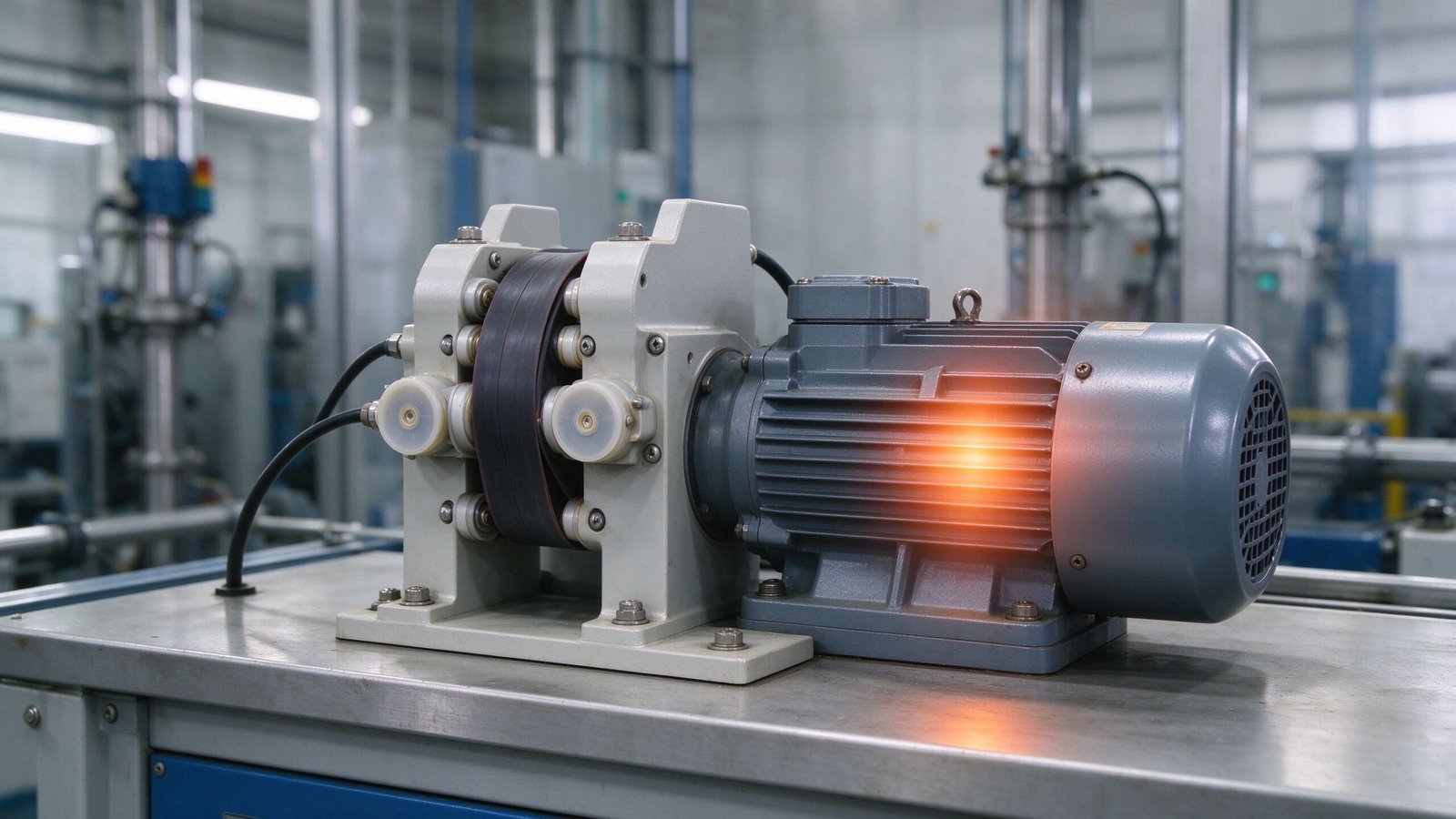
A warm pump is normal; a hot pump that you cannot keep a hand on is a warning. Overheating in a peristaltic pump comes from two separate places that get diagnosed differently: the pump head and tube, or the motor. Mixing them up leads to replacing the wrong part. This troubleshooting guide walks through the common causes of overheating, how to tell where the heat is coming from, and what to fix before it becomes a premature failure.
Left unaddressed, excess heat does more than waste energy. It accelerates tube fatigue, degrades lubrication in the drive, and can push a motor past its insulation rating, shortening the life of parts that should last for years. Catching the heat early is cheaper than replacing a failed motor or a burst tube and cleaning up the spill.
First: Where Is the Heat Coming From?
The fastest diagnostic step is to feel the two parts separately after the pump has run. The pump head and tube generate heat from the friction of the roller compressing the tube. The motor generates heat from its own losses. If the head is hot but the motor is merely warm, the problem is in the tube and occlusion. If the motor housing is too hot to hold, the problem is electrical or mechanical load. This split points the troubleshooting in the right direction, and it takes only a minute to do, so it should be the first thing checked before any parts are replaced.
| Hot part | Likely cause | First check |
|---|---|---|
| Pump head / tube | Over-occlusion, tight tube, high back-pressure | Occlusion setting, discharge restriction |
| Motor housing | Overload, wrong voltage, stalled or worn bearing | Supply voltage, load, free rotation |
| Both | Excessive duty cycle or poor ventilation | Run time, airflow around pump |
Why the Pump Head and Tube Get Hot
Heat at the head is mostly mechanical. Every compression cycle bends the tube and the roller rubs against it, and that friction produces heat that builds up in the tube and the head. A small amount of warmth is expected. Excess heat usually means the tube is being squeezed harder than it needs to.
Over-occlusion. If the head is tightened so the tube is crushed flat rather than just sealed, the roller works much harder, friction rises, and both the tube and head heat up. This also shortens tube life. The fix is to back the occlusion off to the minimum compression that still seals, and to confirm the correct tube size for the head.
Wrong or stiff tube. A tube that is too hard, too thick-walled, or the wrong size for the head resists compression and generates extra heat. Using the specified tube for the head matters; substituting a generic tube that fits physically but compresses differently is a common source of heat and noise. The peristaltic pump tube should be the part the head was designed around.
High back-pressure. A blocked nozzle, a clogged filter, or a long narrow discharge line makes the roller work harder to push the fluid, which raises both heat and load. Checking the discharge path for restrictions is part of head heat troubleshooting.
Why the Motor Gets Hot
Motor heat points to the electrical or load side. A motor that is overloaded runs hotter, and a motor running on the wrong voltage or in a stalled condition will overheat quickly.
Overload. If the pump head is over-tightened or the fluid is unusually viscous, the motor draws more current to drive the load, and that extra current turns into heat. The fix is to reduce the load (loosen occlusion, reduce back-pressure) rather than to cool the motor. Measuring the motor current against the nameplate rating is a quick way to confirm this: a motor running well above its rated current under the expected load is overloaded, and the heat is a symptom of that, not a problem the motor itself caused.
Supply voltage mismatch. Running a motor on the wrong voltage, or on a supply that sags, changes its current and heat. Confirm the supply matches the motor rating and that the voltage is stable under load.
Restricted or worn rotation. A bearing that is going bad, a gear that is dry, or a drive that is binding makes the motor work against friction. With the power off, the shaft should turn smoothly and freely. If it does not, the mechanical drive needs service, not a larger motor.
Continuous duty without ventilation. Motors in enclosed equipment boxes can heat up simply because there is nowhere for the heat to go. Ventilation or mounting the motor outside an enclosed compartment helps. OEM drivers, as described in common motor-driver operating manuals, often include current and thermal protection that should be checked, and stepper drivers with a defined speed-control input should be set to a speed the motor can sustain without overheating.
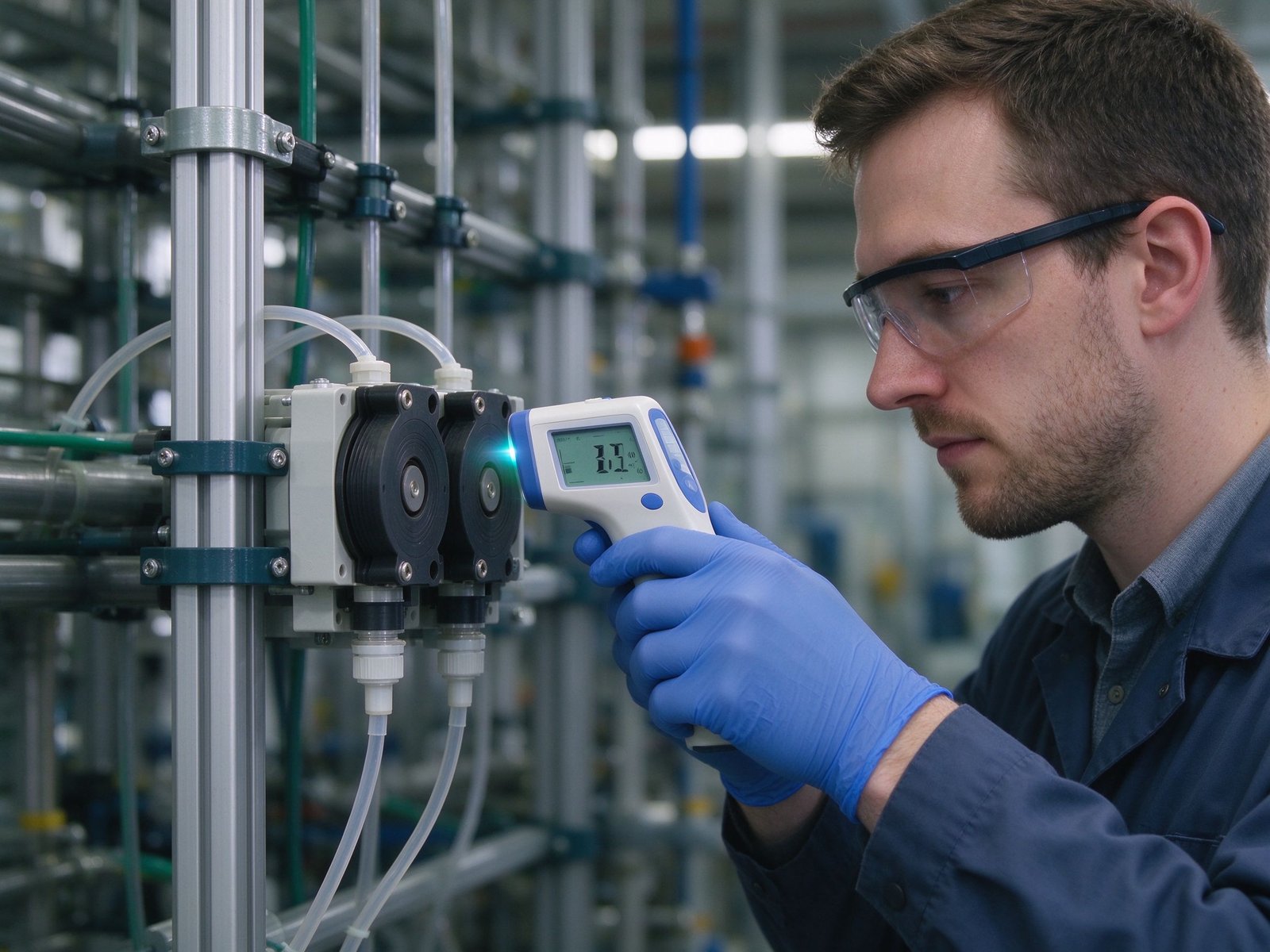
It is worth checking the duty-cycle rating on the motor itself. A motor rated for intermittent duty, run in an instrument that never switches off, will overheat even when everything else is correct. For continuous process equipment, a dosing pump built for sustained operation, rather than an intermittent pump pressed into long service, is the right starting point. Measuring the motor surface temperature with a contact thermometer after a warm-up run gives a baseline; if it climbs well above a comfortable warm after an hour, the duty cycle or the load needs to be reviewed rather than accepted.
When Heat Is a Sign of a Deeper Problem
If the pump heats up even after correcting occlusion and confirming the load, look for a binding mechanical drive or a motor that is too small for the duty cycle. A pump sized for intermittent duty but run continuously will overheat regardless of how well it is adjusted. In that case the fix is a pump rated for continuous duty, not a fan on the existing motor. It is also worth checking whether the environment itself is hot: a pump mounted near a heater, a dryer, or in direct sun will run warmer than the same pump in a cool cabinet, and the baseline temperature should be measured in the real installation, not on a bench at room temperature.
| Symptom | Check | Likely fix |
|---|---|---|
| Head hot, tube soft | Occlusion too tight | Reduce to minimum sealing compression |
| Head hot after tube change | Wrong tube size/material | Use specified tube for the head |
| Motor hot under load | High back-pressure or viscosity | Clear restriction, reduce load |
| Motor hot and humming | Overloaded or stalled | Check voltage and free rotation |
| Gets hot only after long runs | Intermittent-duty pump run continuously | Specify continuous-duty pump |
Prevention
Most overheating is preventable. Set occlusion correctly, use the right tube, keep the discharge path clear, size the pump for the actual duty cycle, and leave room for the motor to breathe. A small micro peristaltic pump in a low-duty instrument rarely heats up; a larger pump in continuous service should be checked at install to confirm it runs within a safe temperature band. Taking a baseline temperature measurement after warm-up follows the kind of controlled, recorded measurement that NIST’s Physical Measurement Laboratory recommends, where a documented baseline is what lets you spot when a pump starts running hotter than it should.
If your peristaltic pump is running hotter than it should and you have already checked the occlusion and the discharge restriction, contact YOORAIN with the pump model, supply voltage, fluid, and duty cycle. Those details help distinguish a tube-and-head adjustment from a motor or sizing problem, so the fix targets the actual heat source instead of replacing parts. Keep a record of the baseline temperature at install; comparing today’s reading against that baseline is the fastest way to tell whether the heat is normal wear or a new fault that needs attention.